Blog
Duct sealing and balancing in Phoenix, AZ: cost ranges, hot-room fixes, and what to demand on the invoice
A buyer-intent guide for Phoenix homeowners with hot rooms and high summer bills. Learn what duct sealing and balancing includes, typical cost drivers, and how to compare quotes.
If you live in Phoenix and you have one or two rooms that stay hot, ductwork is often part of the story. In a cooling-dominated climate, attic ducts can lose a painful amount of cold air before it reaches the rooms you care about.
This guide explains what duct sealing and balancing should include, what it tends to cost, and how to avoid quotes that do not measure anything. If you want to estimate how much of your bill is cooling, open the Bill Breakdown tool.
One-minute setup (do this first)
- Open the Bill Breakdown tool and estimate your cooling spend.
- List your two worst rooms and the symptoms:
- hot afternoons, warm nights, humidity, weak airflow, or dust.
- Check three basics:
- filter is clean,
- all supply registers are open,
- return grilles are not blocked by furniture.
If you want the big picture beyond ducts, start with the heating and cooling upgrade hub.
On this page
- Quick answer: duct sealing helps most when ducts are in a hot attic
- What duct sealing is (and what it is not)
- Phoenix-specific duct problems (why this city is not generic)
- What a good duct sealing and balancing scope includes
- Measurement (before and after)
- Sealing work (where leaks often hide)
- Airflow fixes
- Balancing
- What duct sealing and balancing costs in Phoenix (sanity-check ranges)
- How to know if ducts are the problem (simple homeowner tests)
- Check supply temperature drop
- Feel for return leaks and attic air
- Door test for bedrooms
- What to ask contractors (copy/paste questions)
- How to estimate if the work is worth it
- FAQ
- Is duct sealing worth it in Phoenix?
- Will duct sealing fix a single hot room?
- Should I replace ductwork instead of sealing it?
- Should I close vents in unused rooms to push air to hot rooms?
- What is the fastest comfort fix for hot bedrooms?
- Next steps
Quick answer: duct sealing helps most when ducts are in a hot attic
Duct sealing and balancing often pays off in Phoenix when:
- your ducts run through an attic,
- you have leaky return ducts pulling in attic air,
- supply air is cold at the air handler but warm at the registers,
- airflow is uneven room-to-room.
Duct work will not solve every hot-room problem. Common non-duct causes in Phoenix include:
- solar gain through west-facing windows,
- low attic insulation and air leaks,
- an oversized AC that short-cycles and leaves rooms clammy,
- poor return pathways (bedrooms pressurize with doors closed).
The best plans fix delivery (ducts and airflow) and reduce demand (air sealing and attic insulation). If you want the envelope side, read the insulation upgrade hub.
What duct sealing is (and what it is not)
Duct sealing means sealing leaks in supply and return ducts and at connections, often using mastic and proper sealing tapes. The goal is to keep conditioned air inside the ducts until it reaches the rooms.
Balancing means adjusting airflow so rooms get the right share of supply air, often using dampers and register adjustments, and verifying results with measurements.
This is not the same as:
- duct cleaning,
- fogging or "sanitizing" the ducts,
- replacing a thermostat.
Cleaning can help for dust issues. It does not fix leaky ducts or airflow imbalance.
ENERGY STAR has a plain-English overview of duct sealing and why it matters: ENERGY STAR duct sealing guide
Phoenix-specific duct problems (why this city is not generic)
Phoenix adds two brutal ingredients:
- attic temperature can be extreme in summer, and
- duct losses happen exactly when you need cooling most.
Common Phoenix patterns:
- Return leaks pull hot attic air into the system, raising supply temperature and making the AC run longer.
- Duct insulation is thin or damaged, especially on older flex duct.
- Flex duct is kinked, crushed, or stretched too long, which kills airflow.
- Bedrooms have no good return pathway with doors closed, so they never get steady supply.
These are fixable, but only if the contractor measures and verifies.
What a good duct sealing and balancing scope includes
Use this as your buyer-intent checklist.
Measurement (before and after)
- Static pressure measurement at the air handler.
- Supply temperature at the air handler and at far registers.
- If offered: a duct leakage test before and after sealing.
Sealing work (where leaks often hide)
- Plenum connections.
- Boots at supply registers (air leaks into attic around the boot).
- Return connections and return plenums.
- Any obvious disconnected or damaged sections.
Airflow fixes
- Repair or replace crushed or kinked flex duct.
- Confirm each problem room has enough supply airflow.
- Confirm return airflow path, especially for bedrooms with doors closed.
Balancing
- Adjust dampers if present.
- Verify airflow changes with measurements, not guesswork.
If you want a deeper guide on quote language, read Duct sealing payback (and quote checklist).
What duct sealing and balancing costs in Phoenix (sanity-check ranges)
Pricing depends on access and how much repair work is needed. Use these as planning buckets.
| Scope bucket | When it fits | Planning range (many quotes land here) |
|---|---|---|
| Seal accessible leaks only | Light leaks, easy attic access | $800 to $2,000 |
| Seal + targeted repairs | Leaks plus some damaged flex or boots | $1,800 to $4,500 |
| Seal + repair + balancing work | Multiple problem rooms, duct layout issues, return fixes | $3,500 to $8,000+ |
Red flags:
- A quote with no measurements.
- A promise of a specific percent savings with no baseline.
- A scope that is duct cleaning presented as sealing.
Green flags:
- Before-and-after leakage or performance testing.
- Specific sealing locations and materials.
- A clear plan for return pathways and bedroom comfort.
How to know if ducts are the problem (simple homeowner tests)
You can do a few checks before calling anyone.
Check supply temperature drop
- Measure supply air temperature at a register close to the air handler.
- Measure supply air temperature at a far room.
A small drop is normal. A large drop can point to duct leaks or bad duct insulation. Do not over-interpret a single reading. Use it as a clue.
Feel for return leaks and attic air
With the system running, stand near the return grille. If it feels like it is pulling hot attic air (or smells dusty), there may be return leaks in the attic.
Door test for bedrooms
Close a bedroom door with the system running. If airflow at the supply register changes a lot, you likely have a return-path problem. Jump ducts or transfer grilles can help, but this needs design care.
What to ask contractors (copy/paste questions)
- Will you measure static pressure and supply temperatures before and after?
- Will you test duct leakage before and after sealing?
- What sealant will you use (mastic, tape types), and where?
- Will you seal boots to the ceiling plane so air does not dump into the attic?
- How will you address return pathways for bedrooms?
- If you find damaged flex duct, what is your repair plan and cost structure?
If they cannot answer these clearly, keep shopping.
How to estimate if the work is worth it
In Phoenix, duct fixes can reduce run time and improve comfort. But your payoff depends on how much cooling spend you have and how leaky the ducts are.
Two simple steps:
- Use the Bill Breakdown tool to estimate annual cooling spend.
- Use a conservative savings range when planning (do not assume a miracle).
Example (illustrative):
- Cooling spend: $1,600/year
- Savings range from duct improvements: 5% to 15%
- Savings: $80 to $240/year
If the quote is $2,500, payback can be long. Comfort can still be worth it, especially if it fixes one or two miserable rooms.
If you want a plan that sequences envelope and HVAC work, use My Plan.
FAQ
Is duct sealing worth it in Phoenix?
Often, yes when ducts are in a hot attic and there are real leaks. The best projects measure before and after, and they fix airflow issues at the same time.
Will duct sealing fix a single hot room?
Sometimes. If the room has weak airflow or a leaky run, sealing and balancing can help. If the room has high solar gain or poor insulation, you may need window and envelope fixes too.
Should I replace ductwork instead of sealing it?
Replace ductwork when it is damaged, poorly laid out, or too small. Seal and repair can be enough when the layout is fine and the main issue is leakage and a few crushed runs.
Should I close vents in unused rooms to push air to hot rooms?
Usually no. Closing vents can raise duct pressure and reduce system performance. Fix the airflow properly with balancing and return-path design.
What is the fastest comfort fix for hot bedrooms?
Start with return pathways, then duct airflow to that room. If doors are closed at night and returns are weak, the room can never stay comfortable even with a strong AC.
Next steps
- Estimate your cooling spend with the Bill Breakdown tool.
- Read the heating and cooling upgrade hub for the full plan.
- If you are getting quotes, use the scope checklist and ask for measurements before and after.
Try the companion tool
This post links to an interactive tool built for this topic. Open it to see numbers tailored to your home.
Open the toolGet practical energy tips
Join homeowners getting practical tips on cutting energy bills and staying comfortable.
Practical tips only. Unsubscribe anytime.
Read this next
Related guides selected by topic overlap and upgrade path.
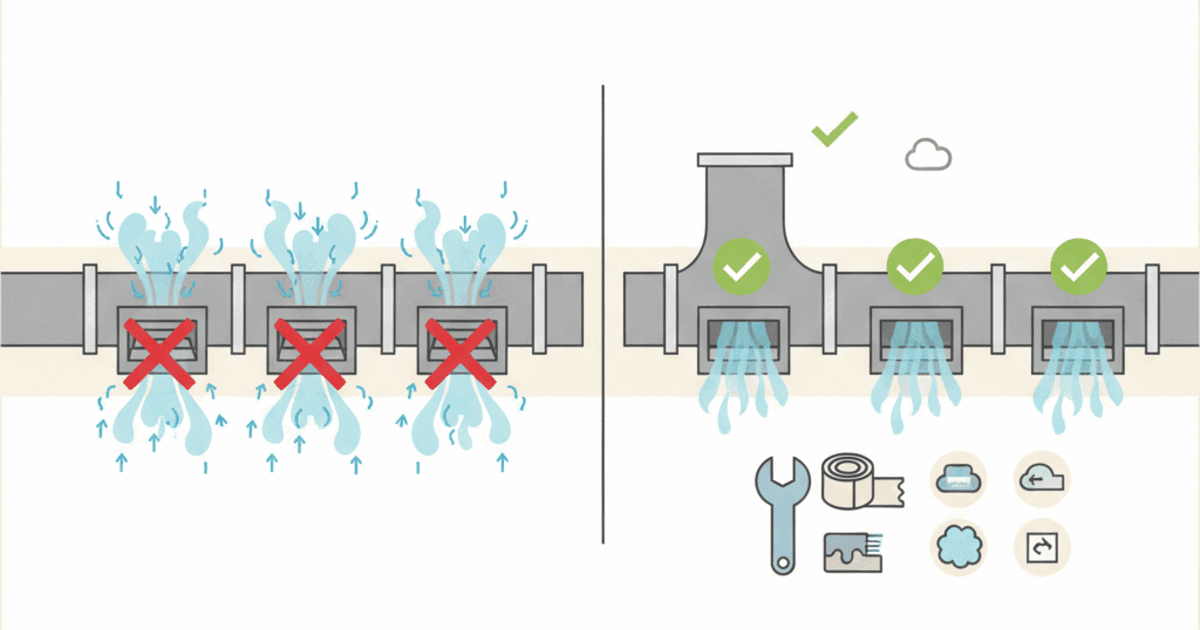
Closing supply vents feels like it should cut your bill, but it often increases duct leakage, reduces comfort, and can stress HVAC equipment. Here is what to do instead.

A Minneapolis-focused guide to choosing a heat pump, gas furnace, or dual-fuel setup using your own rates, plus a quote checklist.
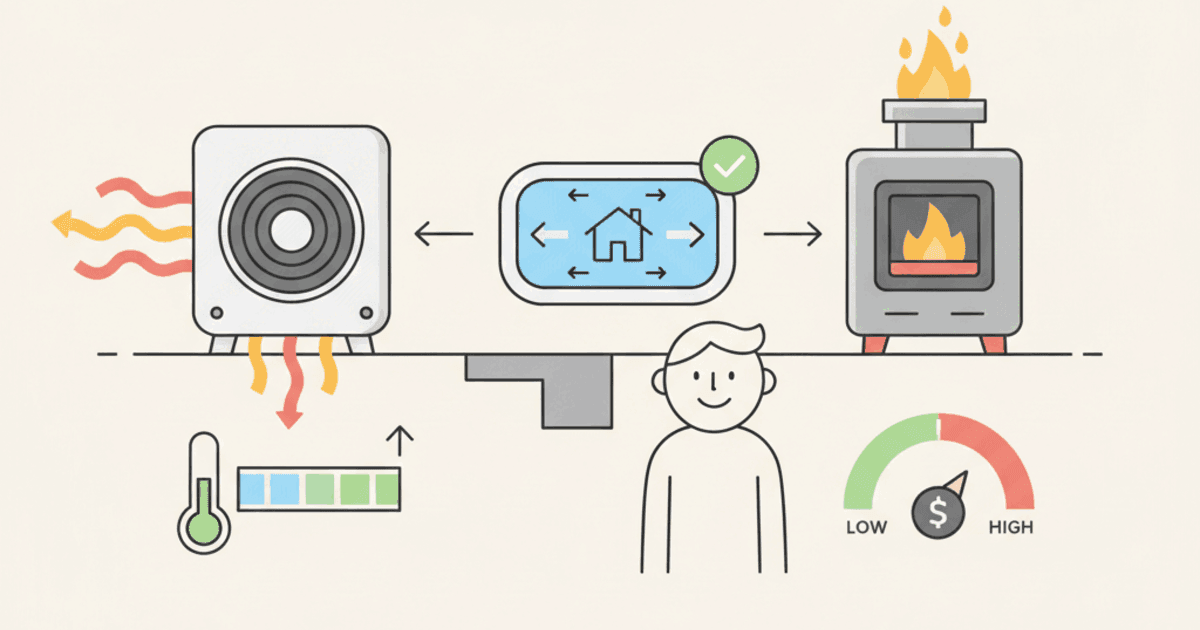
How a dual-fuel (hybrid) heat pump and gas furnace work together, how to set the switchover temperature from your electric and gas rates, the install cost premium, and when dual-fuel beats all-electric or all-gas. Updated for 2026.
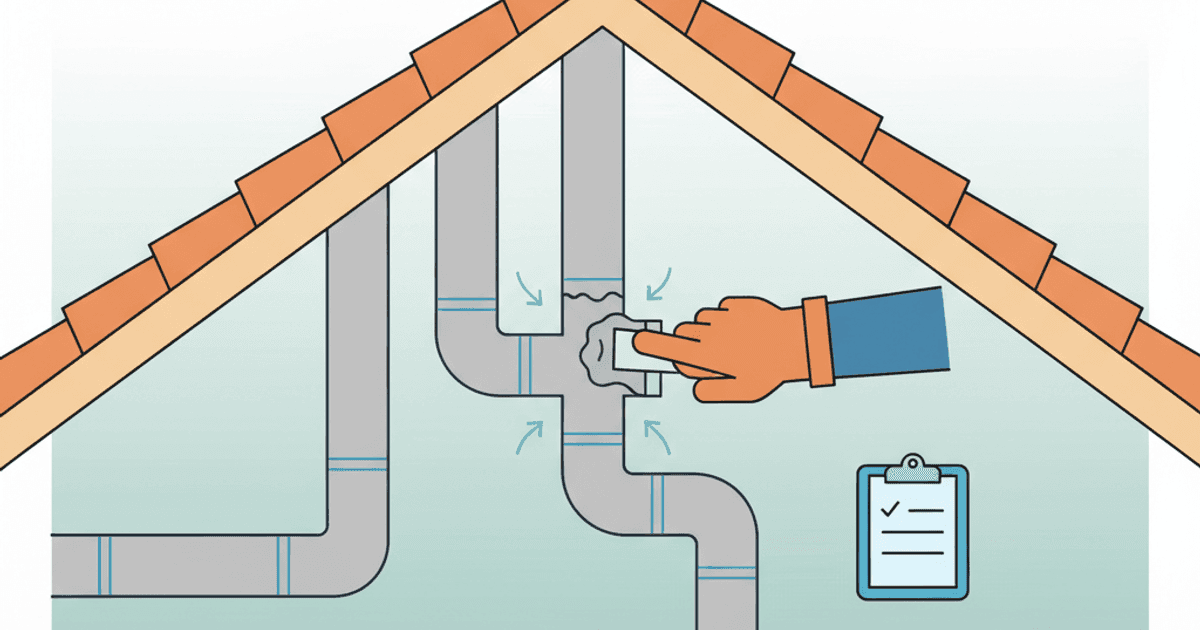
Learn what duct sealing fixes, what it costs, and the questions that separate real work from spray-and-pray.