Blog
Cold rooms, hot rooms: fix uneven temps before big upgrades
Weekend-level fixes to even out hot and cold rooms before spending on new HVAC or windows.
Cold rooms, hot rooms, same house. You pay to heat and cool the whole place, but someone is always wrapped in a blanket while someone else is cracking a window.
Before you spend thousands on new HVAC or windows, it pays to handle the simple, cheap fixes. A lot of comfort problems come from air leaks, airflow issues, and small layout quirks that you can solve with hand tools and a weekend.
This guide walks through:
- Why some rooms run hotter or colder than others.
- Quick checks you can do without touching the thermostat.
- Low-cost fixes worth trying before you call for big quotes.
- When uneven rooms signal a bigger upgrade problem.
If you use a bill breakdown or comfort survey tool, keep it open and note which rooms feel worst as you go.
On this page
- Step 1: confirm the problem, not the story
- Step 2: check the simple airflow issues first
- Make sure vents can breathe
- Look at dampers and obvious duct issues
- Step 3: seal the worst air leaks around the room
- Step 4: use curtains, shades, and doors to your advantage
- Manage sun in rooms with big windows
- Manage doors and internal airflow
- Step 5: tune thermostat settings and schedules
- Step 6: small insulation fixes inside the room
- Step 7: know when the problem is bigger than simple fixes
- How to use this before calling contractors
- Simple next steps
Step 1: confirm the problem, not the story
Pick one or two "problem rooms" and answer these questions.
- Is the room always cold or hot, or only in certain weather?
- Is it worse at night, in the morning, or when equipment starts and stops?
- Does it feel drafty, stuffy, or both?
- Is the floor cold but the air near the ceiling ok, or the reverse?
Walk the room with your hand along:
- Window frames and door frames.
- Electrical outlets on exterior walls.
- Baseboards and trim.
- Around recessed lights in ceilings below attics.
If you feel moving air, even a faint stream, you have a leak; that leak pulls conditioned air out and pulls unconditioned air in somewhere else. One leaky room can also unbalance pressure and airflow for others.
Note everything on a simple sketch. You are building a map of symptoms, not guessing at cures yet.
Step 2: check the simple airflow issues first
Uneven rooms often come down to duct and vent basics. Before you touch equipment, run through these checks.
Make sure vents can breathe
For each problem room:
- Find the supply vent(s) that blow air in.
- Find any return vent(s) that pull air out.
Then check:
- Are vents blocked by rugs, beds, sofas, or long curtains?
- Are supply registers closed or half closed?
- Are return grilles clogged with dust?
Unblock, open, and vacuum them. A blocked supply or return can starve a room and push that air to other rooms, which makes your "good" rooms hotter and colder than they should be.
Look at dampers and obvious duct issues
If you have accessible ducts in a basement or mechanical room:
- Look for manual dampers on branch ducts; small handles on round or rectangular ducts.
- Make sure they are all in reasonable positions, not turned almost fully off to an entire branch.
- Look for disconnections, crushed flex ducts, or large gaps; common near trunk connections or at long runs.
If you see a duct that feeds your cold bedroom pinched behind storage boxes, or a damper almost fully closed, you found a likely suspect.
You do not need to reengineer the system. At this stage, you are fixing obvious mistakes; blocked vents, closed dampers, obvious leaks.
Step 3: seal the worst air leaks around the room
If your hand felt air movement around windows, outlets, or trim, deal with that next. Air leaks often hurt comfort more than insulation alone.
Focus first on:
-
Windows and doors
- Replace missing or crushed weatherstripping.
- Add adhesive foam weatherstripping where sash meets frame if there is visible light or you feel a strong draft.
- Use door sweeps or draft stoppers at exterior doors with gaps.
-
Outlets and switches on exterior walls
- Pop off the cover plate with power off.
- Install inexpensive foam outlet gaskets behind the plate.
- For very drafty boxes, low-expansion foam around the box edges can help, but stay away from the electrical parts.
-
Baseboards and trim on outside walls
- Run a bead of paintable caulk along gaps between trim and wall or trim and floor if you see cracks.
-
Recessed lights below an attic
- If they are old, non-IC rated cans, air can pour through them. You may not fix this yourself, but note them as a top priority for an electrician or insulation contractor.
These steps do not look dramatic, but tightening up air paths in problem rooms often changes comfort more than thermostat tweaks, because you stop cold or hot outside air from swirling through the space.
Step 4: use curtains, shades, and doors to your advantage
Solar gain and internal airflow can swing room temperatures by several degrees without any change at the furnace or heat pump.
Manage sun in rooms with big windows
For south and west facing rooms:
- In winter, open curtains or blinds during the day to let sun in.
- At dusk, close them to hold that heat as long as possible.
For summer:
- Use reflective shades or light-colored curtains to cut direct sun in peak hours.
- Close them before the room heats up, not after.
Large glass areas lose heat in winter and gain it in summer. Smart shade habits nudge those swings in your favor.
Manage doors and internal airflow
If a bedroom runs cold in winter but shares a thermostat zone with warmer rooms:
- Keep the door open during the day so warm air can mix.
- Use a simple door undercut or install a transfer grille if the door must stay closed; this gives air a way to move and keeps pressure in balance.
If one room runs hot in summer while the rest stay comfortable, it might help to:
- Keep that door open when the system runs so cooling air can reach it.
- Use a small fan to push cool hallway air into the room or to pull hot air out into a better served area.
Fans do not fix major design flaws, but they can smooth out mild hot and cold spots for small cost.
Step 5: tune thermostat settings and schedules
You can squeeze more even comfort out of your existing system with smarter control, especially if you use a programmable or smart thermostat.
Try the following, one at a time for a week each so you can feel the difference.
-
Longer, steadier runs instead of short blasts
- In winter, set a smaller setback between day and night; for example, 68°F when awake and 65°F while sleeping instead of 60°F. Large swings push the system into long, hard recovery runs that expose uneven rooms.
- In summer, avoid rapid swings that force the AC to play catch-up for hours.
-
Fan circulation mode
- If your thermostat supports it, use an "on" or "circulate" mode for the fan during problem periods. This moves air between rooms even when the system is not heating or cooling. It uses more electricity than "auto", so test in short windows and keep an eye on comfort vs power use.
-
Zoned or room-by-room controls
- If you already have multiple zones or smart vents, make sure schedules match how you use the home now, not several years ago. Too much heat or cooling to unused rooms can steal capacity from problem rooms.
Do not treat the thermostat like a volume knob for instant heat. You are steering a system with lag; smoother control often leads to more even rooms.
Step 6: small insulation fixes inside the room
You will handle big insulation projects at the house level; attic, walls, and crawlspaces. In the meantime, you can give cold rooms some targeted help.
Ideas worth considering:
-
Rugs on bare floors over unheated space
- A room over a garage or over an unconditioned crawlspace often feels cold at the floor. A rug with a dense pad cuts the radiant chill and slows heat loss downward.
-
Insulated curtains on older windows
- Thermal curtains or layered curtains can reduce drafts and radiant heat loss in winter. Close them at night and when you feel strong downdrafts from glass.
-
Closing fireplace dampers
- In rooms with open fireplaces, make sure dampers fully close when the fireplace is not in use. An open chimney is a strong exit for warm room air.
These steps will not replace proper air sealing and insulation in the shell, but they can improve comfort enough that you do not rush into expensive equipment changes.
Step 7: know when the problem is bigger than simple fixes
If you have tried the steps above and still live with large temperature gaps, you may face a system-level problem. Watch for these signs.
-
Large difference between supply air temperature and room temperature, but no improvement
- Warm air pours from vents in winter, yet the room never reaches setpoint. That can suggest undersized ducts, poor layout, or a load larger than the system can handle for that room.
-
Rooms that lag many degrees behind others even after hours of runtime
- If the thermostat reads 70°F and one room stays at 62°F all day, you likely have design or shell issues that need professional eyes.
-
Visible insulation gaps and attic bypasses
- If an attic inspection shows bare spots, thin insulation, or large open chases around plumbing and chimney runs above the problem rooms, comfort will not improve without deeper air sealing and insulation work.
-
Old, mismatched, or failing equipment
- A 25-year-old furnace with unknown service history, short cycling, or a wildly noisy blower can struggle to serve far rooms even with perfect ducts.
- A small single-stage AC unit sized for an earlier, smaller house may shortchange rooms at the end of long runs.
When you see these patterns, all the weatherstripping and fan use in the world will not solve the core issue. You still gain from the simple fixes you did, because they support future upgrades, but you should start planning for:
- An energy audit with blower door testing.
- Professional duct design or modification.
- Shell upgrades in attics, crawlspaces, and key walls.
- A clearer plan for replacement equipment.
How to use this before calling contractors
Contractors often arrive with a mental script; replace the system, add a return, upsell a product. Your job is to steer them with solid information.
Before any visit:
- Write down which rooms run hot or cold, when, and under what weather.
- Note what you have already tried from this list.
- Bring photos of attic or crawlspace conditions if you have them.
- Bring a rough sketch of the house with problem rooms marked.
During the visit, ask:
- How do you think air moves through these rooms today?
- If we tightened the shell above or below these rooms, how would that change your recommendation?
- Can you size equipment based on a house with better insulation and air sealing, not only today's condition?
You are not doing their job; you are making sure someone thinks about the entire comfort picture, not only the box in the basement.
Simple next steps
If you want a short, practical sequence:
- Pick one problem room.
- Unblock and open vents, clean returns, check dampers.
- Seal obvious air leaks around windows, doors, outlets, and trim.
- Adjust curtains and doors for how sun and airflow move through the space.
- Tweak thermostat schedules for steadier operation.
- Add rugs and better window coverings where floors and glass feel cold.
Give it a week or two. If comfort improves, repeat the pattern in other rooms. If comfort still lags far behind the rest of the house, treat that as a strong signal that your next move is shell work or a deeper HVAC look, not a blind thermostat upgrade or one more gadget.
Try the companion tool
This post links to an interactive tool built for this topic. Open it to see numbers tailored to your home.
Open the toolGet practical energy tips
Join homeowners getting practical tips on cutting energy bills and staying comfortable.
Practical tips only. Unsubscribe anytime.
Read this next
Related guides selected by topic overlap and upgrade path.
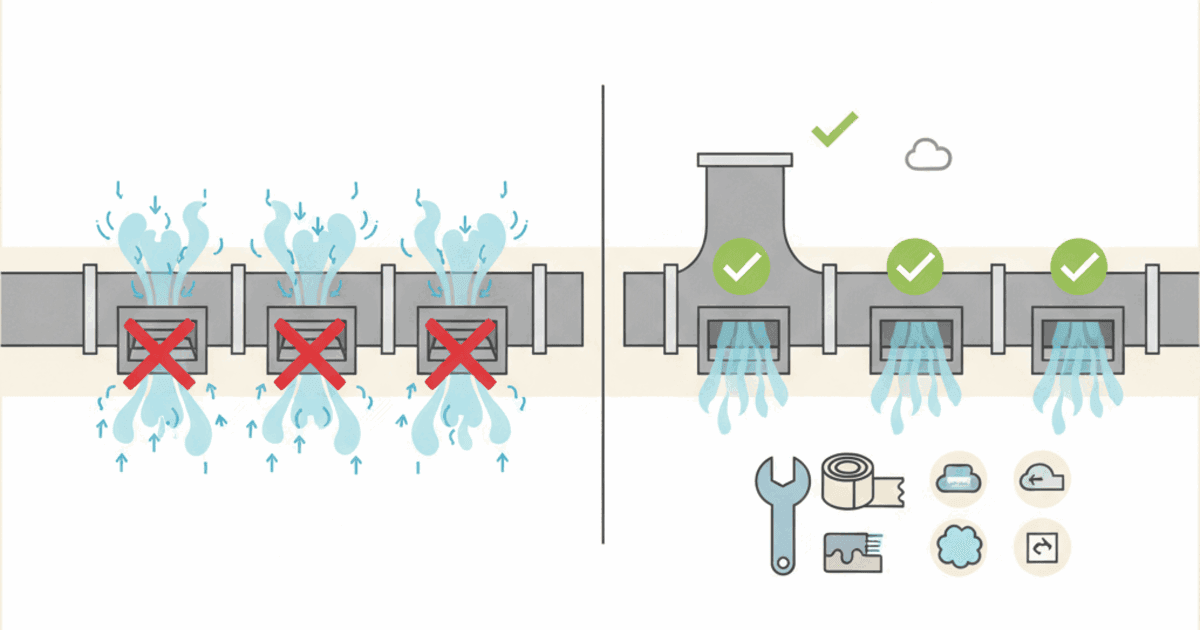
Closing supply vents feels like it should cut your bill, but it often increases duct leakage, reduces comfort, and can stress HVAC equipment. Here is what to do instead.

A practical playbook for spending $2k, $10k, or $25k on energy upgrades—based on your bills, comfort issues, and equipment age.

Plain-English guide to SEER2, HSPF2, AFUE, U-factor, SHGC, ACH50, kWh and other labels so you can compare quotes and plan upgrades.

Attic insulation costs about $1,500 to $3,500 for a typical home, or $1.50 to $4 per sq ft. See 2026 prices by material, attic size, and tax credit.