Blog
Best Home Energy Upgrades by Budget: $2k to $25k
A practical playbook for spending $2k, $10k, or $25k on energy upgrades—based on your bills, comfort issues, and equipment age.
If you have a limited budget, the hardest part is not finding “energy upgrades.” It is choosing upgrades that actually move your bills and comfort, without accidentally paying twice for the same problem.
This guide shows how to spend $2,000, $10,000, or $25,000 in a way that usually creates real momentum. The exact scope will vary by region and house, but the strategy stays surprisingly consistent.
One-minute setup (do this first)
- Open My Plan and set your top priority: lower bills, better comfort, reliability, or a mix.
- If you have recent bills, open the Bill Breakdown Estimator and find your biggest slice (heating/cooling, water heating, or plug loads).
- Keep both tabs open as you read. This post is most useful when you apply it to your house, not “an average home.”
On this page
- Quick answer: what to do at each budget level
- Step 1: find the “big slice” before you spend
- A clean strategy: reduce demand → fix delivery → replace equipment
- What to do with $2,000 (the highest ROI tier when you’re disciplined)
- Bucket A: low-cost fixes that reduce waste
- Bucket B: “buy clarity” so you don’t mis-spend later
- What to do with $10,000 (weatherize + one meaningful upgrade)
- Option 1: attic air sealing + insulation (plus small supporting fixes)
- Option 2: heat pump water heater (when hot water is a big slice)
- Option 3: a targeted comfort solution (mini-split, duct work, airflow fixes)
- What to do with $25,000 (avoid rework, then replace the right system)
- A simple way to choose upgrades by “big slice”
- FAQ
- Should I replace windows first if my house is drafty?
- What if my HVAC is failing right now?
- Is $25k enough to “fully electrify” a home?
- Do rebates change what I should do?
- Next steps
Quick answer: what to do at each budget level
Here is the homeowner-friendly version.
| Budget | The goal | What usually works best |
|---|---|---|
| ~$2k | Stop obvious waste and fix the worst comfort problems | Targeted air sealing, attic access fixes, basic controls, small duct/airflow fixes, a focused inspection/audit |
| ~$10k | “Weatherize + one meaningful system upgrade” | Attic air sealing + insulation, duct sealing where accessible, and either a heat pump water heater or a focused HVAC/comfort fix |
| ~$25k | Avoid rework and lock in long-term savings | Shell improvements first, then right-sized HVAC replacement (often a heat pump), plus electrical planning and the highest-upside comfort fixes |
Two rules keep you out of trouble:
- Spend first on the bottleneck that drives your bills. That’s what the breakdown tool is for.
- Avoid upgrades that look impressive but don’t change the bottleneck. (This is how people end up with new windows and the same drafty attic.)
If you want a full upgrade sequence, How to plan home energy upgrades without wasting money is the companion guide.
Step 1: find the “big slice” before you spend
Most good plans start the same way:
- Identify your biggest end-use (space heating/cooling, water heating, or plug loads).
- Pick the upgrades that attack that end-use first.
- Do the “support work” (air sealing, ducts, electrical readiness) that makes the big upgrade cheaper and more effective.
That is why we recommend starting with the Bill Breakdown Estimator. When you know whether your money is going to heating, cooling, hot water, or “mystery electricity,” your upgrade choice gets dramatically easier.
Example:
- If heating/cooling is half your spend, attic work and HVAC decisions matter a lot.
- If water heating is huge, a heat pump water heater may beat a $12k HVAC swap for payback.
- If plug loads are huge, the “upgrade” might be a behavior and appliance cleanup, not a contractor project.
A clean strategy: reduce demand → fix delivery → replace equipment
A lot of upgrade advice fails because it skips the “why.”
Most homes improve fastest when you follow this sequence:
- Reduce demand (air sealing and insulation). You stop paying to condition the outdoors.
- Fix delivery (duct sealing, airflow, return paths). Comfort improves and your system does less wasted work.
- Replace equipment (heat pump, furnace, water heater) sized for the improved house.
This is not a moral rule. It is a “don’t pay twice” rule.
If your furnace is dying today, you might have to replace equipment first. But even then, it often makes sense to do the fastest “reduce demand” fixes you can before the new equipment is selected and sized.
If you need help staging now/next/later, the Upgrade Timing Planner is built for this.
What to do with ~$2,000 (the highest ROI tier when you’re disciplined)
At this budget, you are not buying a whole new system. You are buying momentum and information.
Think in two buckets:
Bucket A: low-cost fixes that reduce waste
Pick from these based on your home and climate:
- Seal the biggest air leaks you can reach (especially attic access, top plates, obvious penetrations).
- Improve attic hatch insulation and weatherstripping.
- Tune thermostat schedules (or add a smart thermostat if it actually changes your behavior).
- Seal accessible ducts in a basement or attic (mastic on joints, not cloth duct tape).
- Fix return air pathways for problem rooms (often a cheap comfort win).
If you have one or two rooms that are always miserable, read Cold rooms, hot rooms: fix uneven temps before big upgrades before you spend on gadgets.
Bucket B: “buy clarity” so you don’t mis-spend later
Examples:
- A focused inspection or audit (especially if it results in a prioritized scope).
- A couple of strategic quotes for the next tier (attic insulation, duct sealing, heat pump water heater).
- Minor electrical work that removes obvious constraints (but avoid assuming you need a full panel upgrade—use the panel upgrade checklist first).
A simple $2k plan that fits many homes
| Goal | Example spend | Why it helps |
|---|---|---|
| Reduce drafts | Air sealing + attic hatch fix | Often reduces comfort complaints more than thermostat tweaks |
| Stabilize bills | Thermostat schedule + duct leak fixes | Reduces runtime and improves delivery |
| Plan the next step | Audit or two contractor quotes | Prevents spending $10k in the wrong direction |
What to do with ~$10,000 (weatherize + one meaningful upgrade)
This is the budget level where you can usually:
- Make a real dent in comfort issues, and
- Set up the house so future equipment is cheaper and smaller.
Common “good outcomes” at this tier:
Option 1: attic air sealing + insulation (plus small supporting fixes)
If your attic is under-insulated or leaky, this is often the best “foundation” project.
Why it’s powerful:
- You reduce heating and cooling demand for every system that follows.
- Comfort improves (especially upstairs rooms).
- Future HVAC sizing gets easier and often smaller.
Pair it with:
- Duct sealing where accessible (especially if ducts are in a vented attic)
- Targeted fixes for the worst room
If you are deciding whether to prioritize insulation vs a heat pump, use Insulation before a heat pump alongside the attic insulation calculator.
Option 2: heat pump water heater (when hot water is a big slice)
If water heating is a major part of your spend, a heat pump water heater can be a “quiet hero” upgrade.
It is not right for every home (space, noise, and cold basements matter), so use this guide first: Heat pump water heater ROI without the hype.
Option 3: a targeted comfort solution (mini-split, duct work, airflow fixes)
If your main problem is “our bedroom is freezing / the bonus room is unusable,” a focused solution can beat a house-wide project.
At this budget level, comfort upgrades are worth considering when they reduce “band-aid” behavior like running space heaters or window AC units.
What to do with ~$25,000 (avoid rework, then replace the right system)
At this tier, the goal is not “do everything.”
The goal is to avoid expensive collisions, like:
- Installing new HVAC, then insulating and discovering the system is oversized.
- Buying a heat pump, then realizing your ducts leak or your panel is constrained.
- Replacing windows, then still needing attic work and HVAC.
A practical $25k sequence often looks like:
- Top-of-house air sealing and insulation (big demand reduction).
- Duct sealing and airflow fixes (delivery and comfort).
- Equipment replacement sized for the improved house:
- Often a heat pump for heating and cooling, depending on local rates and climate.
- Or a hybrid system if you want gas backup.
- Electrical readiness (circuits, load planning) so electrification does not turn into a surprise bill.
If you are considering a heat pump versus a new furnace, use:
If your ducts are in a vented attic or crawlspace, this is the moment to read: Duct sealing: when it pays back.
A simple way to choose upgrades by “big slice”
If you want a quick decision rule, use this:
| Biggest slice on your bill | Highest-upside first moves |
|---|---|
| Space heating/cooling | Air sealing + attic insulation; duct sealing; HVAC sizing and replacement planning |
| Water heating | Heat pump water heater (if space allows); hot water pipe insulation; fixture strategy and leak checks |
| Plug loads | Identify and measure the big culprits (space heaters, dehumidifiers, old fridges/freezers, pool/hot tub loads) |
Most homes will still do a mix. The point is simply to stop spending on upgrades that barely touch the main driver.
If you want transparency on how payback numbers can mislead you, read How we calculate costs and savings before you assume any single ROI number is guaranteed.
FAQ
Should I replace windows first if my house is drafty?
Usually not. Drafts are often air leaks and insulation gaps, not glass performance. Window replacement can make sense when windows are failing or you have specific comfort goals, but it is often a weak first ROI move. Use Window replacement vs window fixes to avoid the common traps.
What if my HVAC is failing right now?
Then the plan changes. Do the fastest air sealing and attic access fixes you can, then replace equipment based on the “house you’re building toward,” not the leakiest version of today. The Upgrade Timing Planner helps you stage this without rework.
Is $25k enough to “fully electrify” a home?
Sometimes, but not always. Costs vary by house size, ductwork, electrical constraints, and whether you add backup heat. Treat electrification as a staged plan, not a single transaction.
Do rebates change what I should do?
They can change timing and which options pencil out, but they should not override fundamentals. A rebate on an upgrade that doesn’t fix your main problem is still a mis-spend.
Next steps
- Build your first draft in My Plan, then refine it after you run the Bill Breakdown Estimator.
- If you are planning HVAC or envelope work, sanity-check sequence with the Upgrade Timing Planner.
- If you want the deeper “how to think” version, read How to plan home energy upgrades without wasting money.
Try the companion tool
This post links to an interactive tool built for this topic. Open it to see numbers tailored to your home.
Open the toolGet practical energy tips
Join homeowners getting practical tips on cutting energy bills and staying comfortable.
Practical tips only. Unsubscribe anytime.
Read this next
Related guides selected by topic overlap and upgrade path.
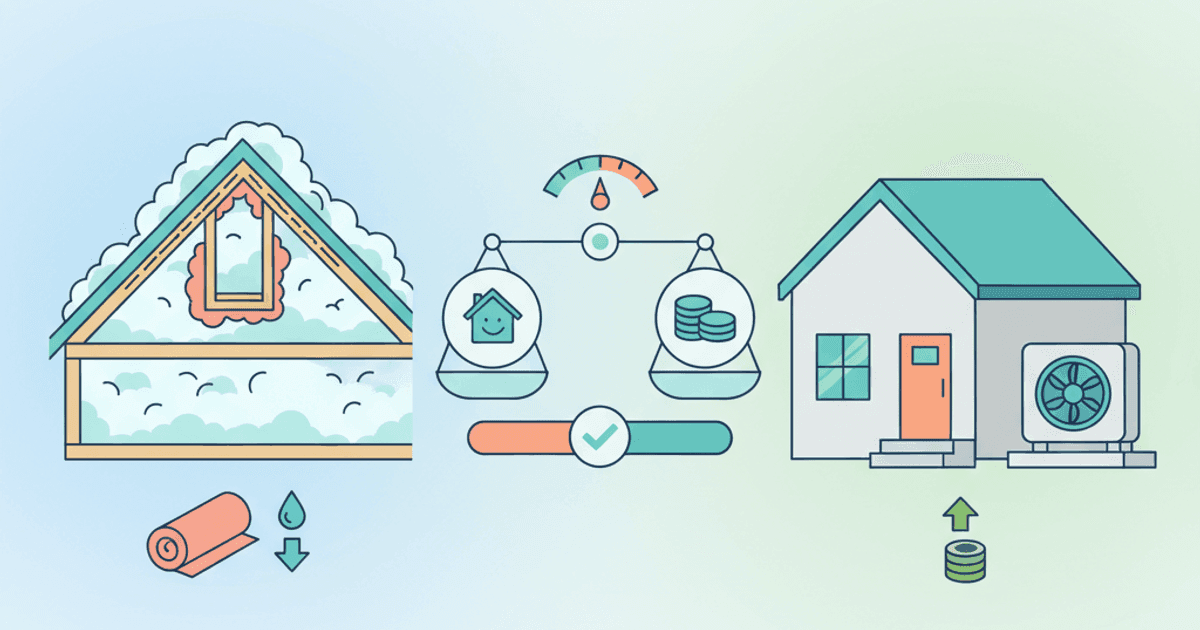
Compare attic insulation, air sealing, and a heat pump using your rates and comfort goals so you spend on what moves the needle.
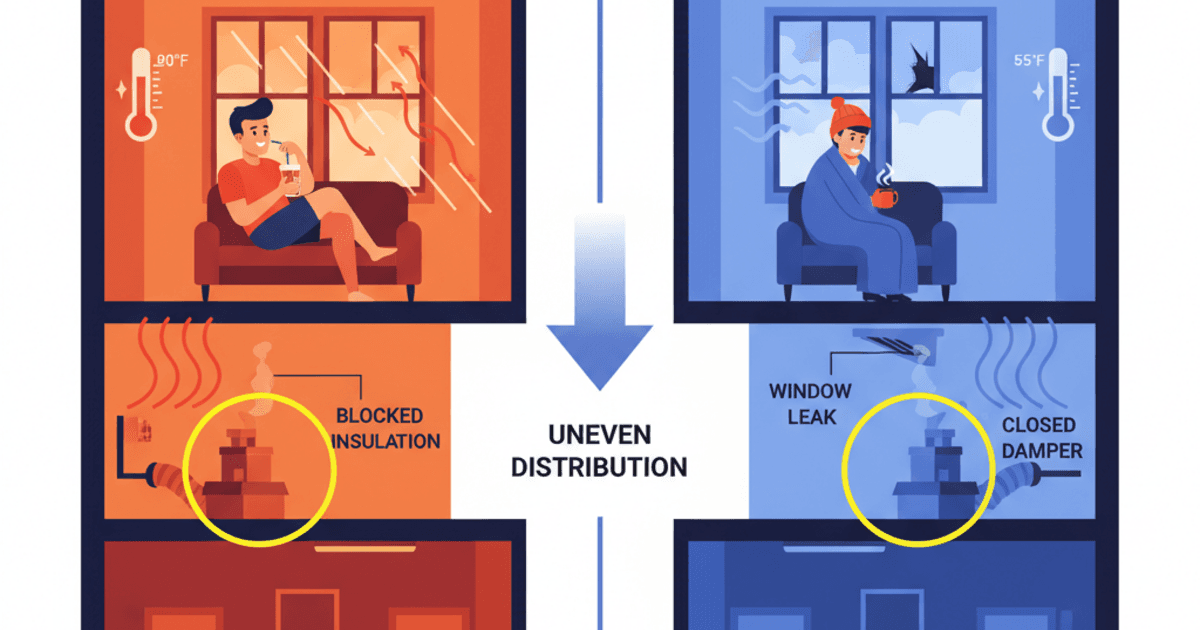
Weekend-level fixes to even out hot and cold rooms before spending on new HVAC or windows.
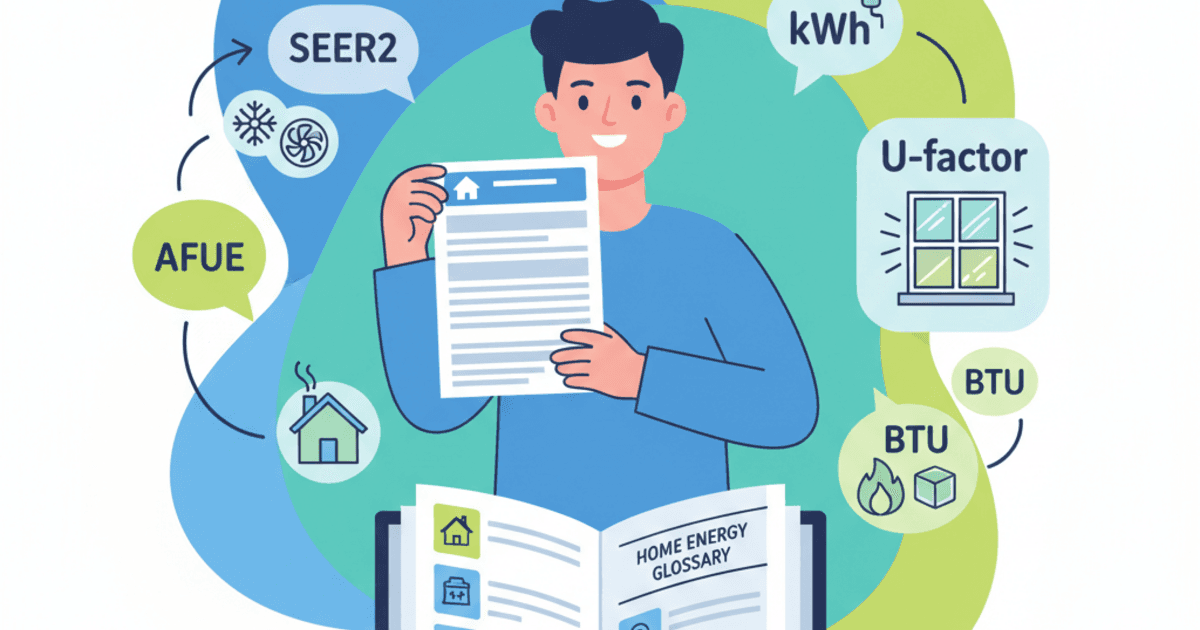
Plain-English guide to SEER2, HSPF2, AFUE, U-factor, SHGC, ACH50, kWh and other labels so you can compare quotes and plan upgrades.
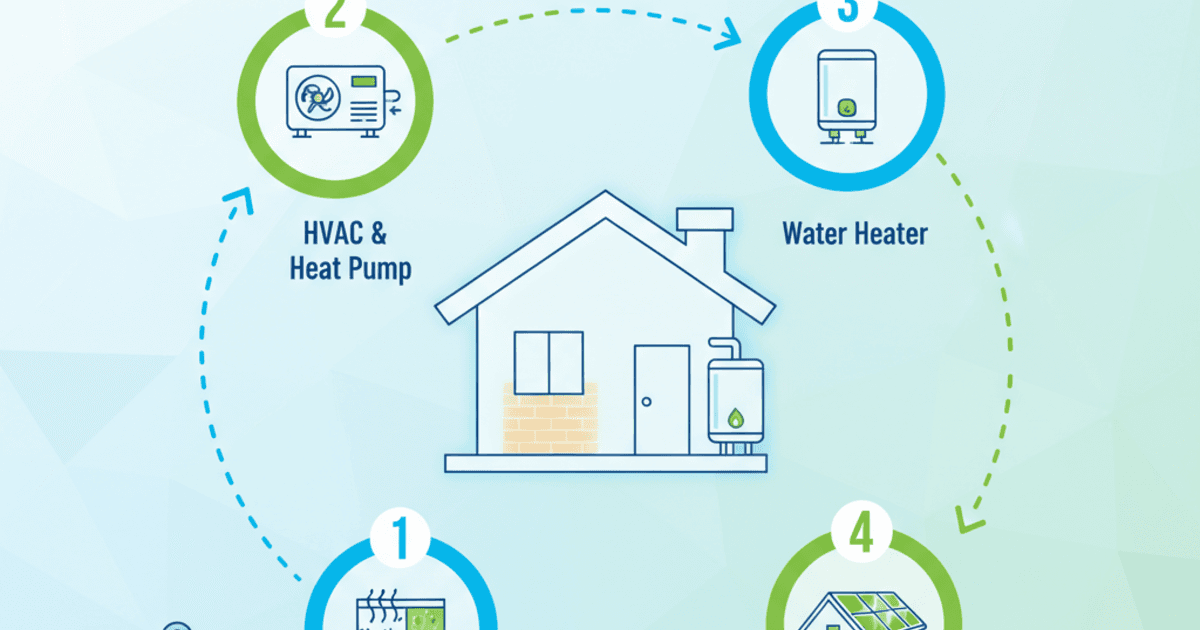
Step-by-step plan to prioritize weatherization, right-sized HVAC, water heating, and solar so you avoid expensive missteps.