Blog
Home energy terms in plain English (from SEER2 to U-factor)
Plain-English guide to SEER2, HSPF2, AFUE, U-factor, SHGC, ACH50, kWh and other labels so you can compare quotes and plan upgrades.
Shopping for a new heat pump, furnace, or windows can feel like walking through alphabet soup. SEER2, HSPF2, AFUE, U-factor, SHGC; every label asks you to care, but none of them explain themselves.
This guide translates the most common home energy terms into plain English so you can:
- Compare quotes without getting snowed by jargon.
- Spot when an "efficient" option is mostly marketing.
- Plug realistic numbers into your upgrade plan and calculators.
Keep your latest quote or product page nearby and match the labels as you read.
On this page
- Why these numbers matter before you sign anything
- Heating and cooling efficiency: SEER2, EER2, HSPF2, COP
- SEER and SEER2
- EER and EER2
- HSPF and HSPF2
- COP (coefficient of performance)
- Furnace and boiler efficiency: AFUE
- AFUE
- Insulation and window terms: R-value, U-factor, SHGC
- R-value
- U-factor
- SHGC (solar heat gain coefficient)
- Air leakage terms: ACH50 and blower door tests
- ACH50
- Energy units on your bills: kWh, BTU, therm
- kWh (kilowatt hour)
- BTU (British thermal unit)
- Therm
- Labels you will see on products
- NFRC window label
- Energy Star labels
- How to use these terms in your upgrade plan
Why these numbers matter before you sign anything
In a typical U.S. home, more than half of all energy use goes to space heating and cooling.
That means the systems that control temperature, and the shell that contains that temperature, dominate your long term energy costs. A higher efficiency rating on those systems:
- Lowers monthly bills over their whole life.
- Often lets you buy smaller equipment after insulation and air sealing.
- Has a bigger effect than squeezing out tiny savings from gadgets.
You do not need to memorize formulas. You only need to know what each label is trying to tell you and when a higher or lower number is good.
Heating and cooling efficiency: SEER2, EER2, HSPF2, COP
These are the terms you see on air conditioners and heat pumps.
SEER and SEER2
What it stands for
- SEER: Seasonal Energy Efficiency Ratio.
- SEER2: the updated version, using a newer test that better reflects real world duct conditions.
Plain English
SEER2 is like miles per gallon for cooling across a whole season. It measures how much cooling you get over the season divided by how much electricity the unit uses. Higher SEER2 means more cooling per kilowatt hour.
What good looks like
- Older units can sit around 10-13 SEER.
- Many newer systems land in the mid teens on a SEER2 scale.
- High efficiency systems reach the high teens or above.
How to use it
When you compare quotes:
- Make sure both contractors are using SEER2, not mixing old SEER and SEER2 numbers.
- If one system has lower SEER2 but much lower price, run the payback math instead of assuming the highest number wins.
EER and EER2
What it stands for
- EER: Energy Efficiency Ratio.
- EER2: updated version under the same newer test method.
Plain English
EER2 is like miles per gallon on a steep uphill climb. It measures efficiency at a single hot test condition. That tells you how the system behaves at peak heat, which matters in hot climates.
How to use it
If you live where summers are long and brutal, give EER2 more weight. Look for a system that does not sag in efficiency when the heat hits hardest.
HSPF and HSPF2
What it stands for
- HSPF: Heating Seasonal Performance Factor.
- HSPF2: updated version for the new standards.
Plain English
HSPF2 is the heating twin of SEER2 for heat pumps. It measures how much heating a heat pump delivers over a season compared with the electricity it uses. Higher HSPF2 means more heating per kilowatt hour in heating mode.
How to use it
If you plan to use a heat pump as a main heater, HSPF2 matters as much as SEER2. Do not pick a system based only on its cooling rating.
COP (coefficient of performance)
What it stands for
- COP: Coefficient of performance.
Plain English
COP is a snapshot of efficiency at a specific condition. A COP of 3 means you get three units of heat out for every unit of electrical energy in at that test point.
Heat pumps reach high COP values because they move heat instead of making it through burning fuel or resistance wires.
How to use it
- Use COP to compare systems in cold climate marketing material, where manufacturers might show performance at a low outdoor temperature.
- Focus on COP at temperatures that match your winter, not only at mild conditions.
Furnace and boiler efficiency: AFUE
AFUE
What it stands for
- AFUE: Annual Fuel Utilization Efficiency.
Plain English
AFUE tells you what percentage of the fuel your furnace or boiler turns into useful heat over a season.
- A 95 percent AFUE gas furnace turns about 95 percent of the gas energy into home heat and loses around 5 percent through vents and other losses.
- An 80 percent unit turns only 80 percent into heat and wastes the rest.
What good looks like
- Old equipment can sit in the 60s or low 70s.
- Mid efficiency gas units cluster around 80-83 percent.
- High efficiency condensing units land in the 90-98 percent range.
How to use it
Ask:
- "What is the AFUE rating on this system?"
- "How does that compare to my current unit?"
Then plug the difference into a heating cost calculator. A move from 80 percent to 95 percent AFUE can cut gas use for heating by roughly 15 percent for the same heat output; whether that pays off depends on gas prices and install cost.
Insulation and window terms: R-value, U-factor, SHGC
Now the shell. These terms show up on insulation, walls, and windows.
R-value
Plain English
R-value measures resistance to heat flow. Higher R means more resistance, so better insulation performance.
Common examples:
- Older attic insulation may be around R-13 to R-19.
- Many cold climate recommendations now aim for R-38 to R-60 in attics.
How to use it
- For insulation, higher R-value is usually better within reason.
- Compare the R-value you have with code or Energy Star guidance for your climate, then plan upgrades to close the gap.
U-factor
Plain English
U-factor measures how easily heat flows through a window or door assembly. It is the inverse of R-value. Lower U-factor means less heat loss and better insulation.
Guides from the U.S. Department of Energy and window rating bodies describe U-factor as the standard way to express window insulation; for windows, values often range from about 0.20 to 1.20, with lower numbers meaning better performance.
How to use it
On window labels:
- Look for the U-factor on the NFRC label.
- In cold climates, aim for lower U-factor numbers.
- In milder climates, you still want a reasonable U-factor, but solar gain and shading may matter more.
SHGC (solar heat gain coefficient)
Plain English
SHGC measures how much of the sun's heat passes through a window as a fraction between 0 and 1. Lower SHGC means less solar heat gets inside.
The same DOE window guides explain that lower SHGC reduces unwanted solar heat, which can help control cooling loads, especially in hot climates.
How to use it
- Hot, sunny climate; lean toward lower SHGC to keep heat out.
- Cold climate with strong sun; a bit higher SHGC on south facing windows can help with passive gain, as long as you manage summer shading.
Combine U-factor and SHGC when you select windows. U-factor for overall insulation, SHGC for solar heat.
Air leakage terms: ACH50 and blower door tests
Sealing leaks can give strong returns, but the language around tests can feel opaque.
ACH50
What it stands for
- ACH50: air changes per hour at 50 pascals of pressure.
Plain English
ACH50 tells you how leaky your house is under a standard pressure test. It answers, "If we pressurize the house to a fixed level, how many times per hour does the entire air volume leak out and get replaced?"
Lower ACH50 means a tighter house.
How to use it
During a blower door test, ask for a target range, not only the number.
- Older, untouched homes may test above 10 ACH50.
- Weatherized homes often land below that.
- Very efficient new homes aim much lower again.
Your goal is not to chase a magic number. Your goal is to move from "very leaky" toward "tighter but still healthy," then bring in balanced ventilation if you move into the tight range.
Energy units on your bills: kWh, BTU, therm
These numbers appear on every bill and on many labels.
kWh (kilowatt hour)
Plain English
A kilowatt hour is a unit of electrical energy. If you run a 1,000 watt (1 kilowatt) device for one hour, you use 1 kWh.
How to use it
Electric bills list total kWh. When you see a label saying an appliance uses 400 kWh per year, compare that to your annual total to judge impact.
BTU (British thermal unit)
Plain English
A BTU is a small unit of heat, the energy needed to raise one pound of water by 1 degree Fahrenheit.
Cooling and heating capacity are often given in BTU per hour. One "ton" of cooling equals 12,000 BTU per hour.
How to use it
- When a contractor says "a 3 ton system," that means 36,000 BTU per hour of cooling capacity.
- Match that capacity to a load calculation, not guesswork or rule of thumb.
Therm
Plain English
A therm is a unit of heat energy often used for natural gas billing. One therm equals 100,000 BTU.
How to use it
If a furnace burns 80 therms in a month, that is 8,000,000 BTU in, before you consider AFUE. Combine therm use with AFUE to estimate how much of that heat enters the house.
Labels you will see on products
When you stand in front of a window display or read an HVAC quote, you are really reading labels.
NFRC window label
On new windows you will often see a label from the National Fenestration Rating Council.
It normally includes:
- U-factor.
- SHGC.
- Visible transmittance (how much light passes through).
- Sometimes air leakage.
The DOE's window efficiency guide explains these are the standard metrics that let you compare products from different manufacturers.
For your plan:
- Use U-factor and SHGC to align windows with your climate and orientation.
- Do not pick windows on aesthetics alone if energy performance is one of your main goals.
Energy Star labels
Energy Star labels appear on HVAC, windows, appliances, and more. The program sets efficiency thresholds based on federal standards and regional climate zones.
Treat Energy Star as a minimum bar, not the finish line, when you plan major upgrades. You still need to weigh better performance against cost and your timeline.
How to use these terms in your upgrade plan
You do not need to become a code official. You only need to use these terms to support your goals.
Here is a simple way to do that.
- When comparing heat pump quotes, insist on seeing SEER2, HSPF2, and capacity at your design temperature. Then plug those into a heating and cooling cost calculator.
- When evaluating a furnace, focus on AFUE and whether the unit is sized for the house after planned insulation, not before.
- When shopping for windows, look at U-factor and SHGC on the NFRC label and match them to your climate and compass direction.
- After a blower door test, write down your ACH50 and ask the auditor which combination of air sealing and insulation would give the strongest return.
- When you use your bill breakdown tool, keep kWh, therms, and BTU in mind so the math behind savings claims feels concrete, not mysterious.
As you plan upgrades over the next few years, return to this glossary whenever a contractor, program, or label throws more letters at you. The more you treat these terms as plain tools, the easier it becomes to say "yes" to upgrades that serve your plan and "no" to ones that only serve the sales pitch.
Try the companion tool
This post links to an interactive tool built for this topic. Open it to see numbers tailored to your home.
Open the toolGet practical energy tips
Join homeowners getting practical tips on cutting energy bills and staying comfortable.
Practical tips only. Unsubscribe anytime.
Read this next
Related guides selected by topic overlap and upgrade path.

A practical playbook for spending $2k, $10k, or $25k on energy upgrades—based on your bills, comfort issues, and equipment age.
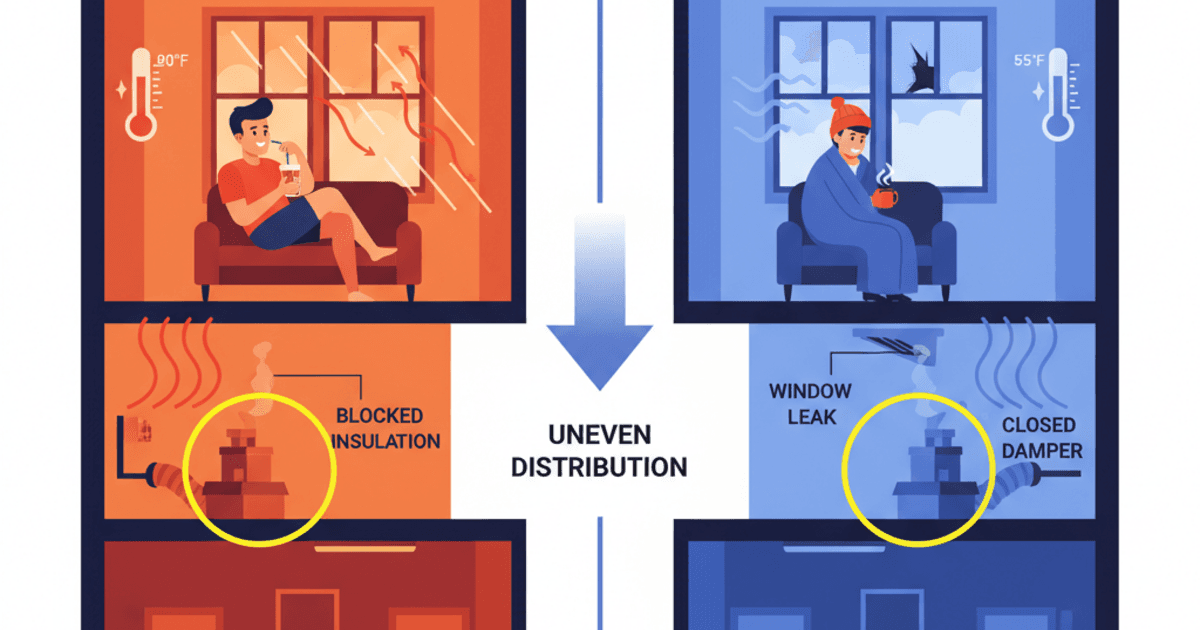
Weekend-level fixes to even out hot and cold rooms before spending on new HVAC or windows.
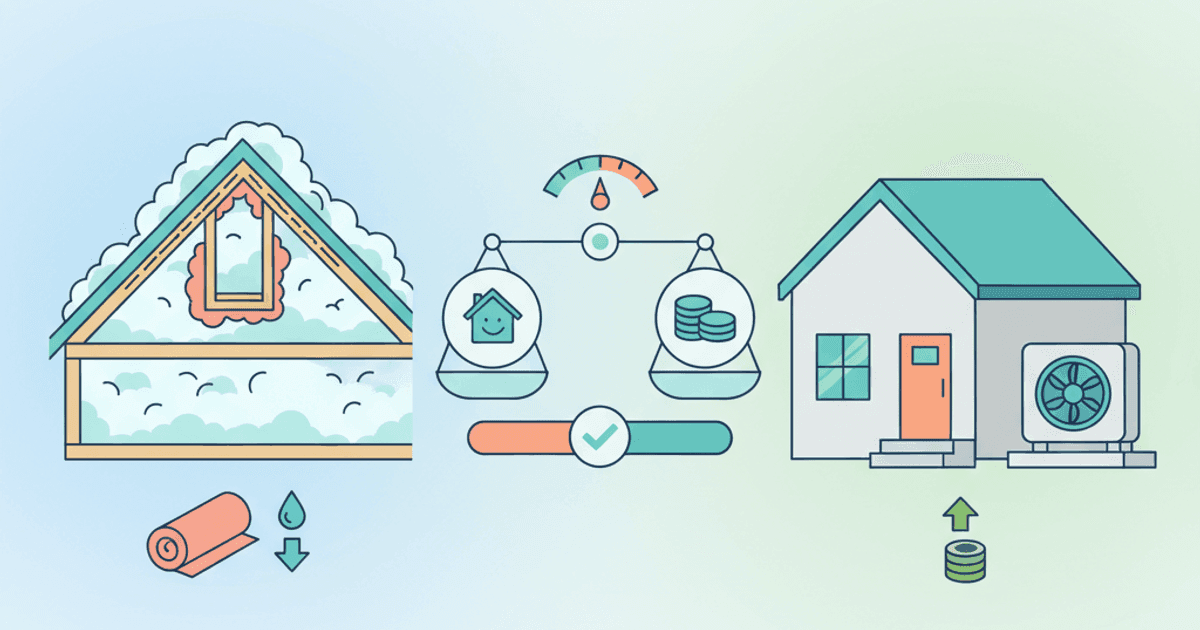
Compare attic insulation, air sealing, and a heat pump using your rates and comfort goals so you spend on what moves the needle.

Heat pump installation costs $6,000 to $18,000 in 2026, about $12,000 to $14,000 for a typical ducted home. See costs by size and type, and how to compare bids.