Blog
Insulation before a heat pump: how to decide with your own numbers
Compare attic insulation, air sealing, and a heat pump using your rates and comfort goals so you spend on what moves the needle.
If your house is drafty and your HVAC is aging, you will hear two strong opinions:
- "Tighten the house first."
- "Replace the equipment first."
Both can be right. The wrong move is spending five figures on a new heat pump while your attic leaks air like an open window.
This guide gives you a clear way to decide, using your bills and your timeline.
One-minute setup (do this first)
- Open the attic insulation calculator.
- Enter your climate, rates, and bills.
- Pick an air sealing/insulation scope and sanity-check the payback range.
Optional: open the Upgrade Timing Planner to stage envelope vs HVAC work into a practical now/next/later sequence.
On this page
- Quick answer: when insulation first is the right call
- The three levers that change your bills and comfort
- Why "tighten first" often wins
- 1) They lower the size of system you need
- 2) They improve comfort even if your HVAC never changes
- 3) They keep paying back regardless of future fuel prices
- The part nobody likes: you need a few numbers
- A simple comparison method that works in the real world
- Step 1: estimate your annual heating and cooling spend
- Step 2: estimate a realistic savings range for envelope work
- Step 3: translate that into dollars
- Step 4: compare payback windows
- When replacing HVAC first is still the smart move
- Emergency replacement: what to do in the real timeline
- Safety and reliability matter too
- How insulation changes heat pump comfort in cold weather
- How to use the Upgrade Timing Planner for this decision
- FAQ
- Should I do insulation before replacing my furnace?
- Will insulation reduce the size of heat pump I need?
- What if rebates make the heat pump cheaper right now?
- If I can only afford one project this year, which should it be?
- Next steps
Quick answer: when insulation first is the right call
Start with air sealing and insulation first when:
- Your attic is under-insulated or has obvious top-of-house leaks.
- You have big comfort issues (cold bedrooms, hot upstairs) and you are not in an emergency replacement.
- Your current heating and cooling still works reliably for one more season.
Replace HVAC first when:
- Your system is failing, unsafe, or one repair away from dying.
- Your equipment is so old and inefficient that the operating cost is the main problem.
- You need cooling you do not have today and a heat pump would replace multiple systems.
If you want a one-line rule:
If your equipment can wait, reduce demand first. If your equipment cannot wait, do the fastest envelope fixes you can and replace with sizing based on the tighter house you are building toward.
The three levers that change your bills and comfort
Almost every home energy plan is some mix of these three levers:
| Lever | What it changes | Common examples |
|---|---|---|
| Reduce demand | How much heat and cooling your house needs | Air sealing, attic insulation, rim joist work |
| Fix delivery | How well your system moves heat and air | Duct sealing, balancing, return fixes |
| Replace equipment | How efficiently you make heat and cooling | Heat pump, furnace, AC, water heater |
Insulation and air sealing live in the first lever. Heat pumps live in the third. Duct work often sits in the middle.
When contractors argue, they are usually arguing about which lever is your biggest bottleneck.
Why "tighten first" often wins
Here is what insulation and air sealing do that equipment cannot:
1) They lower the size of system you need
A tighter house has a lower heating and cooling load. That can mean:
- Smaller equipment
- Lower install cost
- Better comfort (less cycling, more even temps)
This is also why a good HVAC contractor should want envelope work done before final sizing.
2) They improve comfort even if your HVAC never changes
If your living room feels cold at 70 degrees, the problem is often:
- drafts,
- cold surfaces (attic or wall losses),
- uneven air delivery.
A new heat pump can raise supply air temperature and hide some symptoms, but it cannot stop the draft at the attic hatch.
3) They keep paying back regardless of future fuel prices
Insulation reduces energy use. It does not care whether gas or electricity is expensive next year.
Equipment savings are more rate-sensitive. A heat pump can be cheaper or more expensive than gas in winter depending on your local $/kWh, $/therm, and how your heat pump performs in cold weather.
If you want the full winter fuel math, Heat pump vs gas furnace in winter breaks it down.
The part nobody likes: you need a few numbers
You do not need perfect precision. You need a range that tells you what is likely to win.
Grab:
- Your current rates (cents per kWh, dollars per therm).
- A rough annual spend for heating and cooling.
- A rough quote for attic air sealing and insulation.
- A rough quote for the HVAC option you are considering.
If you do not know your heating and cooling spend, the Bill Breakdown Estimator can give you a starting split.
A simple comparison method that works in the real world
This is the method I use when someone says, "Should I insulate before I buy a heat pump?"
Step 1: estimate your annual heating and cooling spend
Use one of these:
- Add up your last 12 months of bills and estimate the heating and cooling slice.
- Or use the Bill Breakdown Estimator to get a first pass.
Example (illustrative):
- Total energy spend: $3,200 per year
- Estimated heating + cooling slice: 60 percent
- Heating + cooling spend: about $1,920 per year
Step 2: estimate a realistic savings range for envelope work
For attic air sealing plus insulation in a home that is under-insulated, a conservative planning range is often:
- 5 to 10 percent reduction in total home energy use, or
- 10 to 20 percent reduction in heating and cooling energy use.
If your house is already well-insulated, your range should be lower.
Step 3: translate that into dollars
Using the example $1,920/year heating + cooling spend:
- 10 percent savings: about $190/year
- 20 percent savings: about $380/year
Step 4: compare payback windows
Now compare the extra cost of each upgrade to the annual savings range.
Example:
- Attic air sealing + insulation quote: $3,500
- Annual savings estimate: $190 to $380
- Payback range: about 9 to 18 years
That is not a slam dunk, but it can still be a good move if comfort is a big priority, and if it reduces HVAC sizing and replacement cost.
Now do the same for the heat pump option:
- Heat pump incremental cost compared to the alternative: $6,000 (example)
- Annual operating savings: maybe $0 to $500 depending on rates and the baseline system
- Payback range: wide
The takeaway is not the exact number. The takeaway is which range is tighter and more believable for your home.
When replacing HVAC first is still the smart move
Sometimes you do not have the luxury of waiting.
Emergency replacement: what to do in the real timeline
If your furnace dies during a cold week, you can still make smart choices:
- Do the fastest air sealing work you can in one day (attic hatch, obvious penetrations).
- Do not let a contractor size a new system based on "what was there."
- Ask for a load calculation (Manual J) or at least a sizing justification.
- Choose equipment that fits the tighter house you are about to create, not only the leaky house you have today.
If you need a weekend plan for fast draft control, start with Air sealing weekend checklist.
Safety and reliability matter too
If your system is unsafe or unreliable, "perfect sequencing" is not the goal. A stable, safe house is the goal.
In that case, your plan can look like:
- Replace HVAC now with good sizing discipline.
- Lock in envelope upgrades in the next 6 to 18 months.
- Re-check operating costs once the house is tighter.
How insulation changes heat pump comfort in cold weather
Insulation and air sealing do not only save money. They change how heat feels.
In cold climates, comfort complaints about heat pumps often trace back to:
- high heat loss from the house, or
- poor air delivery, or
- both.
When the house loses heat quickly, the system has to run hard, and supply air temperature can feel "cooler" compared to a furnace even when the room temp is stable.
Tightening the house lowers the required heat output. That makes it easier for a heat pump to stay in its efficient operating range and maintain steady comfort.
If you want the deeper comfort story, Why some rooms are always cold or hot is the most useful next read.
How to use the Upgrade Timing Planner for this decision
The planner gives you a structured way to compare projects across a timeline.
- Open the Upgrade Timing Planner.
- Enter rates, climate, and equipment age.
- Mark comfort issues honestly.
- Look at the "now/next/later" output for:
- air sealing and insulation,
- duct sealing,
- heat pump timing.
- Use the output to build a quote plan:
- one envelope quote,
- one duct quote if needed,
- one HVAC quote.
If the tool says envelope work is "now" and HVAC is "next," your job is to see whether your HVAC can survive until "next." If it cannot, you compress the timeline and do the fastest envelope work first.
FAQ
Should I do insulation before replacing my furnace?
If your furnace is working and your attic is under-insulated, insulation first often improves comfort and can reduce the size and cost of the next system. If the furnace is failing, do a fast air sealing pass and replace with careful sizing.
Will insulation reduce the size of heat pump I need?
Often, yes. Less heat loss means lower design load. The only honest way to confirm is a load calculation that reflects the planned envelope improvements.
What if rebates make the heat pump cheaper right now?
Incentives can change the math, but do not let a short-term rebate push you into a long-term comfort problem. If the house is leaky, you will still be paying for that leakage after the rebate is gone.
If I can only afford one project this year, which should it be?
If you have serious drafts or an under-insulated attic and your HVAC is not failing, air sealing and attic insulation is often the strongest first project. If you are on borrowed time with equipment, plan the replacement and do the fastest envelope fixes you can first.
Next steps
- Open the Upgrade Timing Planner and see how it stages envelope work vs HVAC for your inputs.
- If you want a full sequencing framework, start with How to plan home energy upgrades without wasting money.
- If you want a single worksheet that ties goals, comfort, and budget together, build a draft in My Plan.
Try the companion tool
This post links to an interactive tool built for this topic. Open it to see numbers tailored to your home.
Open the toolGet practical energy tips
Join homeowners getting practical tips on cutting energy bills and staying comfortable.
Practical tips only. Unsubscribe anytime.
Read this next
Related guides selected by topic overlap and upgrade path.
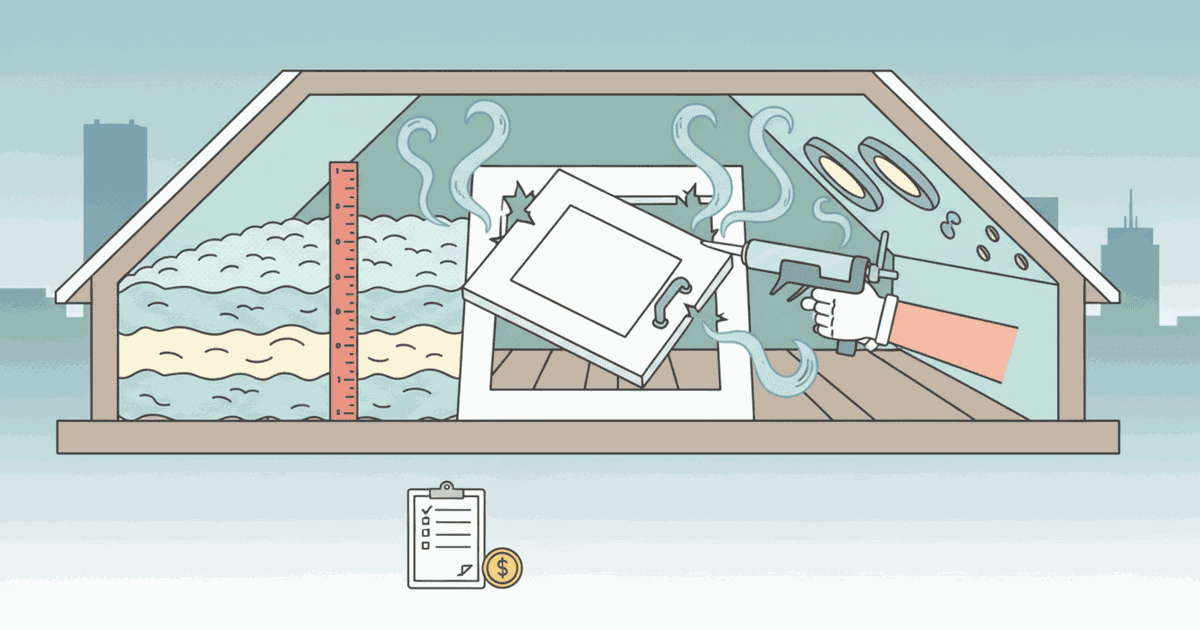
What attic air sealing and blown-in insulation cost in Boston in 2026, how to read a quote, plus Mass Save rebates and the 0% HEAT Loan. Sanity-check pricing before you sign.
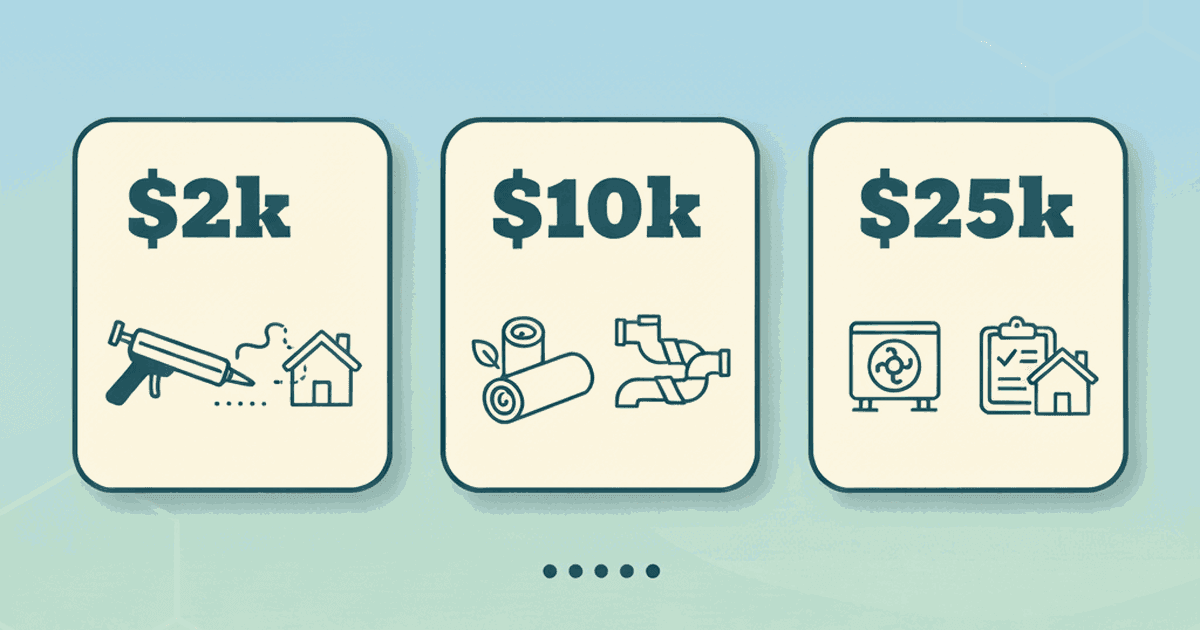
A practical playbook for spending $2k, $10k, or $25k on energy upgrades—based on your bills, comfort issues, and equipment age.
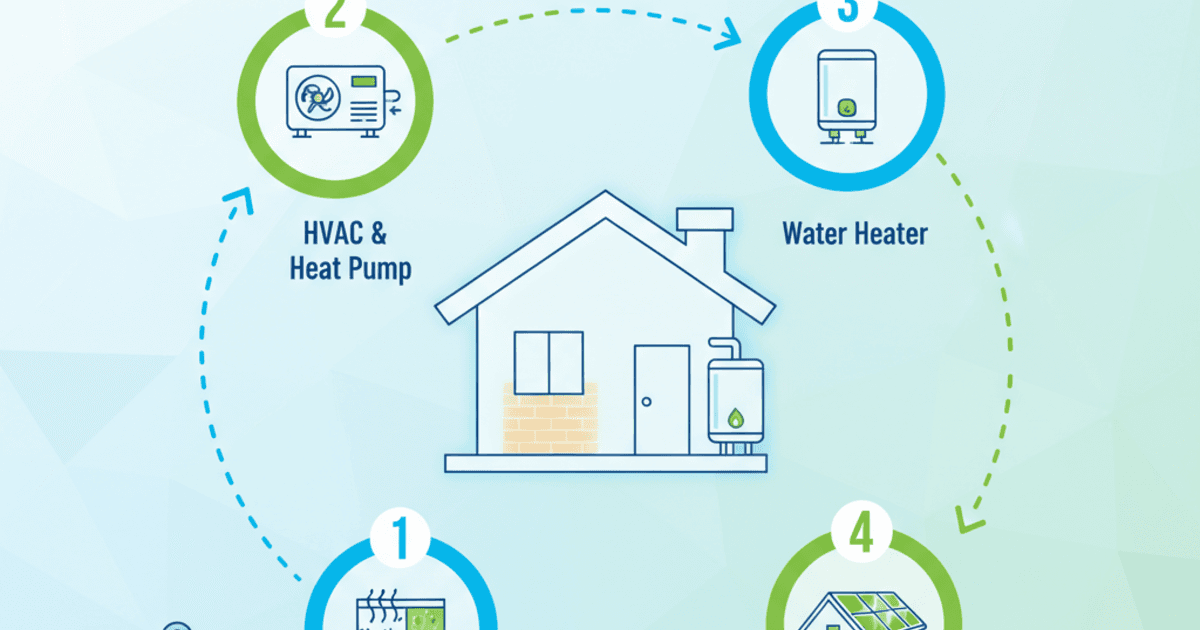
Step-by-step plan to prioritize weatherization, right-sized HVAC, water heating, and solar so you avoid expensive missteps.
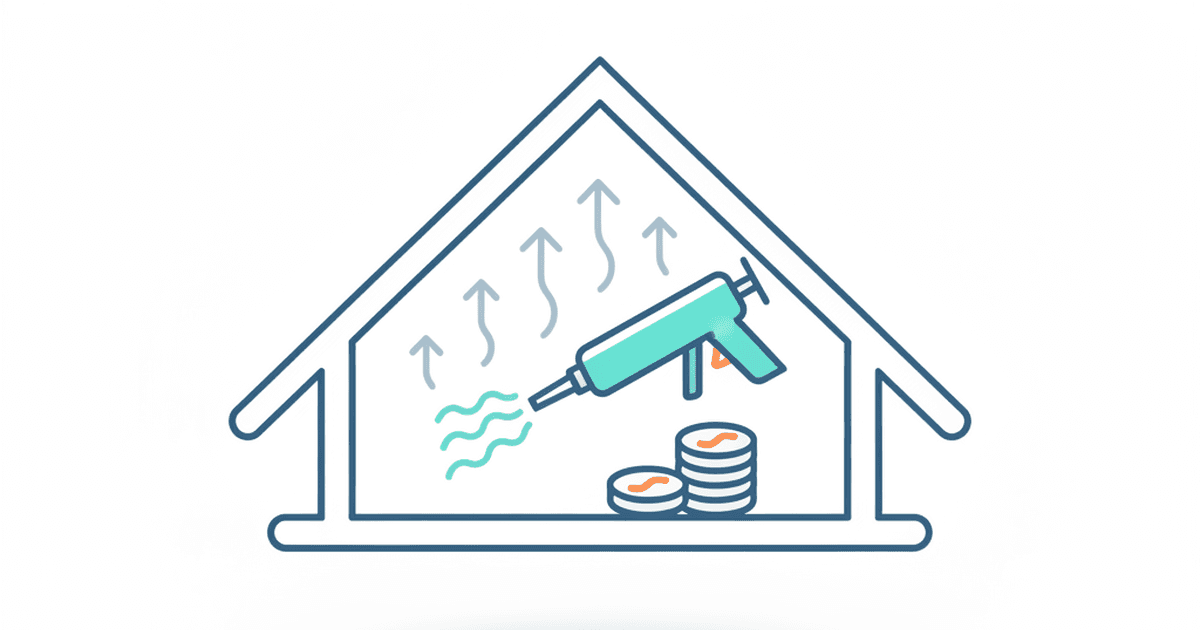
Attic air sealing cost in 2026: $350–$1,200 for a typical pro job, $50–$300 for DIY materials. What's included, why you seal before insulating, and how to compare quotes.