Blog
Air Duct Cleaning Cost in 2026: Real Prices and When to Skip It
Air duct cleaning costs $300 to $700 for a typical home (about $35 per vent). Honest 2026 guide: what gets upcharged, and why most homes do not need it.
Air duct cleaning cost gets murky the moment a $99 coupon lands beside a $700 quote. A complete cleaning for a typical single-family home usually runs $300 to $700, while current national cost data centers near $389. Two systems, difficult access, or more than 20 supply and return registers can push the bill beyond $1,000.
The EPA does not recommend routine duct cleaning. It points homeowners toward specific triggers such as substantial visible mold on hard duct surfaces, vermin, or enough debris to clog the system. If none of those conditions exists, keep the money and change the filter on schedule.
$300–$700
Typical home
National average near $400
~$35
Per vent
Common range $25 to $50
$0
Tax credit for cleaning
It is maintenance, not an upgrade
up to 20%
HVAC savings from duct sealing
The higher-ROI alternative (ENERGY STAR)
Before booking, separate an air-quality complaint from an energy complaint. Our Bill Breakdown tool helps trace high bills and uneven comfort to likely causes, which may be a dirty filter, return-side leakage, or missing air sealing. Five quiet minutes with the numbers can prevent an expensive guess.
On this page
- What air duct cleaning costs in 2026
- What gets upcharged (and what it costs)
- What drives the price
- The standards that should anchor a quote
- DIY vs hiring a pro
- When duct cleaning is NOT worth it (skip it)
- Cleaning, sealing, or replacing: which problem are you solving?
- Taxes, credits, and rebates (the honest 2026 picture)
- Red flags and common mistakes
- What to do next
What air duct cleaning costs in 2026
Companies bill by register, labor hour, or a flat system price. Put every bid on the same scope before comparing the totals.
| Pricing method | Typical 2026 range | Notes |
|---|---|---|
| Per vent (supply + return) | $25–$50 per vent | Count every register; a 3-bed home often has 10–15 vents |
| By ductwork length | $0.15–$0.30 per sq ft of duct | Used for long runs and large homes |
| Hourly labor | $90–$125 per hour | A full job runs 3–8 hours |
| Flat "whole home" rate | $300–$700 | What most reputable single-system jobs land at |
Current Angi data puts the average at $389, with most reported projects between $271 and $509. NADCA gives a broader $450 to $1,000 range for professional cleaning because its scope covers the complete HVAC system. So a one-system house with 10 to 15 registers may reasonably see bids from $300 to $700. The written scope explains more than the headline number.
Air duct cleaning cost by scenario (2026)
most homes
rarely the real total
The $99 trap
That $99 "whole-house" ad may cover a quick pass on the main trunk lines while excluding branches, registers, the blower, and the coil. Then come the add-ons. Ask for the final price and every included component before anyone unloads equipment. I would be wary of a sub-$150 offer unless the company can explain, in writing, how it covers several hours of labor.
What gets upcharged (and what it costs)
Add-ons can exceed the cleaning charge. Some solve a separate problem; others need evidence before they deserve a dollar.
| Add-on | Typical cost | Worth it? |
|---|---|---|
| Dryer vent cleaning | $100–$200 | Often yes (fire safety), separate from HVAC ducts |
| Sanitizing / antimicrobial fog | $50–$200 | Usually no, unless there is a documented mold or odor source |
| Mold remediation | $1,200–$3,800 (up to $10,000 severe) | Only with a confirmed lab test; fix the moisture first |
| Pest / rodent removal | $108–$665 | Yes if there is an active infestation in ducts |
| HVAC coil or blower cleaning | $100–$400 | Often the real fix when "ducts feel dirty" |
| Video inspection | $100–$200 | Useful before a big job; ask for the footage |
| Asbestos abatement (old duct wrap) | $5–$20 per sq ft | Required by law if present; never DIY |
A few of these deserve a closer look.
Dryer vent cleaning is a separate service. Lint packed in that vent is a genuine fire hazard, and the U.S. Fire Administration reports roughly 2,900 home clothes-dryer fires each year. A household doing a daily load, especially with a long vent run behind the laundry room, may need service more often than a two-person home with a short exterior run.
I get wary when sanitizing or "fogging" becomes the headline service. EPA guidance says chemical biocides should be considered only after proper cleaning, and their safety and effectiveness in residential ducts have not been fully established. Request the product label, EPA registration, and the reason it is being proposed.
Mold remediation is a different category of work and cost. Moderate cases run $1,200 to $3,800; severe contamination through the air handler can hit $10,000. The mistake homeowners make is paying a duct cleaner to "treat" mold without anyone fixing the moisture source that grew it. Spray without source control and it comes right back.
If a tech 'finds mold' mid-job
Pause the job. EPA guidance says a substance that looks like mold may need expert or laboratory confirmation, and the water source must be corrected or the growth can return. Ask for clear photos and get an independent assessment before approving a four-figure treatment from the same company that found the problem.
What drives the price
Most quote differences come from a short set of physical details.
Count registers and HVAC systems first. Under per-register pricing, a 2,400 sq ft home with 18 registers and two air handlers can cost about twice as much as a 1,200 sq ft house served by one system.
Duct material and type matters too. Rigid sheet-metal ducts are durable and clean up quickly. Flexible (flex) duct is fragile; aggressive brushing can tear the inner liner, so good crews slow down and charge a bit more. Fiberglass duct board can shed if scrubbed too hard. A competent tech adjusts method to material.
Accessibility changes the labor. Basement ducts with standing room are quick to reach. Attic and crawl-space runs in summer heat, or branches hidden behind finished ceilings, take longer because the crew must protect fragile connections before the vacuum starts. A quote for an accessible ranch should not be copied onto a tight two-story retrofit.
Contamination level adds time. Ducts that have never been cleaned in 20 years, or that sit downstream of a remodel, take longer and may need extra passes.
Region sets the floor through labor rates. Coastal and high-cost metros (San Antonio guides cite $700 to $2,000 for larger or neglected systems) run well above rural Midwest pricing for the same scope.
The standards that should anchor a quote
Reputable cleaners follow the NADCA (National Air Duct Cleaners Association) ACR Standard, which defines a complete cleaning as the supply ducts, return ducts, registers, grilles, the air handler, blower, coil, and drain pan, not just the parts you can see. NADCA's own homeowner guidance pegs a typical professional cleaning between $450 and $1,000 for the average system and several hours of work.
Ask whether the company follows the current NADCA ACR standard and whether a NADCA-certified person will be on the job. Then pin down the air handler and coil. Before scheduling, get the flat or per-register pricing method and the all-in total in writing.
DIY vs hiring a pro
You can do part of this yourself. Pull each register, vacuum it, and run a shop vac with an extension into the first 6 to 10 feet of duct. That handles visible surface dust for the cost of supplies. It will not match a pro.
A professional uses a truck-mounted or large portable negative-pressure vacuum that puts the whole duct system under suction, then runs rotary brushes and air whips to dislodge debris into the collection bag. A shop vac cannot create that pressure, so DIY mostly relocates dust rather than removing it. Worse, homeowners with flex duct routinely tear the liner with stiff brushes, turning a cleaning into a repair.
Surface dust at the registers is manageable with a vacuum and a correctly fitted filter. Visible contamination deeper in the system calls for a qualified professional.
When duct cleaning is NOT worth it (skip it)
Skip the cleaning when the evidence is thin.
- Your air quality is fine and you have no symptoms. The EPA and an NIH fact sheet both note that routine cleaning has no proven health or efficiency benefit, and post-cleaning contaminant levels are sometimes higher than before.
- Your home is newer or well maintained. If you change filters on schedule and get annual HVAC service, your tech would have flagged a duct problem already.
- Your real complaint is high bills or hot/cold rooms. That is an airflow, sealing, or balancing issue. Cleaning will not move the needle.
- A company is selling you a calendar, not a reason. "Every year" or "every 3 to 5 years" is a marketing rule, not an EPA one.
The better spend, most of the time
If comfort or energy bills are the actual problem, duct sealing beats duct cleaning on ROI. ENERGY STAR estimates that sealing and insulating ducts can improve HVAC efficiency by up to about 20 percent, because the average home leaks 20 to 30 percent of the air moving through its ducts. Cleaning removes what is in the duct today; sealing changes what your system wastes every month. See duct sealing payback and the complete duct sealing guide.
Cleaning, sealing, or replacing: which problem are you solving?
These three are not interchangeable, and confusing them is how people overspend.
| If your goal is… | The right job | Rough 2026 cost |
|---|---|---|
| Remove visible debris, mold, or pest mess | Cleaning | $300–$700 |
| Lower bills, fix weak airflow / drafty rooms | Duct sealing | $1,000–$3,000 |
| Replace crushed, leaky, or asbestos-wrapped ducts | Ductwork replacement | $3,000–$8,000+ |
If you are not sure which bucket you are in, price the bigger jobs before you commit. We keep current numbers in air duct replacement cost and ductwork replacement cost.
Taxes, credits, and rebates (the honest 2026 picture)
There is no federal tax credit for air duct cleaning. The service is routine maintenance.
The former 25C Energy Efficient Home Improvement Credit covered certain insulation, air sealing, and high-efficiency HVAC work through 2025. Federal law now disallows that credit for property placed in service after December 31, 2025. The 25D residential clean energy credit also ended for expenditures after that date. A duct cleaner who advertises a federal credit for cleaning should be asked to identify the exact IRS provision in writing.
Red flags and common mistakes
- A price with no scope. "Clean ducts, $X" tells you nothing. You cannot compare it to anything.
- The sub-$150 special. It is bait for upsells, full stop.
- On-the-spot "mold" or "vermin" findings with an immediate, expensive treatment and no third-party verification.
- Promises of lower energy bills or cured allergies. Neither is supported by the evidence.
- Fogging or UV lights as the main event rather than physical removal.
- No NADCA certification, license, or insurance, and no written total before work starts.
Teaser prices create room for selling once the crew is inside. A complete scope and a written total take away that leverage.
What to do next
- Run Bill Breakdown and write down the symptom you are trying to solve. Dust on a register, a musty smell, and a high winter bill point toward different work.
- For visible contamination or pests, get two or three quotes. Require the complete system scope and the final price before work begins.
- Chasing comfort or lower bills? Price sealing through the heating and cooling hub, then check the likely return in duct sealing payback.
Sources & further reading
- Should You Have the Air Ducts in Your Home Cleaned? — U.S. EPA
- Duct Sealing (energy savings from sealing and insulating ducts) — ENERGY STAR
- Cost and Time Estimates for Air Duct Cleaning — NADCA
- Home energy credit expirations — IRS
- Appliance and Electrical Fire Safety — U.S. Fire Administration
About this post: We compared current national cost reporting with EPA, ENERGY STAR, NADCA, IRS, and U.S. Fire Administration guidance. No cleaning company paid for placement. Prices are U.S. planning ranges; the written scope for your system controls the final quote.
Frequently asked questions
How much does air duct cleaning cost in 2026?+
A typical single-family home runs $300 to $700, with a national average near $400. Most companies price per vent at about $25 to $50 each, or charge $90 to $125 per hour for a three-to-eight-hour job. Larger homes, two HVAC systems, or hard-to-reach ducts push the total toward $1,000 or more.
Why do air duct cleaning quotes range from $99 to over $1,000?+
A $99 'whole-house special' usually covers only the main trunk lines and is a lead to upsell add-ons once the crew is inside. A complete NADCA-standard cleaning of every supply, return, register, and the air handler on an average home costs $400 to $700. The gap is almost always scope, not your home.
Does the EPA recommend cleaning air ducts regularly?+
No. The EPA does not recommend routine duct cleaning and says it should be done only on an as-needed basis, such as visible mold growth inside ducts, vermin or insect infestation, or debris heavy enough to clog registers. There is no proven link between routine cleaning and better health or lower energy bills.
How much does dryer vent cleaning cost, and is it the same as duct cleaning?+
Dryer vent cleaning is a separate service that runs about $100 to $200 on its own, often bundled at a discount during a duct visit. It is unrelated to your HVAC air ducts but is genuinely worth doing, because lint buildup is a fire hazard and the U.S. Fire Administration ties thousands of dryer fires a year to it.
How much does mold removal in air ducts cost?+
Mold remediation is a separate, much larger job: roughly $1,200 to $3,800 for moderate cases and $2,000 to $10,000 when it is severe or spread through the air handler. If a tech 'finds mold' mid-job, stop and get a third-party lab test before paying for fogging or antimicrobial sprays.
Will cleaning my air ducts lower my energy bill?+
Almost never by a measurable amount. The EPA found no evidence that routine cleaning improves HVAC efficiency unless ducts were clogged enough to choke airflow. Duct sealing can cut bills: sealing leaky ducts can reduce HVAC energy use by up to about 20 percent, per ENERGY STAR.
Is there a tax credit or rebate for air duct cleaning?+
No. Air duct cleaning is maintenance, so no federal tax credit applies. The 25C Energy Efficient Home Improvement Credit covered qualifying insulation, air sealing, and high-efficiency HVAC equipment through 2025, but it never covered duct cleaning and is unavailable for property placed in service after December 31, 2025.
How often should air ducts be cleaned?+
Only when there is a real trigger, not on a fixed schedule. Skip the 'every 3 to 5 years' marketing rule unless you have visible mold, pests, post-renovation debris, or water damage. Many well-maintained homes with good filters go decades without ever needing it.
Can I clean my air ducts myself?+
You can clean registers and vacuum the first 10 feet or so of each duct with a shop vac, which handles surface dust for the cost of supplies. You cannot replicate a pro's truck-mounted negative-pressure vacuum and rotary brushes, and aggressive DIY can tear flex duct or push debris deeper. For most homes, register cleaning plus a good filter is enough.
Try the companion tool
This post links to an interactive tool built for this topic. Open it to see numbers tailored to your home.
Open the toolGet practical energy tips
Join homeowners getting practical tips on cutting energy bills and staying comfortable.
Practical tips only. Unsubscribe anytime.
Read this next
Related guides selected by topic overlap and upgrade path.
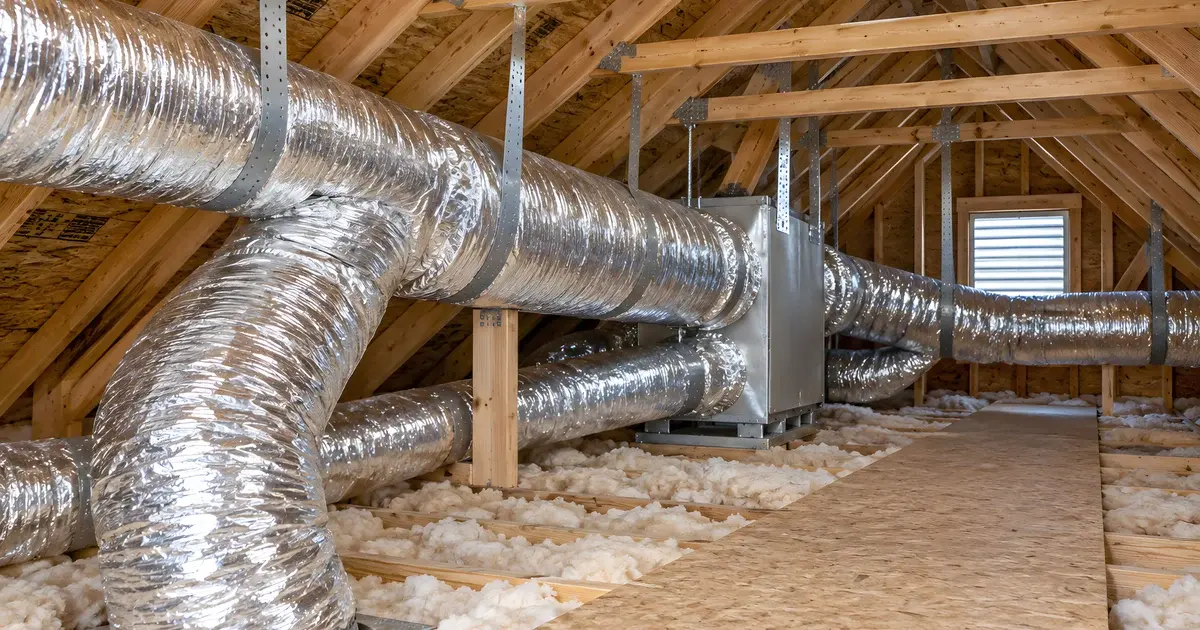
Replacing air ducts in an attic should start with damage, leakage, and airflow testing. Compare repair, sealing, materials, quote scope, and final verification.
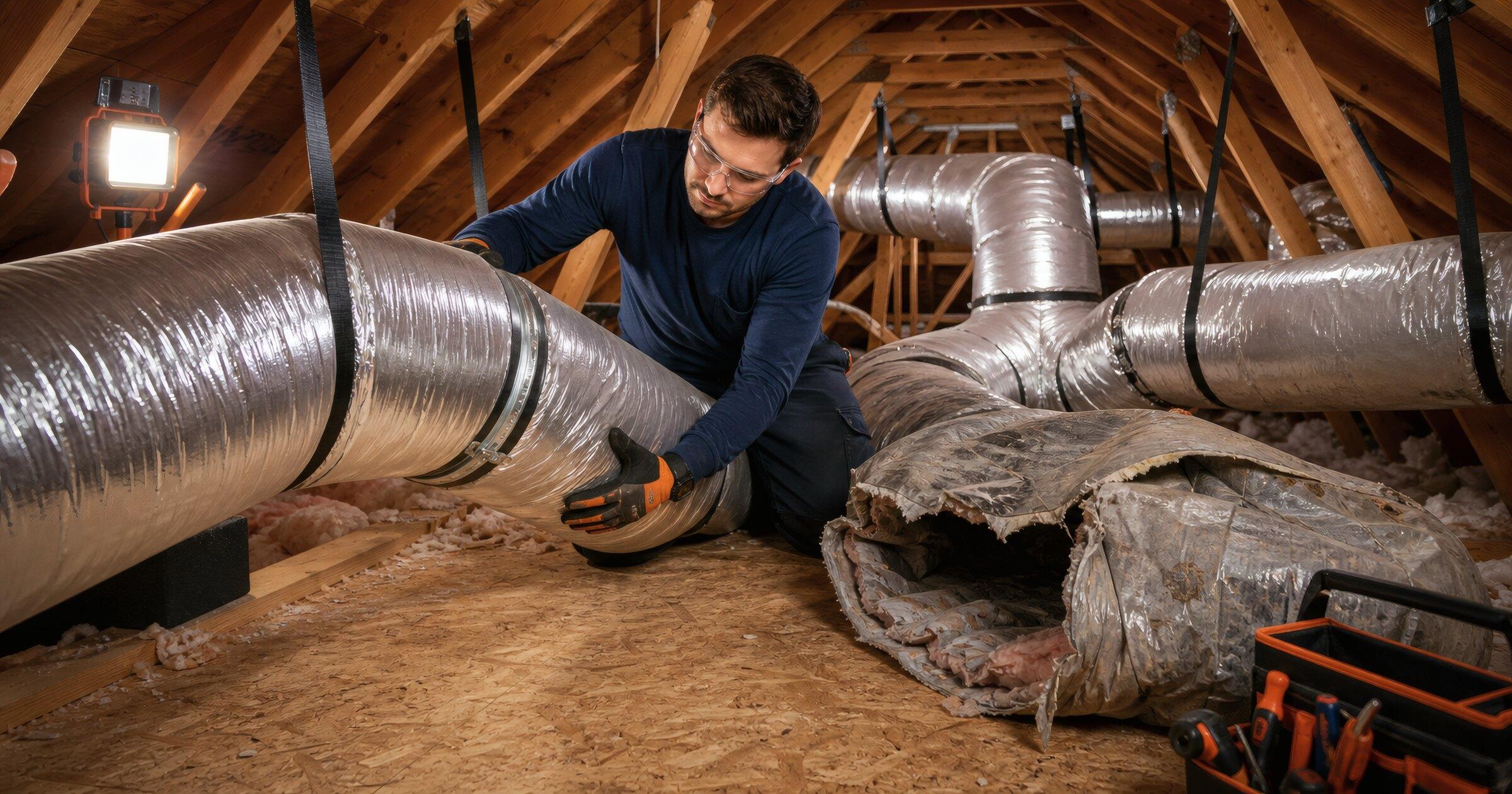
Ductwork replacement cost runs about $1,400–$7,000 for most homes. Estimate your HVAC ductwork price by home size, access, material, and project scope.
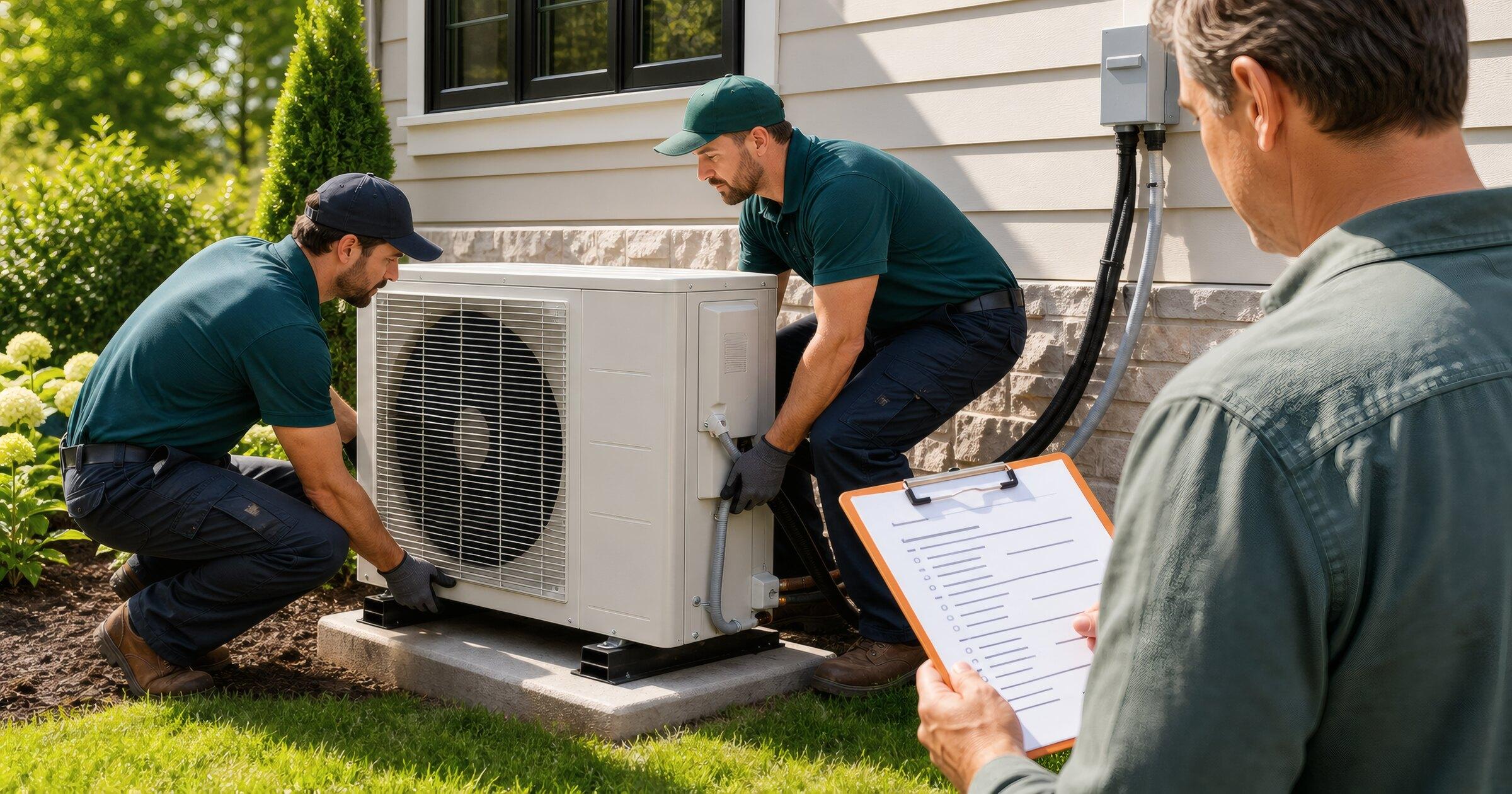
Heat pump cost to install runs $6,000–$18,000 in 2026, with a typical ducted home near $12,000–$14,000. Compare prices by size, type, and quote scope.
Mini split installation cost runs about $3,000–$6,000 for one zone and $8,000–$18,000+ for a whole-home system. Compare prices by zone count and BTU.