Attic insulation calculator
Six inches that barely reaches the joist tops can leave a large R-value gap. This attic insulation calculator estimates the depth to add, installed cost, annual savings, and simple payback from your attic size, climate, and current insulation.
Measure depth where the attic is ordinary
Check several spots away from the hatch, eaves, and obvious piles. Slide a ruler down to the attic floor without pressing the material. If joists are exposed in one half and buried in another, record both. The thinner zones deserve attention in the scope.
Identify the material before converting depth to R-value. Cellulose looks gray and fibrous, loose fiberglass is usually pink, yellow, or white, and mineral wool can appear granular. Dust and age muddy those clues, so old paperwork or a qualified inspection can settle the question.
Turn the R-value gap into an exact bag countA 1,200 sq ft mixed-climate example
Savings depend on the home's leakage, HVAC, climate, utility prices, and the quality of the installation. Use the result as a planning range rather than a promise.
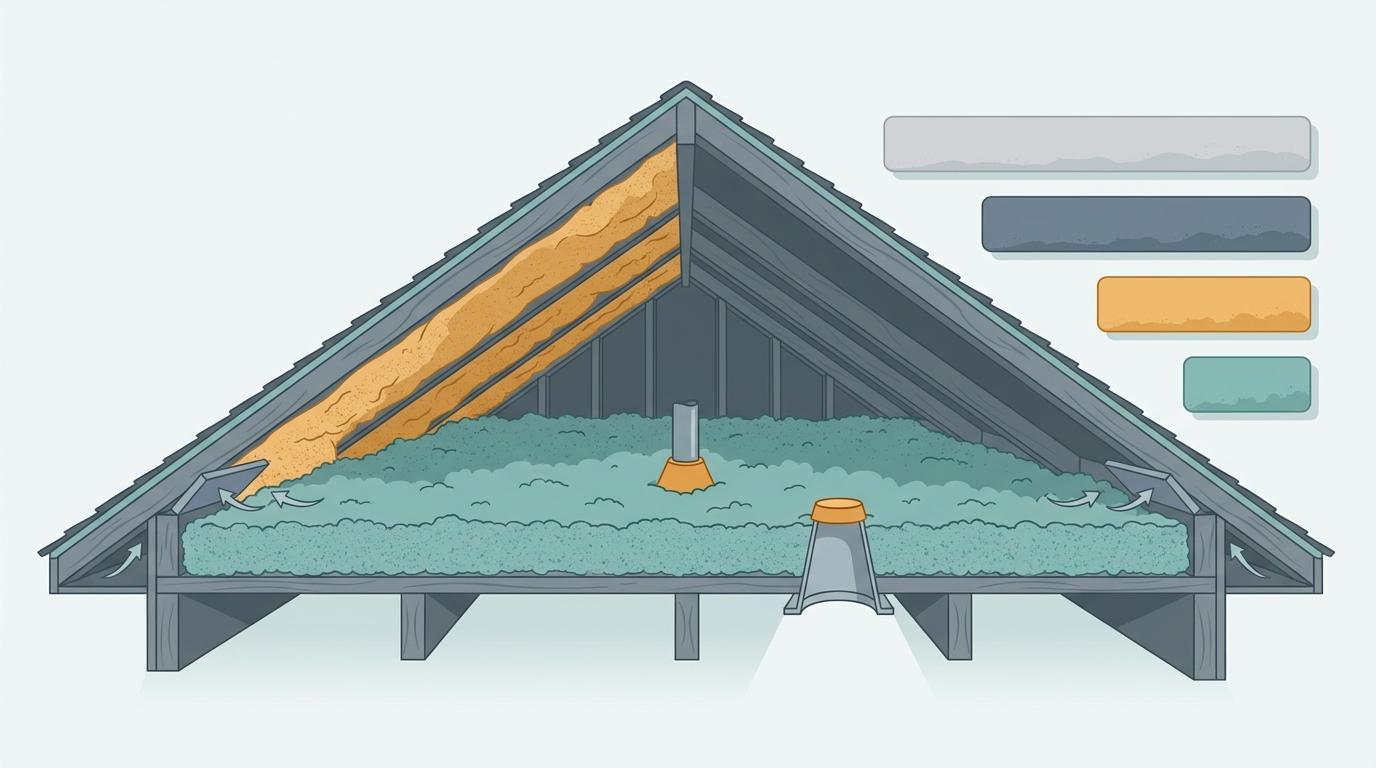
The insulation belongs after the repair work
Water first
Repair roof leaks and bath fans that dump damp air into the attic. Wet insulation performs poorly and can hide damaged sheathing.
Air leaks next
Seal accessible penetrations at the ceiling plane. Preserve safe clearances around flues, chimneys, and fixtures.
Then coverage
Install baffles and dams, mark depth, and spread material evenly. Verify both minimum depth and bag count.
An attic with a furnace, recessed lights, knob-and-tube wiring, vermiculite, active pests, or dark staining needs a closer look. A rushed top-up can bury a problem and make the next repair slower.
How the savings estimate behaves
The model starts with your annual heating and cooling spend. It applies a range based on ENERGY STAR methodology, then scales the result by the share of the target R-value being added. A small R-5 top-up cannot claim the savings of a bare attic brought to R-49.
Simple payback divides installed cost by annual savings. It leaves out utility-rate changes, financing, maintenance, comfort, and future HVAC sizing. Some worthwhile projects have a long bill-savings payback because they also correct drafts or uneven temperatures.
What to ask for in the quote
- Measured attic area. Include excluded platforms, kneewalls, and inaccessible sections.
- The current condition, exact product, target R-value, installed depth, and minimum package count.
- Preparation. Air-sealing locations, baffles, dams, hatch work, fire clearances, and ventilation repairs.
- Photos, cleanup, warranty, exclusions, and how wet or unsafe material will be handled if found.
Questions people ask before buying
How much insulation do I need in my attic?
ENERGY STAR planning targets for an uninsulated attic run from R-30 in climate zone 1 to R-49 in zones 2 and 3, and R-60 across zones 4 through 8. Existing insulation changes the recommendation. Enter what is there now so the calculator sizes only the gap.
How do I estimate the current attic R-value?
Identify the material, measure depth in several places without compressing it, and use the manufacturer or DOE depth guidance. Generic values are roughly R-3.2 to R-3.8 per inch for cellulose and R-2.2 to R-3.2 for loose fiberglass, but density and product vary. An energy audit gives a stronger starting point.
How many inches of attic insulation do I need?
Depth depends on both the R-value gap and the product. Adding R-30 is roughly 8.6 inches with the calculator's cellulose planning value, 12 inches with loose fiberglass, or 9.4 inches with fiberglass batts. The bag chart or package label controls the installed depth.
Should an attic be air sealed before adding insulation?
Yes, where leaks are accessible and safe to seal. Plumbing and wiring penetrations, partition tops, attic hatches, and some chases can move conditioned air into the attic. Seal them, correct unsafe heat clearances, and preserve needed ventilation before the new layer hides the work.
How much can attic insulation save?
ENERGY STAR estimates average heating and cooling savings near 15 percent from air sealing and adding insulation in attics and accessible basement rim joists, with results varying by climate and starting condition. This calculator scales its savings estimate by the R-value gap and your heating and cooling spend.
Can I add insulation over vermiculite?
Do not disturb it. EPA guidance says to assume vermiculite attic insulation may contain asbestos and leave it in place until a trained, accredited professional determines how work can proceed. Blowing material over it can disturb and conceal the condition.
Method, sources and limits
Climate bands map to R-30, R-49, or R-60 planning targets. Visual depth choices map to approximate current R-values, and the exact-current-R option overrides them. Added depth is the R-value gap divided by the selected material's planning R per inch.
Cost uses installed rates scaled by R-value added, with an optional attic air-sealing allowance. Savings use an ENERGY STAR-derived range scaled by the R-value gap and the heating and cooling spend you enter. Local code, exact product data, and field conditions remain controlling.
- Recommended home insulation R-values (ENERGY STAR)
- Methodology for estimated sealing and insulation savings (ENERGY STAR)
- Vermiculite attic insulation safety guidance (U.S. EPA)
- Air sealing existing attics (Building Science Education)