Blown-in insulation calculator
A thin attic can swallow more bags than the shelf estimate suggests. This blown-in insulation calculator uses area, the R-value gap, and a manufacturer coverage chart to size the purchase.
Read all three numbers on the coverage chart
Installed R-value, settled thickness, and bags per 1,000 square feet belong together. Buying from a generic square-foot claim can leave the attic light on material. Enter the exact coverage from your bag when the SKU differs from either preset.
1,000 sq ft, add R-30
34 bags
Greenfiber cellulose with 10% overage, about 9.2 inches.
1,000 sq ft, add R-30
17 bags
Knauf EcoFill fiberglass with 10% overage, about 10.4 inches.
1,200 sq ft, R-19 to R-49
41 bags
Cellulose reference with 10% overage. The calculator sizes R-30 to add.
Before the first bag goes into the hopper
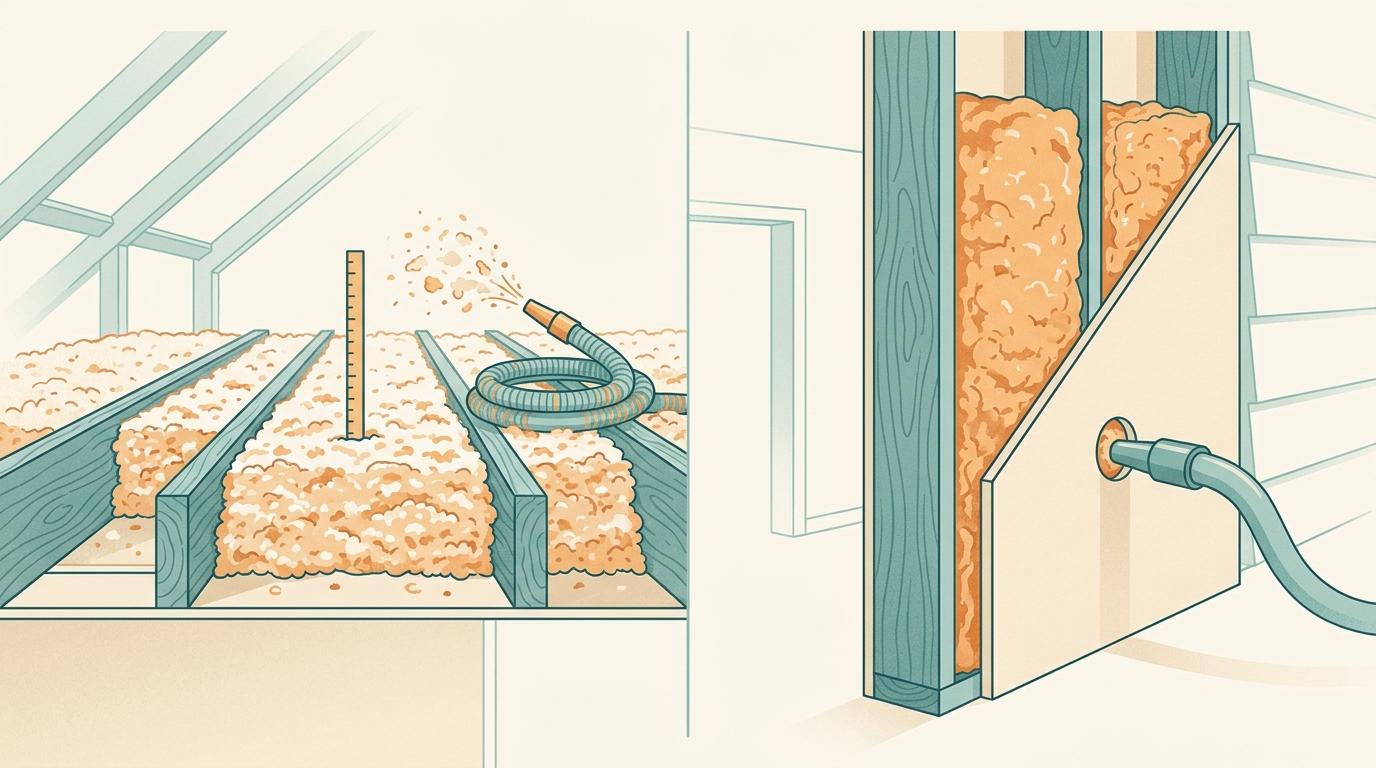
Find and seal ceiling penetrations while they remain visible. Bath fans should exhaust outdoors, soffit vents need baffles, and heat-producing fixtures need their required clearances. Mark final depth on rulers across the attic so low spots show up.
Keep a bag count. Empty wrappers are a plain, useful record for the homeowner and the installer. Photos of the air sealing and rulers before the attic hatch closes help too (especially near the far eave where nobody enjoys crawling twice).
When the estimate needs a professional review
- Vermiculite. Leave it undisturbed and follow EPA guidance.
- Knob-and-tube wiring, an active leak, mold-like growth, or scorched framing changes the job before insulation begins.
- Combustion and fire clearance. Flues, chimneys, recessed fixtures, and attic equipment need code-compliant protection.
- Dense-pack walls require product-specific density, setup, access holes, and verification. An open-attic chart cannot size that work.
Questions people ask before buying
How many bags of blown-in insulation do I need?
The count depends on area and the R-value being added. For 1,000 square feet, the Greenfiber reference chart uses about 31 30-pound bags at R-30 before overage, while the Knauf EcoFill reference chart uses about 16 bags at the same R-value. Bag weight, density, and coverage differ, so counts cannot be compared across products by bag alone.
How deep should blown-in insulation be?
Depth comes from the product chart. In the presets used here, Greenfiber cellulose is about 9.2 inches at R-30 and 18 inches at R-60. Knauf EcoFill fiberglass is about 10.4 inches at R-30 and 19.75 inches at R-60. Existing insulation and settling affect the final measured depth.
Should I calculate the full target R-value or only the amount to add?
Enter the current R-value and the intended total. The calculator sizes the gap. If the attic is near R-19 and the target is R-49, it uses the product coverage at roughly R-30 additional insulation rather than pricing a new R-49 layer over the whole attic.
Is cellulose or fiberglass better for an attic?
Both can perform well when installed to the labeled depth and minimum weight. Cellulose usually delivers more R-value per inch and uses more bag weight. Fiberglass is lighter and some products cover more area per bag. Moisture history, access, dust control, cost, and the installer or blower setup can decide the practical choice.
Why does minimum bag count matter?
Loose fill can look deep while being underweight or over-fluffed. The coverage chart ties R-value to both minimum thickness and minimum mass. A complete job should meet the stated depth and use at least the required number of bags for the measured area.
Can I blow new insulation over old insulation?
Often, after water leaks, unsafe clearances, damaged wiring, blocked ventilation, and air leaks are corrected. Do not disturb vermiculite. The EPA advises treating vermiculite attic insulation as potentially asbestos-contaminated and leaving it undisturbed until a qualified professional evaluates the work.
Method, sources and limits
The reference mode interpolates published coverage points for Greenfiber 30-pound cellulose and Knauf EcoFill fiberglass. Bags equal project area plus the selected overage divided by square-foot coverage per bag, rounded up. Weight is bag count multiplied by the published package weight.
Product labels remain controlling. Pricing is a planning range from our current insulation cost research and can move with access, prep, local labor, minimum job charges, and removal.
- Recommended home insulation R-values (ENERGY STAR)
- Vermiculite attic insulation safety guidance (U.S. EPA)
- Performance+ EcoFill blowing wool coverage table (Knauf Insulation)
- DIY loose-fill cellulose installation guide (Greenfiber)