Insulation cost calculator
One bundled quote can hide the price of removal, air sealing, and the insulation itself. This insulation cost calculator separates those lines, adds contingency, and compares a contractor total with a current planning range.
Start with the same scope on every bid
Price per square foot becomes useful only when area, material, installed R-value, prep, and cleanup match. Ask each bidder to identify the product and quantity. For loose fill, that means bags and final depth. Spray foam needs board feet, target thickness, and the protective coating or barrier where required.
1,000 sq ft cellulose
$1,500–$3,500
Installed insulation before removal, air sealing, and contingency.
1,000 sq ft mineral wool
$2,500–$4,500
Installed batt planning range for accessible framed areas.
500 sq ft closed-cell, R-21
$2,100–$5,008
About 1,615 board feet at current installed rates.
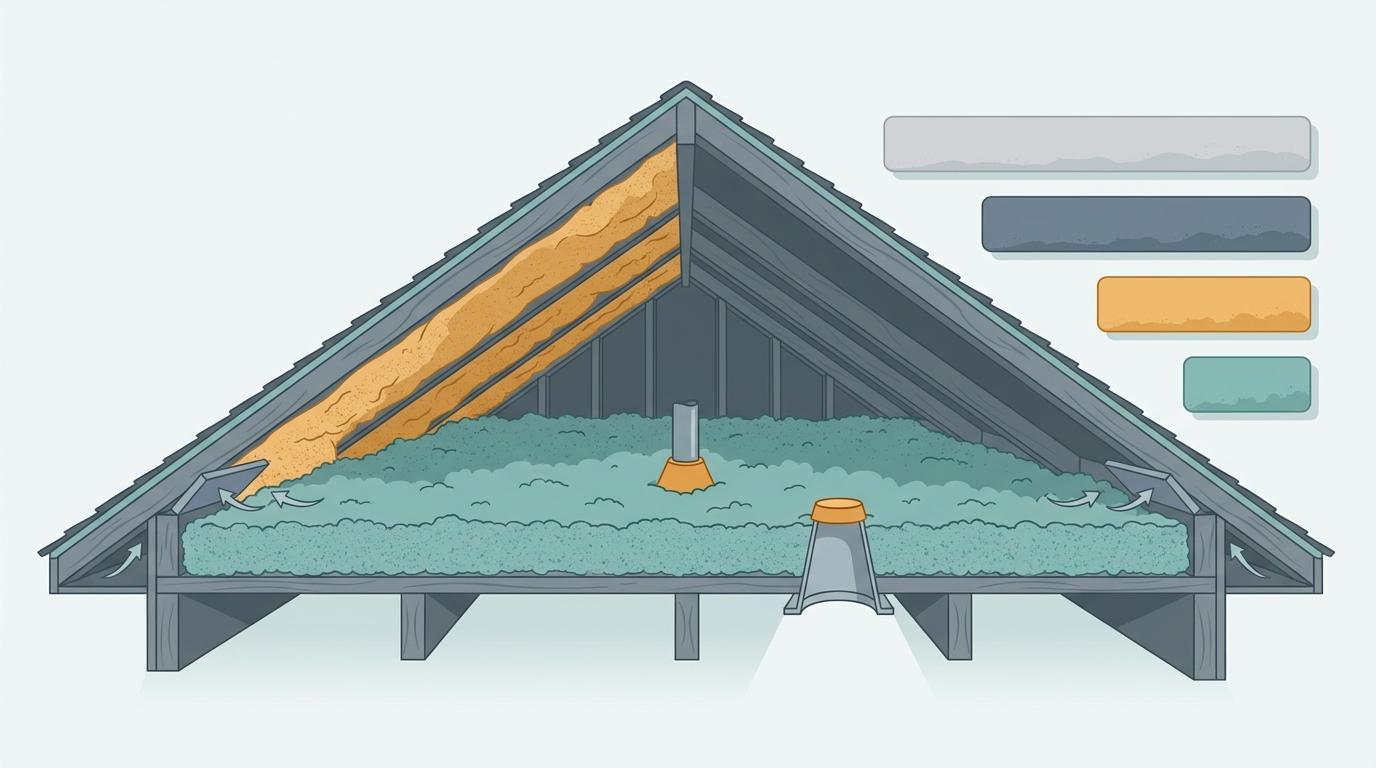
Material-only numbers need the missing costs beside them
A store receipt leaves out blower rental terms, delivery, respirators and disposable clothing, attic rulers, baffles, blocking, sealants, lights, and disposal. Foam kits add temperature control, masking, ventilation, and unused chemical handling.
Time belongs in the comparison too. A cramped attic with a low roof pitch can turn a neat Saturday estimate into several careful sessions. I think access is underpriced in most early budgets, even when the material math is sound.
Read a contractor quote line by line
- Measured area. Ask how it was measured and which surfaces are included.
- The exact product, target R-value, depth or thickness, and quantity installed.
- Prep and protection. Air sealing, ventilation, fire clearance, masking, occupant controls, and cleanup.
- Removal, hauling, exclusions, warranty, payment schedule, and what happens when hidden damage appears.
Costs the range deliberately leaves out
Structural repairs, mold remediation, asbestos work, major electrical correction, roofing, HVAC changes, permits, fire-rated assemblies, and extensive demolition need their own quotes. Vermiculite deserves a full stop. EPA guidance says to assume it may contain asbestos and leave it undisturbed until qualified help determines the next step.
Regional labor and access can outweigh the national rate. The local price selector shifts the baseline by 15 percent lower or 20 percent higher. It is a pressure test, not a verdict on a contractor's proposal.
Questions people ask before buying
How much does insulation cost per square foot?
Current national planning ranges used here run about $1.50 to $3.50 per square foot installed for cellulose, $1.50 to $2.50 for blown fiberglass, $1.50 to $3.50 for fiberglass batts, and $2.50 to $4.50 for mineral wool. Access, prep, depth, labor market, and minimum charges can move a real quote outside those bands.
How is spray foam cost calculated?
Spray foam is commonly priced by board foot, which is one square foot at one inch thick. The calculator converts target R-value into thickness using R-3.6 per inch for open-cell or R-6.5 for closed-cell, then applies the current installed board-foot range.
How much does old insulation removal add?
The calculator uses $1.50 to $3.00 per square foot as a planning range for removal and disposal. Contamination, pests, difficult access, deep material, air sealing beneath the old layer, and hazardous materials can push the scope higher.
Should air sealing be included in an attic quote?
It should be addressed before new loose fill hides the attic-floor penetrations. Some proposals include a detailed air-sealing scope; others carry a vague line item or omit it. The calculator adds a $350 to $1,500 typical attic allowance, but a complex house can cost more.
Why is my quote above the calculator range?
Check access, removal, baffles, damming, hatch work, ventilation, fire clearances, electrical repairs, protective coatings, cleanup, travel, and warranty. A high total can be fair when the written scope is broader. Compare line items and installed quantity before deciding.
Why is my quote below the range?
It may reflect an efficient local crew or a simple job. It can also leave out required depth, minimum bag count, prep, air sealing, disposal, permits, or protection. Ask for the product, coverage area, installed R-value, thickness, quantity, and exclusions in writing.
Method, sources and limits
Non-foam materials use current material-only or installed square-foot ranges. Foam converts target R-value to thickness and board feet first. Local price factors, selected add-ons, and contingency apply visibly as separate line items.
Cost inputs were reviewed in August 2026. National ranges age quickly and cannot capture job minimums, exact product pricing, contractor overhead, or unusual access. Enter the written quote to compare it, then investigate the scope behind any gap.
- Methodology for estimated sealing and insulation savings (ENERGY STAR)
- Vermiculite attic insulation safety guidance (U.S. EPA)
- Current spray foam cost ranges (Angi)
- Insulation and air-sealing project guidance (ENERGY STAR)