Insulation calculator
Put the surface dimensions and exact package coverage into this insulation calculator. It returns net area, packages to buy, a material budget, and a climate-based R-value planning target.
Measure the surface the insulation touches
Attic insulation covers the attic floor when the ceiling below is the thermal boundary. Roofline insulation follows the sloped roof deck, which can be a much larger area. That quiet distinction can change a purchase by several packages.
Walls need the combined length of the walls in scope. Multiply by wall height, then subtract doors and windows. For an irregular attic, split the floor into rectangles and add them before entering one total.
Read the insulation upgrade guideThree takeoff examples
Package counts use the label coverage shown here and already round up.
| Project | Net area | Allowance | Label coverage | Buy |
|---|---|---|---|---|
| Attic floor | 1,000 sq ft | 10% | 40 sq ft/bag | 28 bags |
| Exterior walls | 278 sq ft | 10% | 40 sq ft/pkg | 8 packages |
| Crawlspace floor | 720 sq ft | 15% | 48 sq ft/pkg | 18 packages |
Use the package label as the final input
Batts, rolls and boards
Match the R-value, thickness, width, length, and piece count. A package of 23-inch batts can have different coverage from the 15-inch version sitting beside it. Keep scraps only when they fill a full cavity without compression or gaps.
Loose fill and spray foam
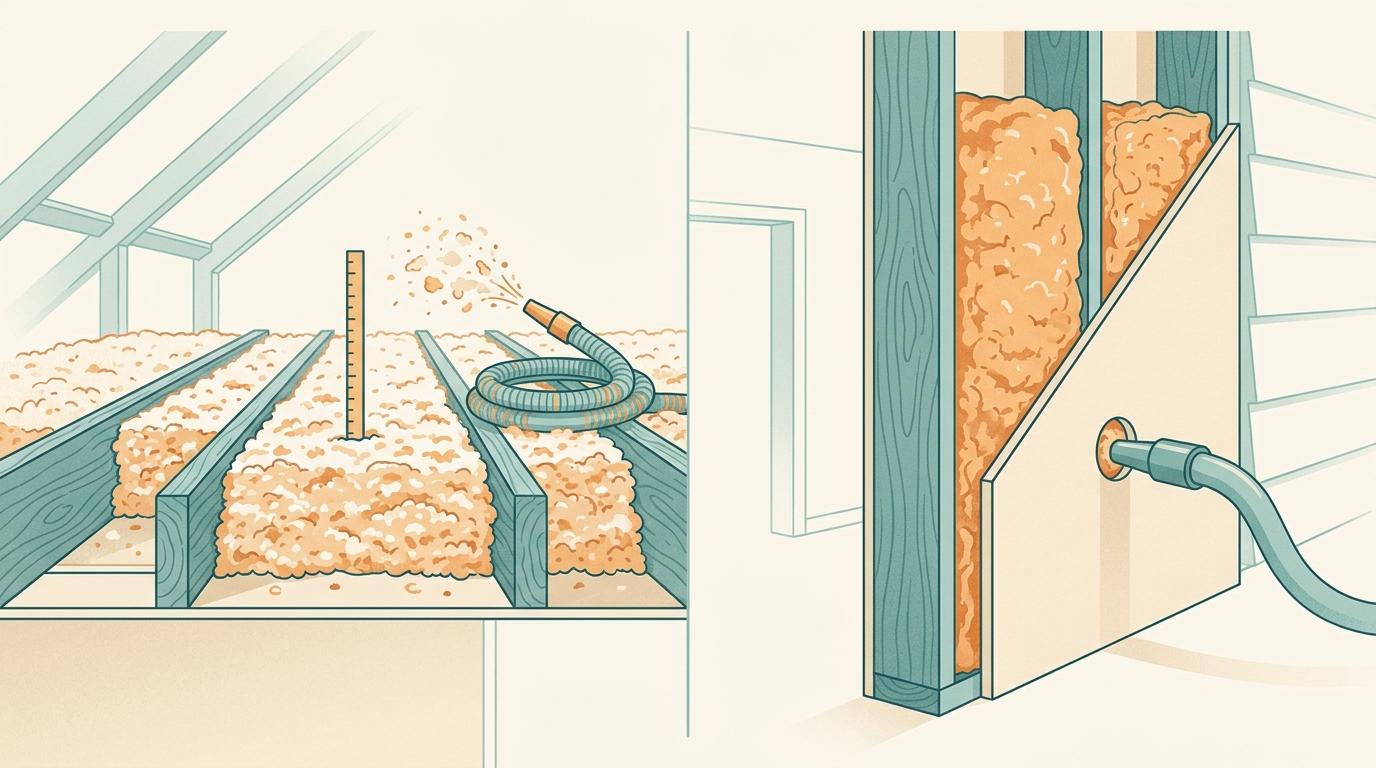
Loose-fill charts pair every R-value with a depth and bags per 1,000 square feet. Foam kit yield is measured in board feet under rated conditions. Field yield can shrink when tanks, substrate, or air temperatures miss the product window.
Pause when you find vermiculite, wet insulation, heat-damaged wiring, an unguarded recessed light, or material packed against a hot flue. Quantity math can wait while the hazard is identified.
Questions people ask before buying
How do I calculate how much insulation I need?
Multiply length by width for each surface, subtract large openings, and add a cutting or yield allowance. Divide that purchase area by the coverage printed on the exact package for your chosen R-value. Round packages up because partial packages cannot cover a final bay or low spot reliably.
How much waste should I add for insulation?
Ten percent is a sensible planning allowance for a simple batt or board layout. Complicated framing, many small cuts, blown-in machine yield, or irregular cavities can justify 15 percent. A wide open rectangular attic may need less when the product coverage chart already builds in installation density.
Should I use square feet or board feet?
Batts, rolls, boards, and blown-in bags usually publish square-foot coverage at a stated R-value. Spray foam uses board feet, where one board foot covers one square foot at one inch thick. Use the spray foam calculator when thickness matters.
Does package coverage change with R-value?
Yes, especially for loose-fill insulation. A bag covers fewer square feet at R-49 than it does at R-19. Batt package coverage also changes with product width, length, thickness, and piece count. Copy the coverage for the exact SKU into the calculator.
Does this calculator replace local energy code?
No. Its climate targets are planning values. Your adopted code, assembly design, product evaluation report, and manufacturer instructions control the project. Existing homes can also have moisture, ventilation, fire-clearance, and combustion-safety conditions that change the scope.
Is air sealing included?
The quantity takeoff covers insulation only. Seal accessible attic-floor penetrations and repair water entry before burying them. The cost calculator can add an air-sealing allowance, while the attic calculator estimates the combined savings and payback.
Method, sources and limits
Net area equals gross area minus openings. Purchase area adds the selected allowance, and packages equal purchase area divided by the label coverage, rounded up. R-value targets are planning defaults drawn from ENERGY STAR guidance; adopted local code and the complete assembly govern the work.
Prices are whatever you enter. Inputs stay in local browser storage so a return visit can restore them; the calculation does not send a project record to our server.
- Recommended home insulation R-values (ENERGY STAR)
- Insulation guidance for existing homes (U.S. Department of Energy)
- Air sealing existing attics (Building Science Education)