Blog
Attic Insulation Cost in 2026: Price by Material, Size, and R-Value
Attic insulation costs about $1,500 to $3,500 for a typical home, or $1.50 to $4 per sq ft. Compare 2026 prices by material, size, R-value, and scope.
Attic insulation cost can double before a new bag is opened. A clean blown-in top-off may stay near $1,500, while a typical prepared job runs $1,500 to $3,500, or roughly $1.50 to $4 per square foot. Removal, air sealing, difficult access, and roofline spray foam move the price higher.
The bag price is only one part of the bid. Current R-value sets the material quantity, air leaks determine prep time, and damaged insulation may have to leave before new material goes in. Those details belong in writing.
Use the attic insulation calculator with your square footage, current depth, target R-value, and utility costs. It gives you a planning range for cost and payback. Then compare that range with the contractor's measured scope.
$1,500–$3,500
Typical installed cost
Blown-in, average attic, full 2026 price
$1.50–$4.00
Per sq ft installed
Blown cellulose or fiberglass to R-49
$300–$1,500
Air sealing add-on
Highest-value line item in the quote
$0
25C credit (2026)
Federal 25C ended Dec 31, 2025
On this page
- Attic insulation cost per square foot, by material
- Total attic insulation cost by attic size
- What drives the price (the real cost factors)
- 1. How much R-value you are adding
- 2. Air sealing complexity
- 3. Existing insulation: top-off, or remove first
- 4. Access and attic shape
- 5. Region and climate
- DIY vs hiring a pro
- The 25C federal tax credit ended after 2025
- When attic insulation is NOT worth the cost
- Red flags and common mistakes
- Quote checklist
- Related planning guides
- What to do next
Attic insulation cost per square foot, by material
Most quotes begin with attic-floor area and then add preparation. The table separates material price from installed price. Regional labor, target R-value, and attic shape still move the total.
| Material | R-value per inch | Material only ($/sq ft) | Installed ($/sq ft) | Best for |
|---|---|---|---|---|
| Blown fiberglass | 2.5–3.5 | $0.50–$1.10 | $1.50–$2.50 | Most attic floors, top-offs |
| Blown cellulose | 3.2–3.8 | $0.60–$2.30 | $1.50–$3.00 | Most attic floors, better air-flow resistance |
| Fiberglass batts | 2.9–3.8 | $0.40–$1.50 | $1.50–$3.50 | DIY, open joist bays, small areas |
| Mineral wool batts | 3.0–3.7 | $1.40–$2.10 | $2.50–$4.50 | Fire/sound priorities, knee walls |
| Open-cell spray foam | 3.5–3.8 | n/a | $3.00–$5.00 | Roofline / unvented attics |
| Closed-cell spray foam | 6.0–7.0 | n/a | $5.00–$8.00 | Roofline, moisture-prone, tight space |
A square-foot number leaves out some costly details.
- Blown-in is sold by coverage, and depth alone does not tell the whole story. Reaching R-49 takes roughly 14 to 18 inches of blown fiberglass or cellulose. Bag charts on the package list how many bags per 1,000 sq ft hit each R-value, which is how installers price material.
- Batts look cheap but install slow. The material is inexpensive, but cutting around every joist, wire, and pipe eats labor. Gaps and compression quietly cost you R-value.
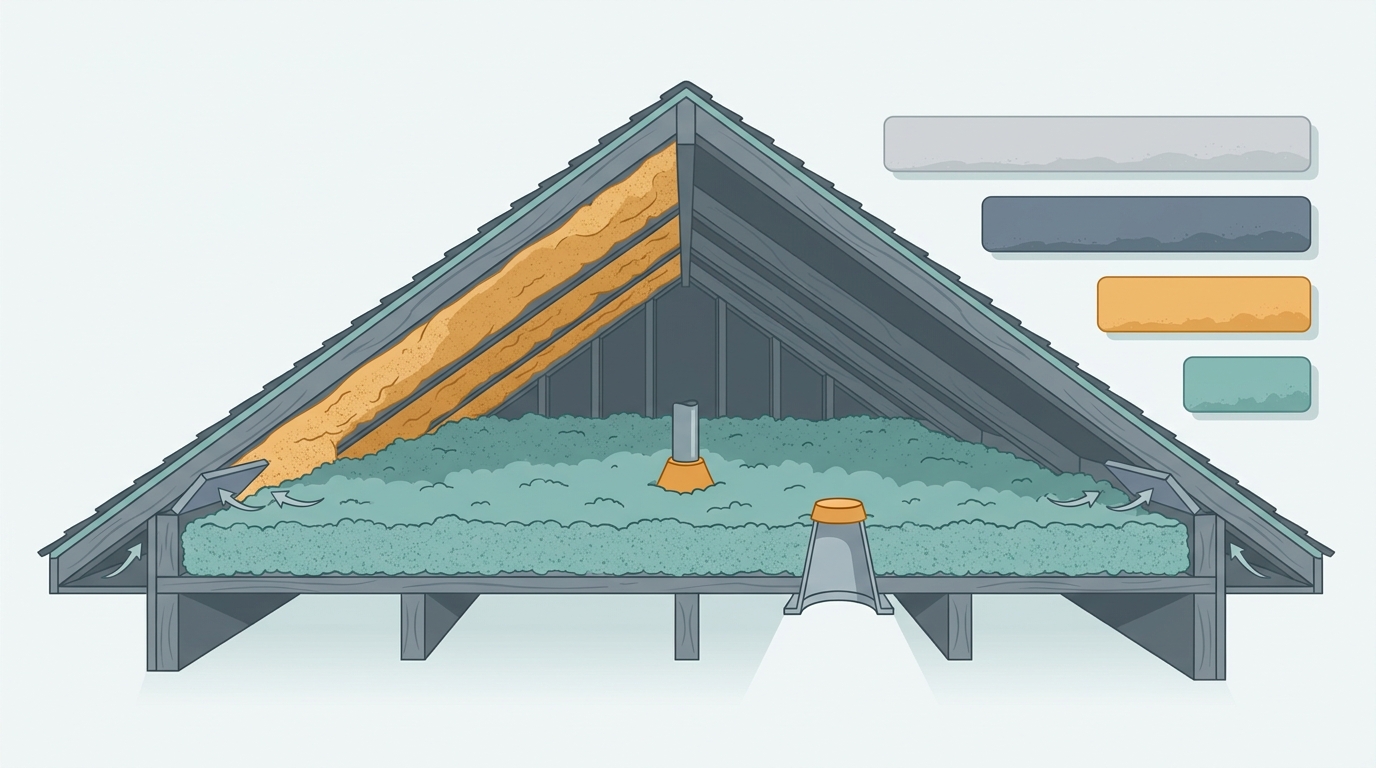
- Spray foam is a different project. It is usually applied to the roof deck (the underside of the roof) to create an unvented, conditioned attic, not blown on the floor. That is why its total runs $5,900 to $12,000 instead of a few thousand.
Total attic insulation cost by attic size
Square footage sets the base quantity. These 2026 ranges cover cellulose or fiberglass brought to roughly R-49 with labor included. Low figures assume a clean top-off. The upper figures allow for air sealing and some removal.
Blown-in attic insulation: installed cost by attic size (to R-49)
Top-off near the low end; full prep near the high end
Most homes land $2,500–$4,000 for a clean job
Larger ranch footprints; more bags, more labor
Open vs closed cell, removal included
| Attic size | Blown-in to R-49 (installed) | With air sealing | Spray foam roofline |
|---|---|---|---|
| 1,000 sq ft | $1,500–$4,000 | +$300–$1,200 | $5,900–$9,000 |
| 1,500 sq ft | $2,300–$6,000 | +$400–$1,500 | $7,000–$11,000 |
| 2,000 sq ft | $3,000–$8,000 | +$500–$1,500 | $8,000–$12,000+ |
Consider three quotes for a 1,500 sq ft 1990s ranch. A $2,400 bid might cover a top-off only. A middle bid can add top-plate sealing and safe covers over compatible recessed lights. A $7,800 scope may also remove rodent-contaminated fiberglass and haul it away. The totals look irrational until the work is placed side by side.
The cost reality most quotes hide
An advertised $1.50 to $2.45 per square foot often describes a straightforward top-off. Air sealing, baffles, protective covers, removal, and cleanup may be separate. Ask the contractor to show each of those decisions in the quote; a deeper pile of insulation cannot close a plumbing chase hidden underneath it.
What drives the price (the real cost factors)
1. How much R-value you are adding
You pay for inches of material. Going from a bare R-11 attic up to R-49 takes a lot of bags; topping off R-30 to R-49 takes far fewer. ENERGY STAR and the DOE recommend R-49 to R-60 in cold climates and R-30 to R-49 in warm ones. Pushing past the recommendation for your zone adds cost with diminishing returns.
2. Air sealing complexity
Insulation slows heat flow. Air sealing closes pathways around wiring, plumbing, open chases, and the attic hatch. A clean ceiling plane may take little time; a dropped kitchen soffit can swallow an hour by itself (and it is easy to miss under old fiberglass). Budget $300 to $1,500 and request photos before the new insulation covers the work.
3. Existing insulation: top-off, or remove first
If the old insulation is dry and clean, blow on top of it and save the removal cost. If it is mold-stained, rodent-fouled, water-damaged, or it is vermiculite, it has to come out. Removal runs $1.50 to $3.00 per square foot, so on a 1,500 sq ft attic that is $2,250 to $4,500 added before a single new bag goes in. See our attic insulation removal cost guide for the cases that justify it.
4. Access and attic shape
A wide-open attic with safe decking is a different job than a low-slope truss attic where a tech crawls on hands and knees. Knee-wall bonus rooms, cathedral sections, and tight headroom all add labor.
5. Region and climate
Colder zones require higher R-values, so more material. Labor rates vary too. Labor alone commonly runs $1 to $3 per square foot.
DIY vs hiring a pro
DIY blown-in is possible. Home-improvement stores often lend the blower with a minimum bag purchase, and material for a modest top-off can cost hundreds rather than thousands. The machine needs two people, one feeding bags below and another controlling the hose above.
The hard part happens before the blower starts. You may spend hours sealing top plates, protecting heat-producing fixtures, keeping soffit vents open, and marking the joists so one misplaced boot does not meet the ceiling below. Summer attic temperatures can be dangerous. Stop when heat, questionable wiring, vermiculite, mold, or unstable footing enters the job.
DIY makes sense for a simple top-off over a sound, already-sealed attic, or for filling a few open joist bays with batts. Hire a pro when there is meaningful air sealing, removal, knob-and-tube wiring, or any moisture question. For the per-square-foot math behind a blown-in job, see blown-in insulation cost per sq ft.
The 25C federal tax credit ended after 2025
The Energy Efficient Home Improvement Credit (Section 25C) was terminated for property placed in service after December 31, 2025, so there is no federal insulation credit for 2026 installs. If your job was placed in service in 2025, you can still claim it on your 2025 return (IRS Form 5695). The 2025 rules that applied:
- 30% of the cost of qualifying materials, capped at $1,200 per year.
- Materials only, not labor, for insulation and air-sealing products.
- Materials had to meet the prescriptive IECC standard in effect.
- The $1,200 annual cap was shared with other 25C improvements (windows, doors, an energy audit).
On that basis, a 2025 job with, say, $1,000 in qualifying material returned roughly $300 on the 2025 return. For a 2026 install, plan on the full price and look to rebates instead.
The 25D Residential Clean Energy Credit (the 30% solar credit) also ended December 31, 2025. Both federal home-energy credits are gone for 2026: solar and insulation alike. For 2026 work the levers are state programs, utility rebates of $50 to $1,100 for insulation, and IRA Home Energy Rebate programs. Check DSIRE for what is available in your area, and see the IRS Energy Efficient Home Improvement Credit page if you are filing a 2025 return.
With the federal credit gone, stack rebates instead
For 2026 installs there is no federal 25C credit, but a state program and a utility rebate can often be combined on one job. Pull the exact figures from DSIRE, ENERGY STAR, and your utility before assuming a number. If you are claiming a 2025 install, keep the product receipts and the manufacturer's certification statement; you need them at tax time.
When attic insulation is NOT worth the cost
Pause the project when the attic is already deep enough or another defect comes first.
- Your attic is already at R-49 or more. Adding R-10 on top of a deep, well-sealed attic saves little. The first inches do the heavy lifting; the last inches barely move the needle.
- The real problem is duct leakage or a failing HVAC system. If your discomfort traces to leaky ducts in the attic or an oversized, short-cycling furnace, insulation will not fix it. Diagnose first.
- There is unresolved moisture. A roof leak, condensation, or a bathroom fan venting into the attic must be fixed before you bury anything. Insulation over a moisture problem grows mold.
- You are about to do roof or major attic work. Sequence it so you do not pay to remove and reinstall insulation.
Red flags and common mistakes
- A quote with no air sealing line item. "Blow it to R-49" with nothing about sealing penetrations is an incomplete job.
- Burying soffit vents. Blown-in can choke off soffit airflow. A good scope includes baffles to keep the vent path open; skipping them invites moisture and ice dams.
- Removing perfectly good insulation. Removal is sometimes necessary, but some crews quote it by default to pad the bill. Ask why.
- Roofline spray foam with no moisture plan. Sealing the roof deck changes how the attic breathes. If a contractor proposes it without explaining ventilation and moisture control in plain English, slow down.
- Compressed or gappy batts. Stuffed-in batts and gaps around framing quietly erase the R-value you paid for.
Quote checklist
Print this page or keep the list open while reviewing bids.
Scope and targets
- Target R-value, and where it applies
- Specific air-sealing tasks listed (not just "air seal attic")
- Plan to keep soffit vents clear (baffles)
- Attic hatch weatherstripped and insulated
Existing conditions
- Keep, top-off, or remove old insulation, and why
- Moisture, pests, vermiculite, or knob-and-tube called out
- Cleanup and disposal plan
Quality signals
- How they ensure even coverage in corners and tight areas
- Depth markers or a coverage-verification method
- Photos or a walk-through at completion
Then feed the numbers into the attic insulation calculator to see the payback range for each quote.
Related planning guides
Attic work affects HVAC sizing, moisture control, and the rest of the enclosure.
- Attic air sealing cost: the prep that helps insulation perform.
- Attic insulation calculator: size the job and estimate cost, savings, and payback.
- Insulation before a heat pump: why sealing and insulating first lets you buy a smaller, cheaper system.
- The full insulation upgrade hub ties the tools and guides together.
What to do next
- Measure attic-floor area and record insulation depth in several places. Compressed and bare areas matter more than the deepest spot beside the hatch.
- Get two or three itemized quotes. Compare air sealing, baffles, removal, R-value, and cleanup before comparing totals.
- Run each scope through the attic insulation calculator. The insulation hub can help sequence this work with ducts and future HVAC replacement.
Sources & further reading
- Home energy credit expirations — IRS
- Recommended Home Insulation R-Values — ENERGY STAR
- Methodology for estimated air-sealing and insulation savings — ENERGY STAR
- Well-Insulated and Sealed Attic — ENERGY STAR
- How Much Does Blown-In Insulation Cost? [2026 Data] — Angi
About this post: Cost ranges come from current national project data and official insulation guidance. The worked quote comparison is illustrative; it shows how scope changes a bid and does not describe a claimed customer project. No insulation company paid for inclusion.
Frequently asked questions
How much does attic insulation cost in 2026?+
A typical attic insulation job runs $1,500 to $3,500 installed, with most homeowners paying around $1,900 to $2,000. Per square foot, blown-in insulation runs about $1.50 to $4 installed depending on material and target R-value. Spray foam is the outlier at roughly $5,900 to $12,000 for a whole attic.
How much does it cost to insulate a 1,000 sq ft attic?+
Expect roughly $1,500 to $4,000 for a 1,000 sq ft attic with blown-in cellulose or fiberglass to R-49, including labor. The low end assumes an easy top-off; the high end assumes air sealing and some removal. Spray foam on the same attic would run far higher, often $6,000 to $10,000.
How much does it cost to insulate a 1,500 sq ft attic?+
A 1,500 sq ft attic typically costs $2,300 to $6,000 for blown-in insulation to R-49, installed. Most straightforward top-offs land near $2,500 to $4,000. Add $300 to $1,500 if air sealing is included, and $1,500 to $4,500 more if old insulation must be removed first.
What is the cheapest way to insulate an attic?+
Blown-in fiberglass is usually the cheapest professionally installed option at about $0.50 to $1.10 per sq ft for material, or roughly $1.50 to $2.50 per sq ft installed. DIY batts are cheaper on paper but easy to install badly. The best value is blowing new insulation on top of sound existing insulation rather than removing it.
Does attic insulation qualify for a tax credit in 2026?+
No. The federal 25C Energy Efficient Home Improvement Credit was terminated for property placed in service after December 31, 2025, so 2026 installs get no federal credit. A 2025 install can still be claimed on your 2025 return (IRS Form 5695) at 30% of qualifying material costs, up to $1,200. For 2026, the levers are state and utility rebates plus IRA Home Energy Rebate programs; check DSIRE for what is available in your area.
Should I remove old attic insulation before adding new?+
Usually no. If the existing insulation is dry, pest-free, and not contaminated, you can blow new insulation on top to reach your target R-value and save $1.50 to $3 per sq ft in removal cost. Remove it only for mold, rodent contamination, water damage, vermiculite, or when you need clear access to air-seal the ceiling.
How much does air sealing add to an attic insulation job?+
Air sealing typically adds $300 to $1,500 to an attic insulation project, depending on how many penetrations, chases, and bypasses need sealing. Insulation slows heat flow, while air sealing closes the leaks that carry conditioned air into the attic. Ask for the sealing scope as its own line item.
What R-value do I need for attic insulation?+
ENERGY STAR and the DOE recommend R-49 to R-60 in cold northern climates and R-30 to R-49 in warmer southern ones. For most US homes, R-49 (about 14 to 18 inches of blown-in material) is the practical target. Adding to an under-insulated attic gives the biggest return; going past the recommended level adds cost with little extra savings.
Is attic insulation worth the cost?+
For many under-insulated homes, yes. ENERGY STAR estimates that cost-effective air sealing and insulation can save an average of 15% on heating and cooling costs, though the result for one home depends on climate, fuel prices, and existing conditions. Adding more is a weak investment when the attic already meets the recommended R-value or the comfort problem comes from ducts or HVAC equipment.
Try the companion tool
This post links to an interactive tool built for this topic. Open it to see numbers tailored to your home.
Open the toolGet practical energy tips
Join homeowners getting practical tips on cutting energy bills and staying comfortable.
Practical tips only. Unsubscribe anytime.
Read this next
Related guides selected by topic overlap and upgrade path.
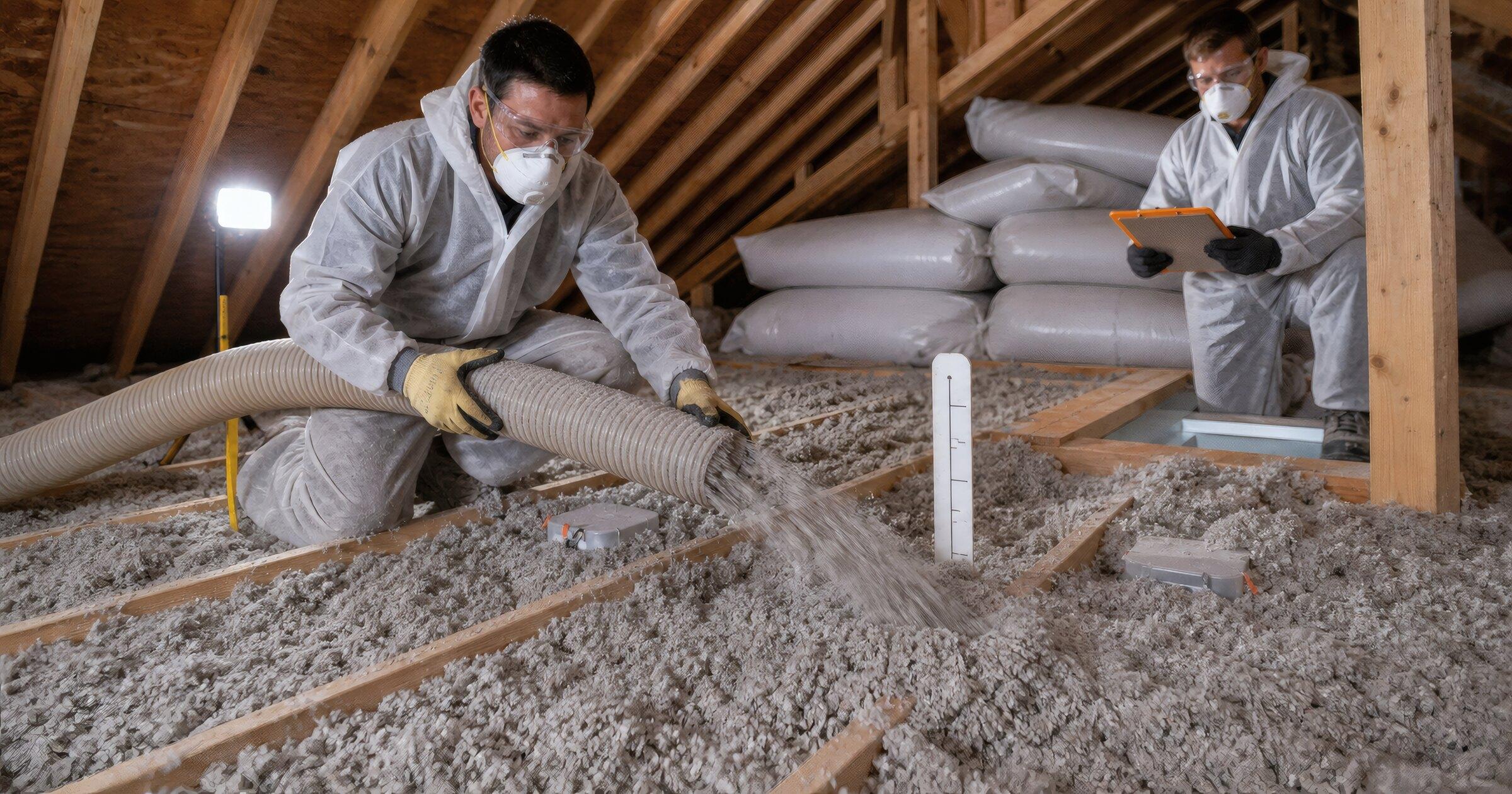
Blown-in insulation costs $1.50 to $3.50 per sq ft installed in 2026 ($0.90 to $1.80 DIY). Cellulose vs fiberglass by R-value, attic vs walls, bags needed.

Attic insulation removal costs $1–$2 per sq ft, or about $1,600–$3,600 for a typical attic. Rodents, mold, or asbestos push it far higher. Here's the honest 2026 breakdown.
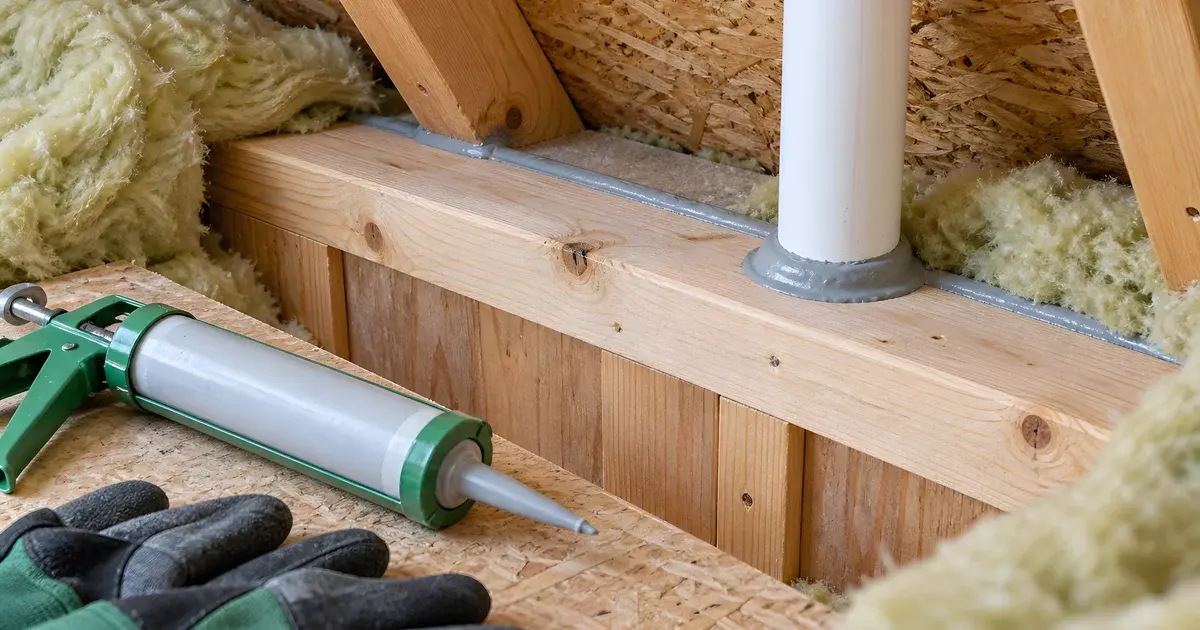
Attic air sealing cost depends on access and leakage scope. Separate sealing, insulation, testing, and restoration before comparing contractor quotes.
Spray foam insulation costs depend on strategy, not hype. Learn open vs closed cell tradeoffs, roofline vs attic floor choices, and how to compare quotes.