Blog
Duct Sealing
Duct sealing closes leaks at plenums, branches, boots, and returns. Learn which materials work, when DIY is safe, and what a measured quote should include.
A gray band of mastic over a leaking plenum seam is duct sealing in its most visible form, and a sound job starts with a leakage number and ends with another one.
The work closes holes and failed connections in supply and return ducts. It can improve comfort and reduce heating or cooling loss when ducts cross an attic, crawlspace, garage, or other unconditioned area. It cannot correct an undersized branch, crushed flex duct, missing return path, or weak insulation by itself.
On this page
- When sealing deserves a closer look
- Sealing, cleaning, and balancing solve different problems
- Where leaks hide
- Materials that last
- A limited DIY job
- Testing turns workmanship into a result
- Compare quotes by scope
- Phoenix attic priorities
- Quick answers
- Is duct sealing worth it?
- Can I seal ducts from the inside?
- Will sealing fix one hot room?
- Should ducts be cleaned first?
When sealing deserves a closer look
ENERGY STAR says roughly 20% to 30% of the air moving through a typical home's ducts is lost through leaks, holes, and poor connections. That national estimate describes a broad housing stock; it does not predict your house's savings. Read the current ENERGY STAR guidance.
These clues make testing worthwhile.
- Ducts run outside the conditioned boundary, especially through a vented attic or crawlspace.
- One or more rooms stay uncomfortable after the filter and registers are checked.
- A return chase connects to a dusty attic, wall cavity, or open platform.
- Flexible duct has slipped off a collar, sagged sharply, or lost its insulation jacket.
- The air handler runs longer than expected and delivered-air temperatures worsen along distant branches.
A system with all ducts inside conditioned space can still leak and distribute air badly. The direct energy penalty is often smaller because escaped air remains within the home's boundary. Comfort and pressure balance may still justify repair.
Sealing, cleaning, and balancing solve different problems
| Service | Problem addressed | Evidence to request |
|---|---|---|
| Duct sealing | Air escaping or entering through gaps | Leakage reading before and after |
| Duct repair | Disconnected, torn, crushed, or poorly supported runs | Photos and an itemized repair list |
| Balancing | Wrong airflow share between rooms | Room airflow and pressure readings |
| Duct cleaning | Debris or contamination under specific conditions | Visual evidence and a defined cleaning scope |
| Internal coating | Damaged liner under limited circumstances | Product, substrate, and safety justification |
EPA draws an important line between sealing air leaks from the outside and spraying a coating over interior duct surfaces. It says questions remain about interior sealants and does not recommend routine encapsulation of contaminants. The agency also says routine duct cleaning has not been shown to prevent health problems. See the EPA consumer guide.
A fogged duct is a different proposal
Ask whether an aerosol treatment is being used to reach exterior leak paths or to coat the duct interior. Get the product, safety data, substrate approval, access-hole plan, and before-and-after leakage results in writing. Decline vague promises about “sanitizing” or permanent health benefits.
Where leaks hide
Walk from the air handler outward on both the supply and return sides.
- Air-handler and plenum connections. Large pressure differences make a small opening matter here.
- Branch takeoffs, end caps, and elbows often have fasteners without a continuous air seal.
- Flexible duct can separate at the inner liner even while its outer insulation jacket looks connected.
- Register boots may leak into a wall, floor, or attic around their metal edges.
- Filter cabinets, return boxes, and building cavities used as return chases can pull untreated air into the system.
Most leakage occurs at connections to registers, plenums, and branches, according to LBNL research on residential sealants. A flashlight inspection finds gross defects. A pressure test captures leaks hidden behind insulation and finishes.
Materials that last
| Condition | Suitable repair | Avoid |
|---|---|---|
| Sound sheet-metal seam | Water-based HVAC mastic applied to the product's thickness instructions | General-purpose cloth duct tape |
| Gap wider than about 1/8 inch | Fiberglass mesh embedded in mastic | Filling a moving gap with a thin smear |
| Listed connection needing tape | UL 181 foil or film tape approved for that duct type | Unlisted foil tape with no installation rating |
| Flex duct pulled off a collar | Reattach the inner liner mechanically, seal it, then restore insulation and jacket | Taping only the outer jacket |
| Crushed or torn flex run | Replace the damaged section and support the new run | Sealing over a kink |
The Department of Energy's weatherization job aid specifies mechanical attachment plus sealants suited to the connection. Its companion guidance calls for UL-approved mastic, UL 181 tape, or an equivalent, with mesh over wider gaps. Review DOE's mastic job aid before buying materials.
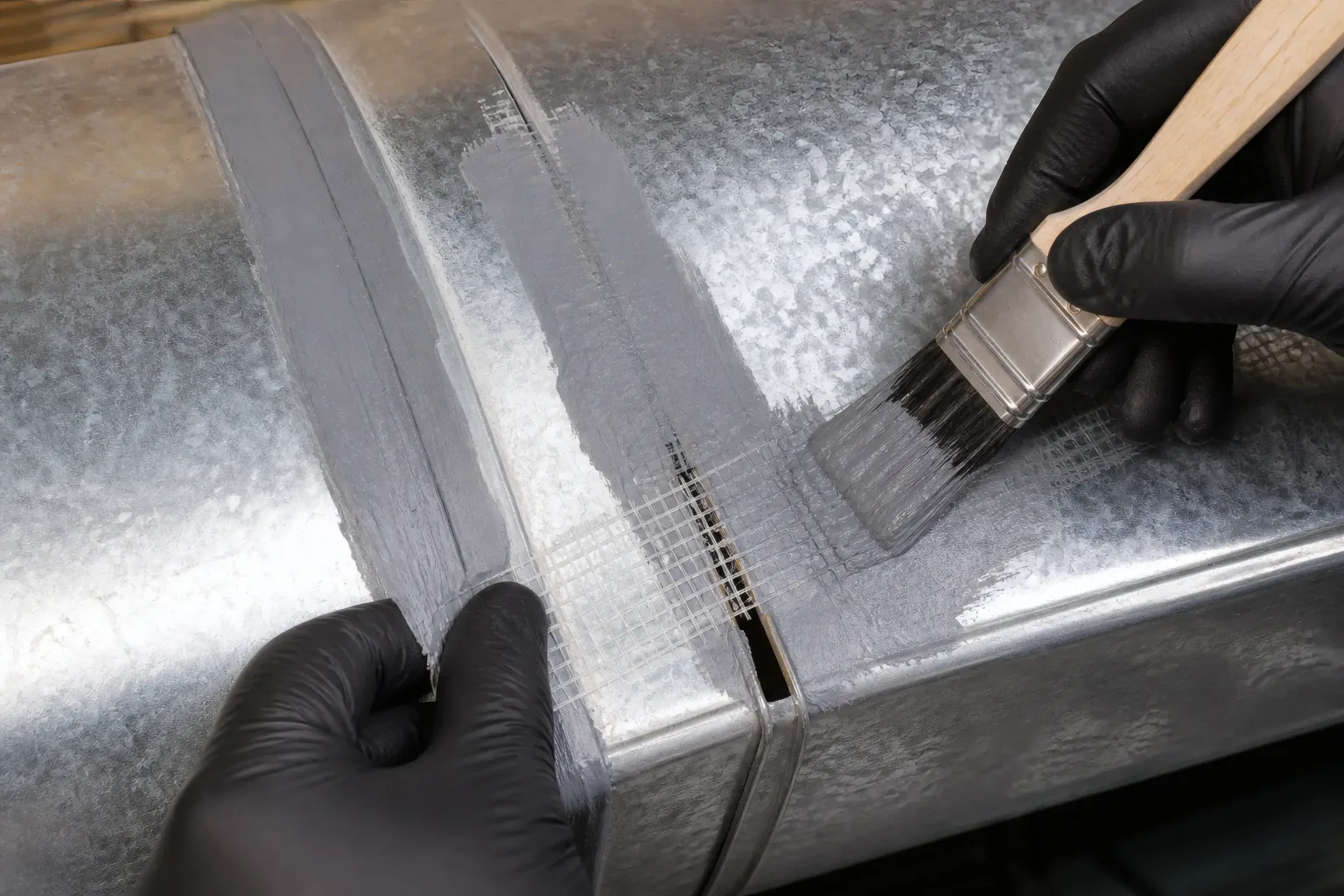
Mastic seals air. Duct insulation slows heat transfer. When ducts cross an unconditioned space, restore the insulation and vapor-resistant outer jacket after the sealant cures.
A limited DIY job
DIY makes sense when solid metal ducts are safely accessible from a basement or utility room. Turn the HVAC system off, clean and dry the exterior surface, fasten loose metal first, and follow the sealant label for thickness, temperature, cure time, and protective equipment.
Stop when the work involves these conditions.
- An attic without a continuous, load-bearing walkway
- Suspected asbestos-containing tape or insulation
- Mold, sewage, animal contamination, or wet duct liner
- A disconnected flue, soot, damaged wiring, or any combustion concern
- Hidden ducts where access holes or aerosol sealing would be needed
- Flexible duct that needs sizing, layout, or support corrected
Do not seal intentional openings, combustion-air inlets, flues, condensate drains, equipment panels, or fire/smoke dampers. A material that looks like an air leak may have a required service function.
Testing turns workmanship into a result
A duct leakage tester temporarily seals the registers and pressurizes the duct system, commonly to 25 pascals. The result is reported as airflow at that test pressure, often CFM25.
Total leakage includes air escaping anywhere. Leakage to outside isolates paths into unconditioned space or outdoors, which are especially relevant to energy loss. A contractor may use a duct tester with a blower door to separate the two.
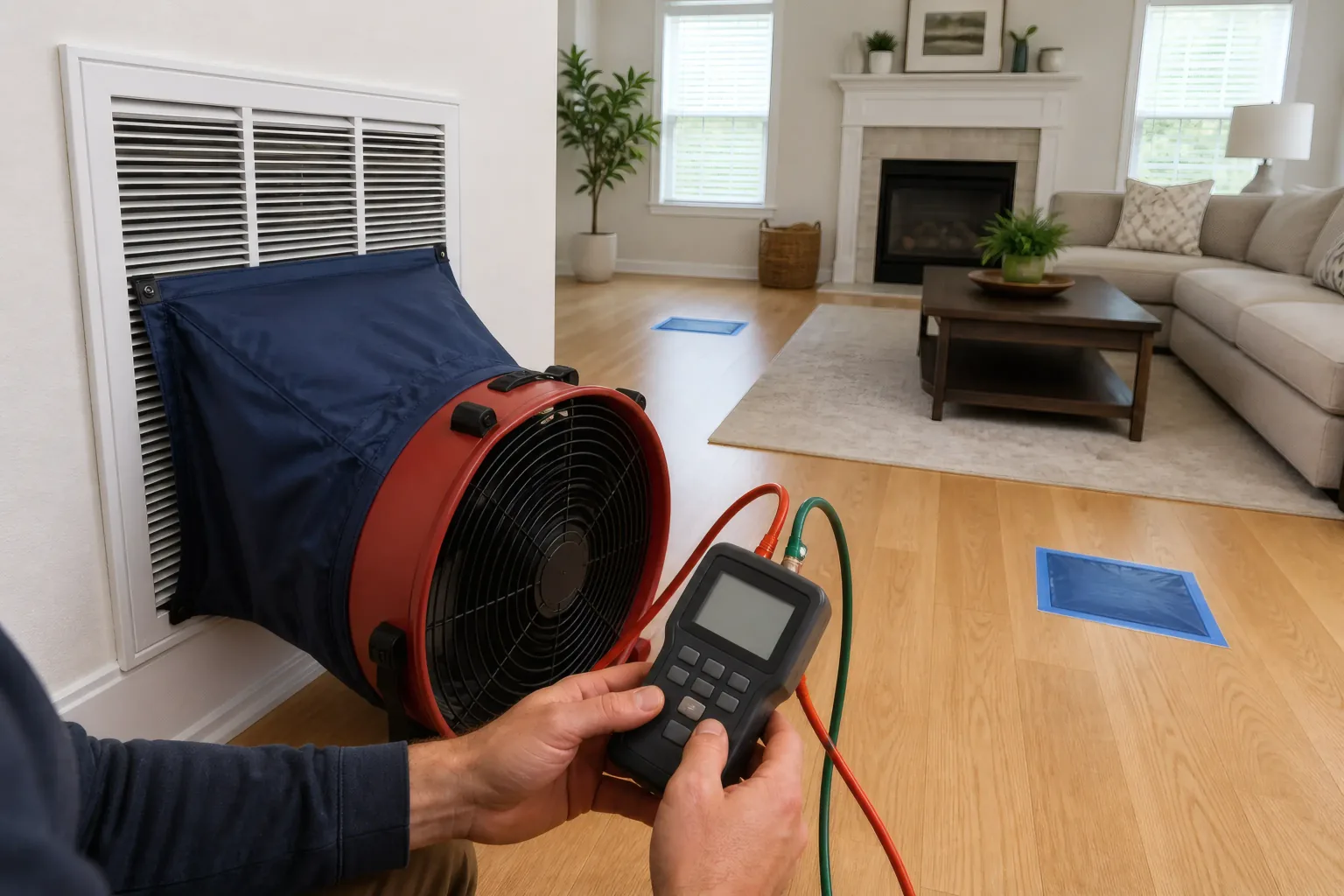
A test number is useful only with context. Ask for the pressure used, whether the number is total or outside leakage, which air handler was included, and whether the value was normalized to floor area or system airflow.
After sealing, check total external static pressure against the equipment manufacturer's limit. Then verify delivered airflow. Sealing a badly undersized system can reveal restrictions that leakage had partly masked; Arizona utility SRP explicitly warns that duct sizing may need correction before sealing to protect cooling capacity. See SRP's duct test and repair requirements.
For homes with combustion appliances, DOE's existing-system guidance calls for combustion-safety and carbon-monoxide testing after this kind of retrofit. The same guide covers leakage and airflow verification in its testing requirements.
Compare quotes by scope
Market averages blur together tiny basement touch-ups, difficult attic work, internal aerosol sealing, and full flex-duct replacement. Use an itemized scope instead.
| Quote line | What should be written down |
|---|---|
| Baseline | Total or outside CFM25 and test method |
| Accessible sealing | Exact plenums, trunks, takeoffs, boots, and returns |
| Repairs | Quantity and length of flex, collars, boots, supports, and insulation |
| Materials | Mastic or listed tape, including the duct types each will touch |
| Verification | Post-work CFM25, static pressure, equipment airflow, and room checks |
| Safety | Combustion and carbon-monoxide testing where fuel-burning appliances are present |
For a reproducible comparison, divide each quote into testing, sealing, repair, access, and restoration. Then calculate leakage reduction only after results exist.
Suppose a measured project costs $2,250 and reduces total leakage from 450 to 180 CFM25. The documented reduction is 270 CFM25, and the price works out to $8.33 per CFM25 reduced. That is a paper example, not a market benchmark; comfort, outside leakage, airflow, and repair quality matter more than that ratio alone.
Be cautious with a guaranteed percentage saving. ENERGY STAR's 20% to 30% figure is typical airflow loss, not a promised bill reduction. Estimate the part of your bill tied to heating and cooling with the Bill Breakdown tool, then model a range rather than assigning every lost cubic foot the same dollar value.
Phoenix attic priorities
Phoenix makes outside-the-boundary duct losses expensive during long cooling hours. The National Weather Service's 1991–2020 normal high for July 4 is 107°F, a useful indication of the load facing attic systems even before roof-space temperatures rise above outdoor air. See NWS Phoenix climatology.
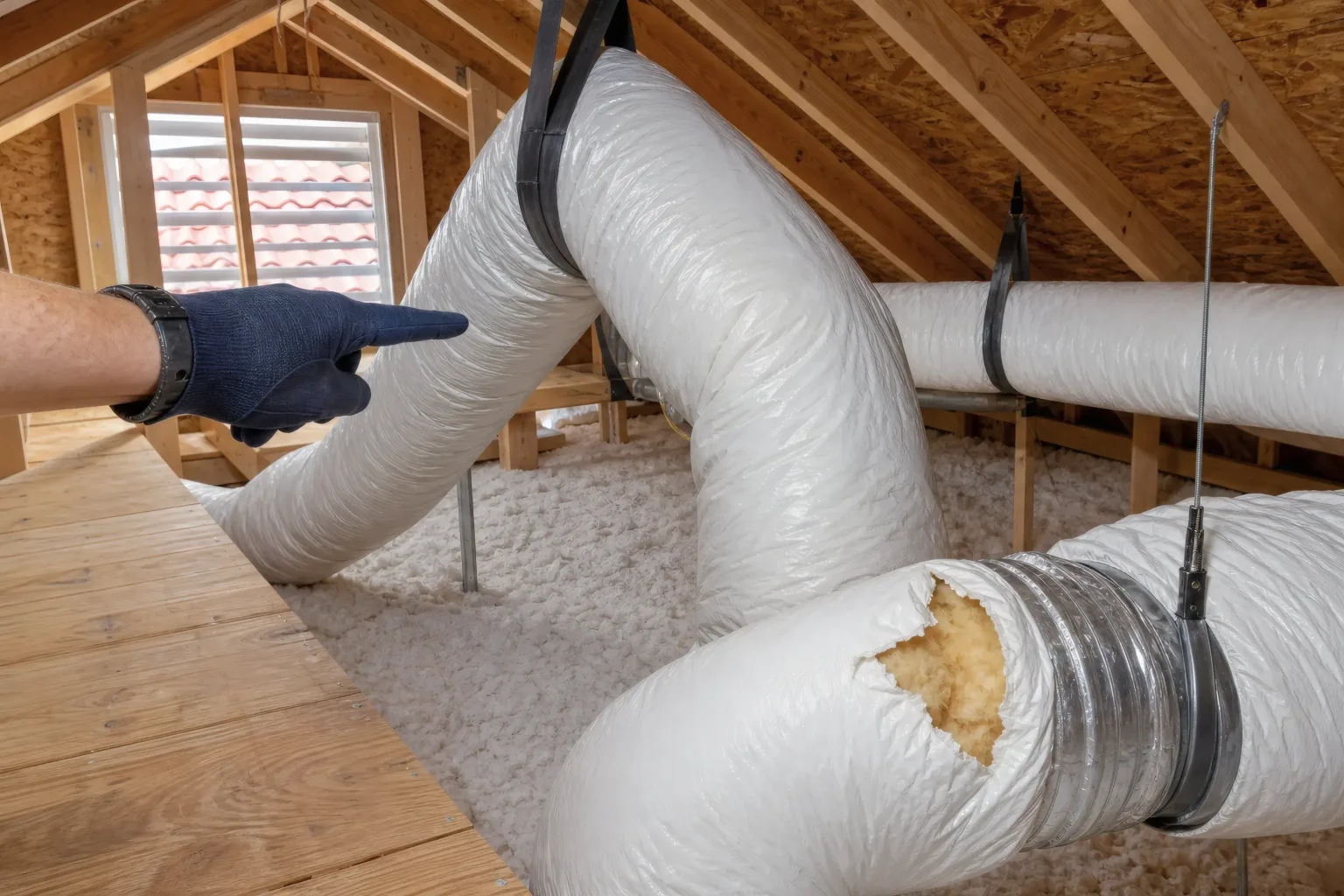
Prioritize this order in a vented Phoenix attic.
- Repair disconnected, crushed, or sharply kinked flex duct.
- Seal return plenums and any return chases that can draw attic air.
- Seal supply plenums, collars, branch connections, and boots.
- Restore duct insulation and the outer jacket without compressing it.
- Balance bedrooms with doors closed, then check equipment airflow and static pressure.
A west-facing room may remain hot after the duct is sound. Compare afternoon solar gain, attic air leaks, insulation depth, and window shading before enlarging the branch. The hot-room guide walks through that diagnosis, while the attic insulation calculator helps frame the envelope side.
Quick answers
Is duct sealing worth it?
It has a strong case when measured leakage reaches an attic, crawlspace, garage, or outdoors. The result is less predictable when all ducts are inside conditioned space or comfort problems come from sizing and room loads.
Can I seal ducts from the inside?
Professional aerosol systems can reach inaccessible leaks. Ask for the pre-test, post-test, product documentation, equipment protection steps, and access-hole restoration. Keep interior encapsulation proposals separate.
Will sealing fix one hot room?
Only when leakage or damage deprives that room of air. A small branch, long sagging flex run, closed door with no return path, poor insulation, or strong sun needs a different correction.
Should ducts be cleaned first?
Ordinary dust does not require routine cleaning before exterior leak sealing. Active contamination, wet material, pest debris, or construction waste calls for source control and a separate, evidence-based cleaning decision.
Write the target leakage result, repair list, airflow checks, and safety tests into the contract. If several upgrades compete for the same budget, compare the duct scope with envelope and equipment work in My Plan.
Try the companion tool
This post links to an interactive tool built for this topic. Open it to see numbers tailored to your home.
Open the toolGet practical energy tips
Join homeowners getting practical tips on cutting energy bills and staying comfortable.
Practical tips only. Unsubscribe anytime.
Read this next
Related guides selected by topic overlap and upgrade path.
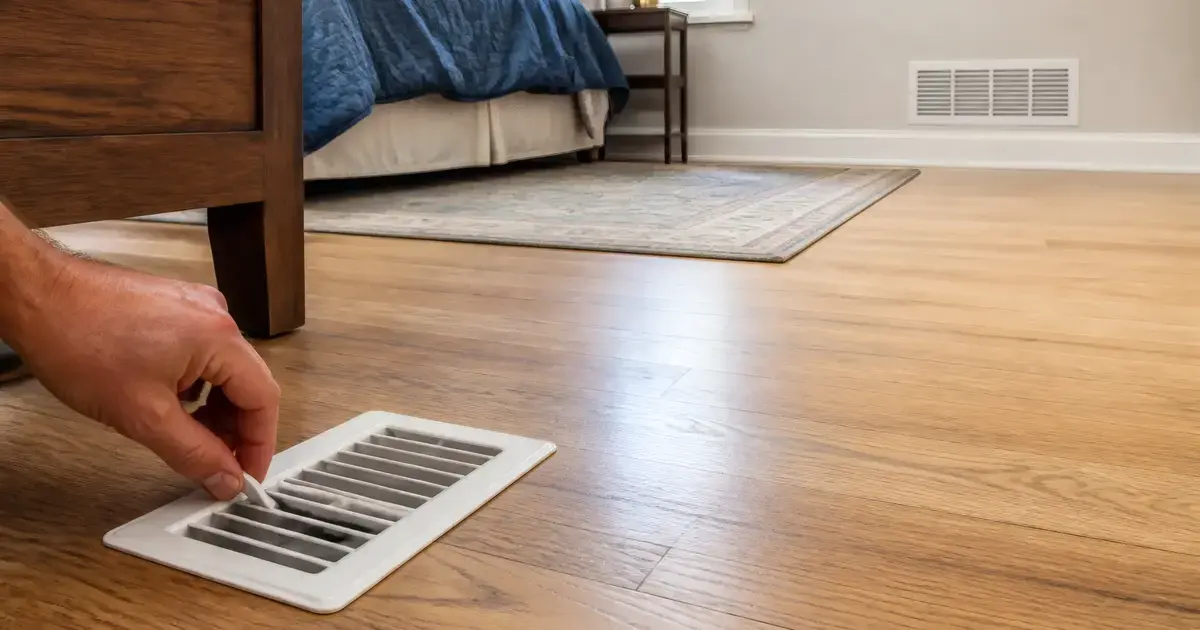
Is it OK to close air vents? Learn what one closed register changes, why several can raise duct pressure, and how to fix an uneven room safely.
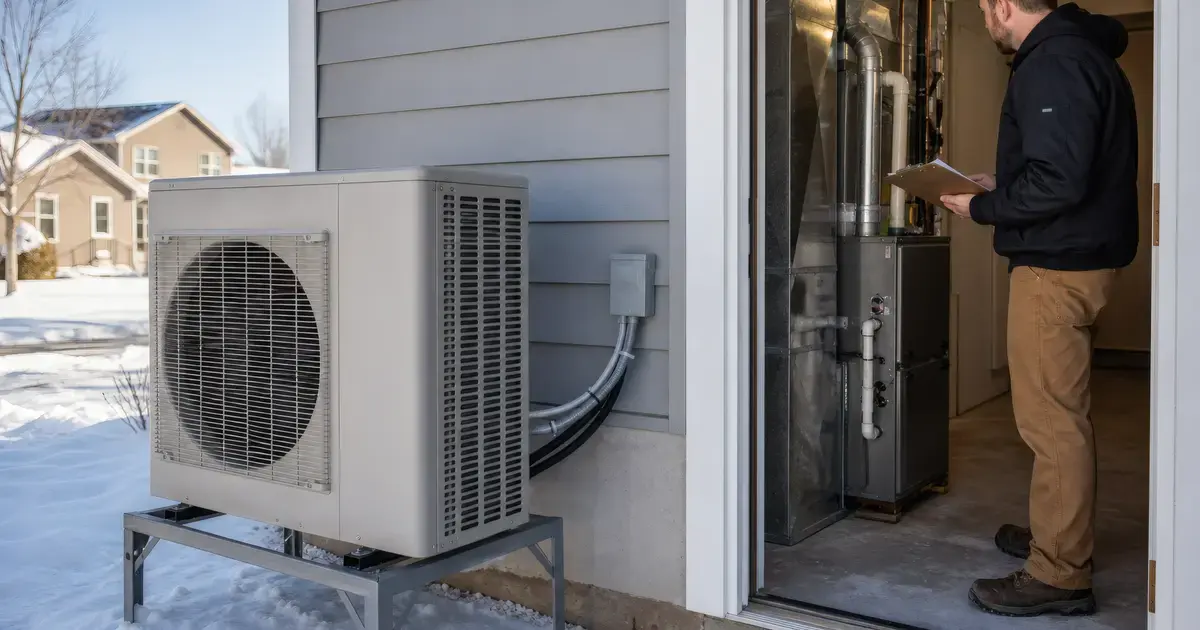
Compare heat pump and furnace costs, cold-weather performance, comfort, sizing, backup heat, and quotes using your own home and utility rates.
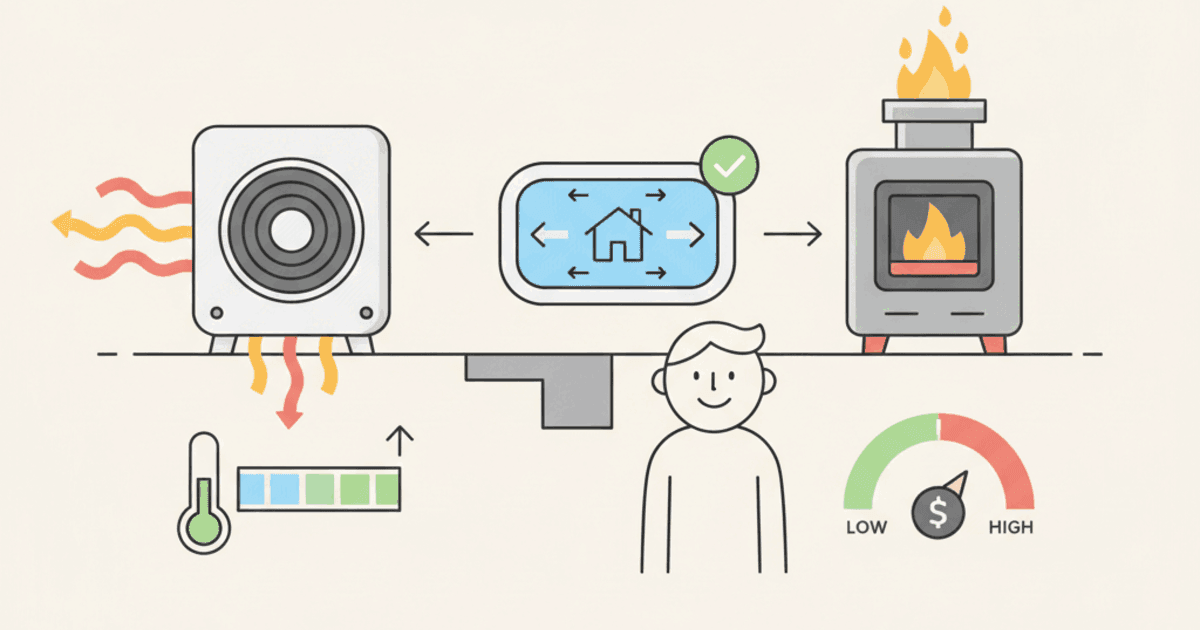
How a dual-fuel (hybrid) heat pump and gas furnace work together, how to set the switchover temperature from your electric and gas rates, the install cost premium, and when dual-fuel beats all-electric or all-gas. Updated for 2026.
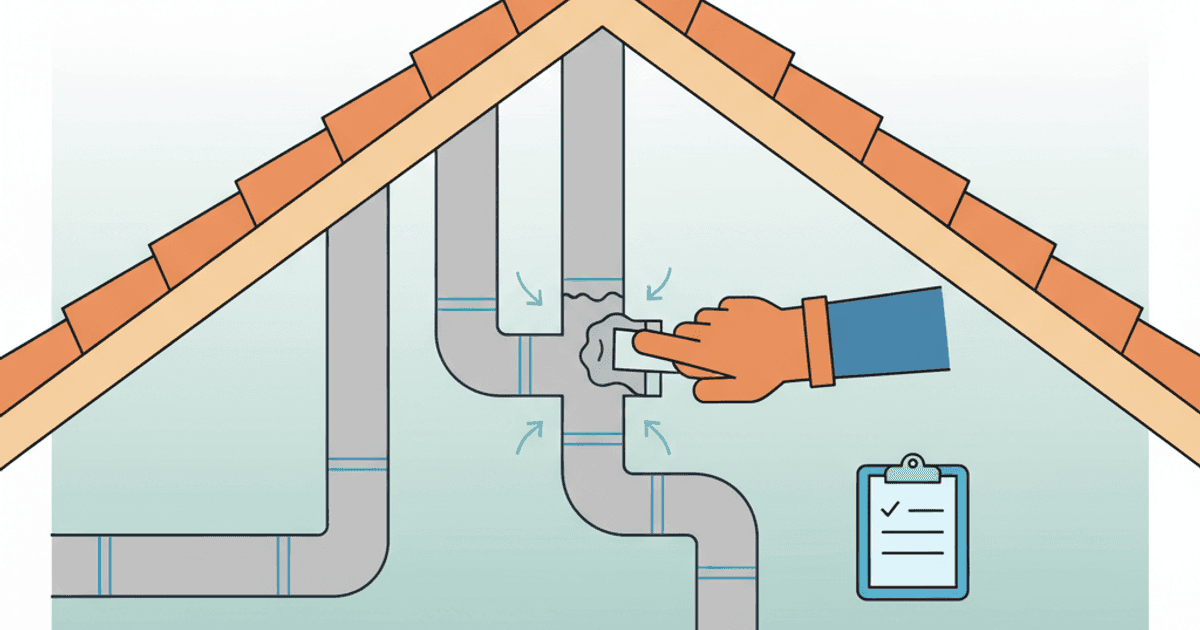
Learn what duct sealing fixes, what it costs, and the questions that separate real work from spray-and-pray.