Blog
Is It OK to Close Air Vents
Is it OK to close air vents? Learn what one closed register changes, why several can raise duct pressure, and how to fix an uneven room safely.
One shut bedroom register is rarely an emergency, but if you're asking “Is It OK to Close Air Vents,” leave most supply registers open until you know how the system reacts.
Closing several registers can raise duct pressure, reduce total airflow, and push more conditioned air through leaks. It usually fails as an energy-saving strategy. A small adjustment to one over-conditioned room can be reasonable when you watch the rest of the system.
On this page
- Supply, return, and damper are different parts
- What changes when a register closes
- Is one closed vent okay?
- Run this 48-hour room test
- Match the symptom to the next check
- Balancing is the measured version
- Quick answers
- Does closing vents lower the electric bill?
- Can I close basement vents in summer?
- Should I close vents near the thermostat?
- What should I do with a truly unused room?
Supply, return, and damper are different parts
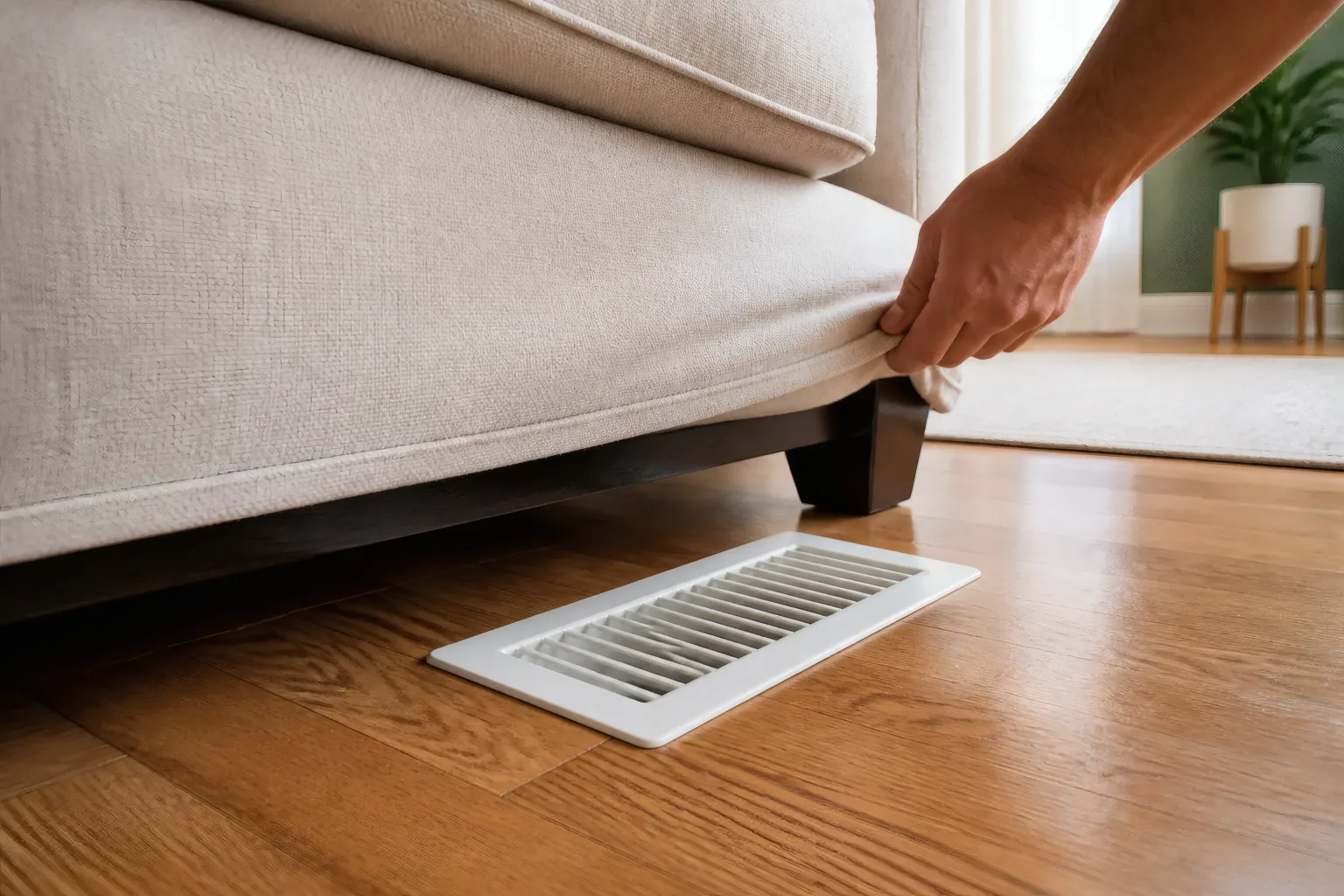
The small adjustable grille blowing warm or cool air into a room is a supply register. The larger grille drawing room air back toward the air handler is a return grille. Returns often lack a closing lever for good reason.
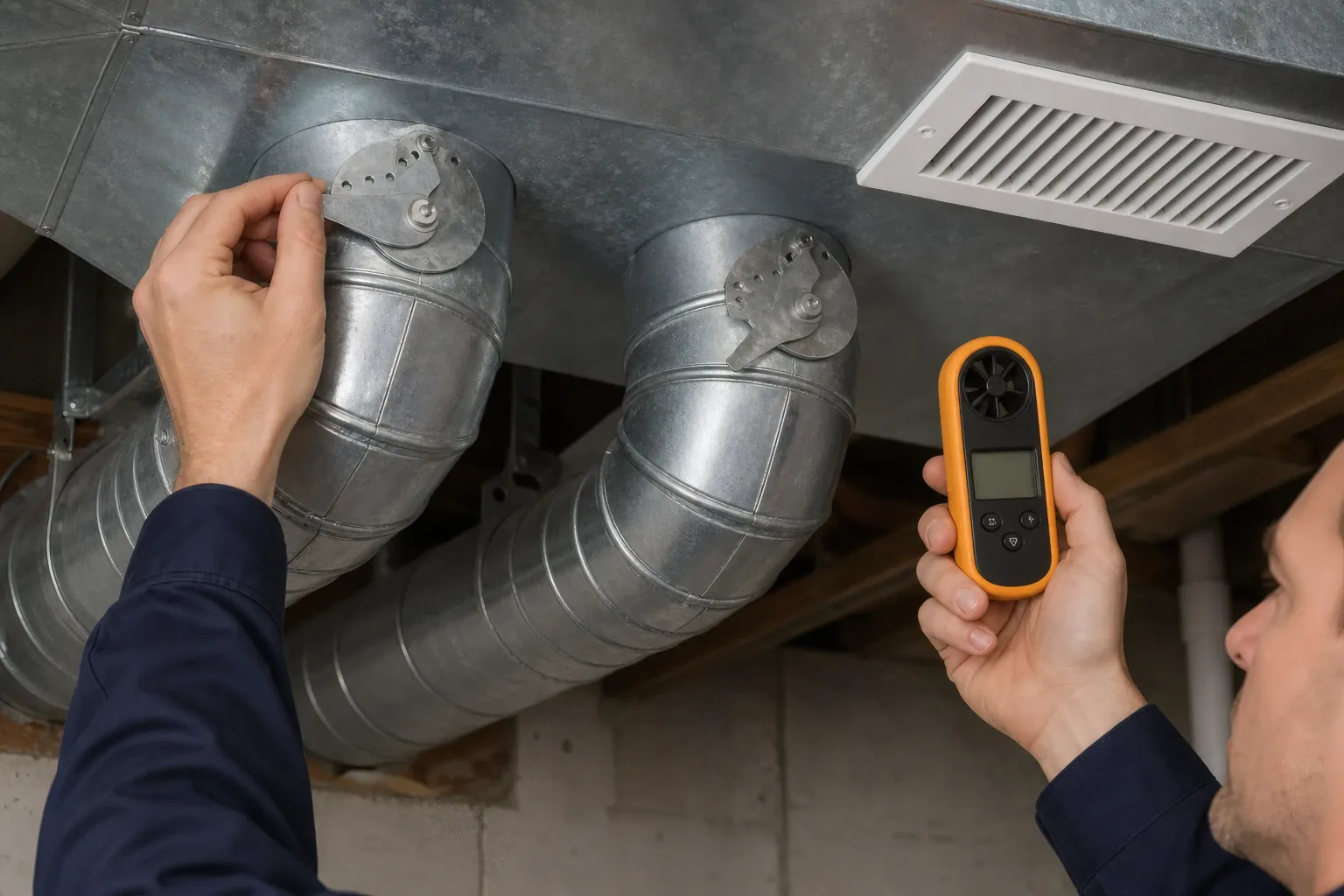
A balancing damper sits upstream inside a branch duct. A technician can use it to distribute airflow while checking what reaches each room. Twisting a register shut at the floor is a much rougher control.
| Part | What it does | Homeowner setting |
|---|---|---|
| Supply register | Delivers conditioned air | Keep open as the baseline; small adjustments only |
| Return grille | Feeds air back to the blower | Open and unobstructed |
| Branch damper | Sets flow for a duct run | Adjust during measured balancing |
| Motorized zone damper | Opens and closes a designed zone | Let the zone controls operate it |
What changes when a register closes
A central blower and its ducts operate as one network. Closing outlets adds resistance. Depending on the blower, duct layout, and leakage, the fan may move less air, duct pressure may rise, or both may happen.
Lawrence Berkeley National Laboratory tested a ten-register duct system and modeled typical California houses. Register closing increased duct leakage and, across the modeled cases, increased energy use when ducts were outside conditioned space. The researchers also warned against closing more than 60% of registers because severe airflow restriction can contribute to furnace high-limit trips and frozen cooling coils. Read the LBNL study summary.
That 60% figure is a danger boundary from one study, not a safe allowance. Your filter, coil, blower settings, and existing duct pressure may leave far less room.
ENERGY STAR reports that typical homes lose roughly 20% to 30% of duct airflow through leaks, holes, and poor connections. Higher pressure can make those existing leak paths more costly, especially in an attic, crawlspace, or garage. See ENERGY STAR's duct guidance.
Is one closed vent okay?
Usually, one partly closed supply register won't create a crisis. It also may send less extra air to the room you hoped to help than expected.
Use this boundary.
- Reasonable trial. One room is consistently over-conditioned, every return is open, and you close its supply only partway.
- Reopen it when you hear a whistle, another room loses airflow, or the equipment begins cycling differently.
- Skip the trial when the register is a return, several supplies are already closed, the cooling coil has iced before, or a furnace has tripped its high-temperature limit.
Variable-speed equipment changes its fan response, though it doesn't remove the duct restriction. Some blowers ramp up against higher resistance. Others lose airflow. The manufacturer's fan table and a static-pressure reading settle that question.
Run this 48-hour room test
Begin with every supply and return open. Keep the thermostat schedule unchanged, and avoid comparing a mild day with a heat wave.
- Clear the air path. Move furniture, rugs, and curtains away from registers. Replace a visibly loaded filter with the size and type specified for the equipment.
- Record the problem room and hallway temperature near bedtime, then again in the morning. A basic digital thermometer is enough.
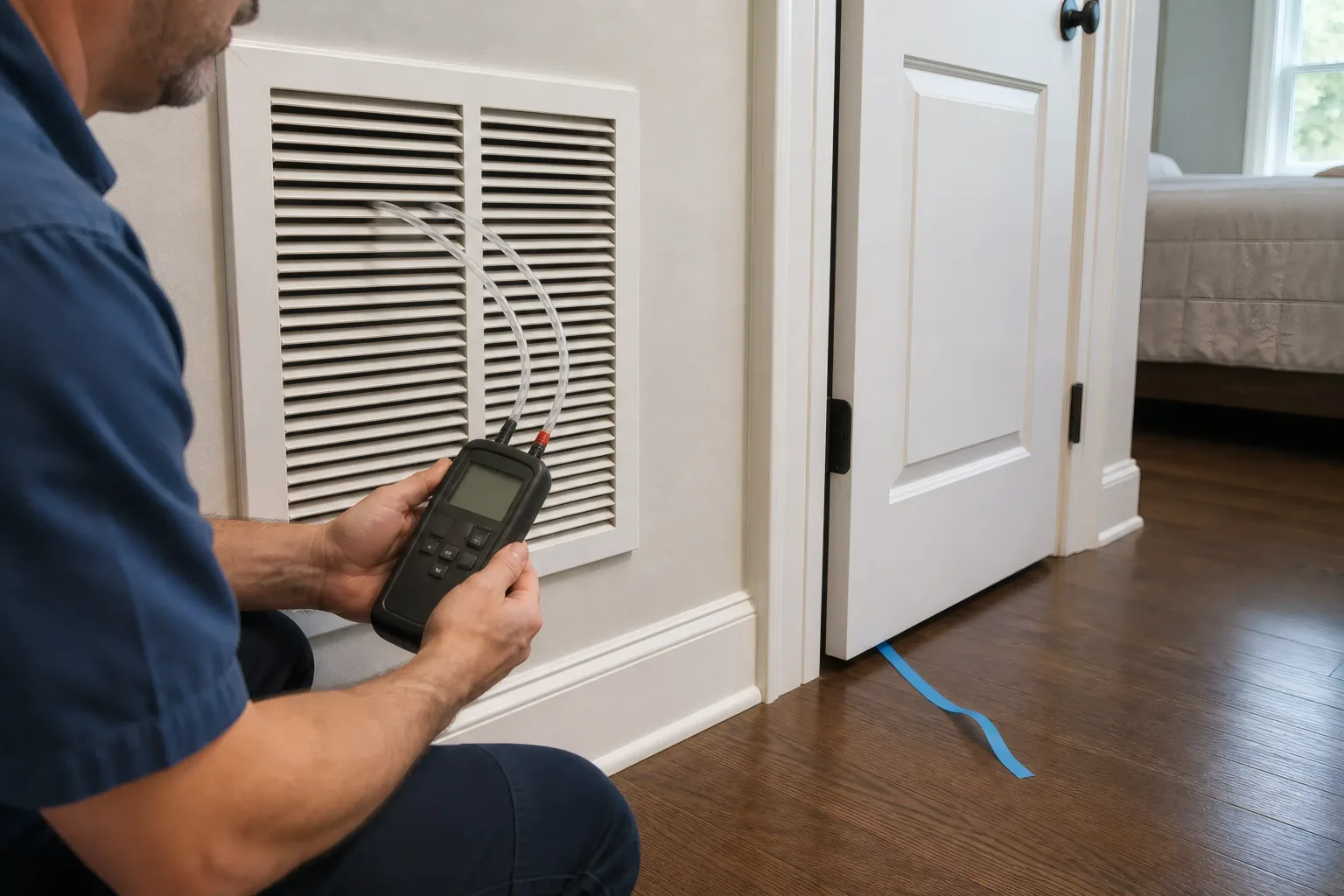
- Close the bedroom door while the system runs. Hold a strip of tissue near the door undercut. Strong movement and a door that pushes or pulls can point to a weak return path.
- Open the door and repeat the temperature check the next night under similar weather. A large improvement with the door open gives a contractor something specific to investigate.
- If the room still runs hot or cold, inspect the accessible duct run for a disconnect, crushed flex duct, or damaged insulation. Stay out of unsafe attics and do not step between joists.
Match the symptom to the next check
| What you notice | Likely checks | Better next move |
|---|---|---|
| One bedroom changes when its door closes | Return path and room pressure | Ask about a transfer grille, jump duct, or dedicated return |
| Weak airflow at one register | Crushed run, loose connection, closed branch damper | Inspect and measure that branch |
| Upstairs overheats every sunny afternoon | Attic bypasses, insulation, west-facing glass | Start with hot-room diagnosis |
| Several registers whistle | High duct pressure or undersized outlets | Reopen supplies and measure static pressure |
| Frost on the refrigerant line or coil | Low airflow or a refrigeration fault | Turn cooling off and call an HVAC professional |
| Soot, a CO alarm, or combustion odor | Possible combustion-safety problem | Leave the area and follow emergency guidance from the fire department or utility |
Closing doors to unused rooms can also change pressure. If the room has no dedicated return, a closed door may restrict its return path even while the supply remains open.
Balancing is the measured version
A proper balancing visit starts with all registers identified and the filter clean. The technician measures total external static pressure, checks airflow across the equipment, and then measures or estimates flow at the problem rooms.
After that, branch dampers can be adjusted in small steps. The DOE Building Science Education guide notes that terminal grilles need correct sizing and placement; a small grille can create noise and poor distribution even when the upstream duct is sound.
Ask the contractor to write down these results.
- Total external static pressure before and after, compared with the equipment's rated maximum
- Airflow or a repeatable reading at the problem register
- Bedroom pressure with the door closed
- The damper positions changed
- Any duct leakage, crushed flex, or return restriction found
If the ducts leak outside the conditioned space, repair that first. The broader duct sealing guide explains materials, leakage testing, and quote language. Use the HVAC duct-size calculator for a rough branch-size check; final design still needs room loads and measured airflow.
Quick answers
Does closing vents lower the electric bill?
Do not count on it. The LBNL work found that lower room load was offset by higher duct-system losses in the homes it modeled. A thermostat setback, repaired duct leak, or reduced solar gain has a clearer path to savings.
Can I close basement vents in summer?
Partly adjusting one or two may help comfort, provided the rest of the system stays quiet and airflow remains healthy. Seasonal balancing dampers are preferable when the duct layout supports them. Mark the starting position before changing anything.
Should I close vents near the thermostat?
Avoid it. Starving the thermostat area can make that sensor unrepresentative of the rooms you occupy, extending a cycle while other spaces overshoot.
What should I do with a truly unused room?
Keep its return open and its supply mostly open. Reduce heat flow through the room's windows, attic, and exterior walls, then use a professionally designed zone if separate temperature control matters enough to justify it.
The immediate move is simple. Open the returns, clear the supplies, and establish a two-day baseline. Put larger duct, insulation, and zoning work into the Upgrade Timing Planner after the measurements show which one belongs first.
Try the companion tool
This post links to an interactive tool built for this topic. Open it to see numbers tailored to your home.
Open the toolGet practical energy tips
Join homeowners getting practical tips on cutting energy bills and staying comfortable.
Practical tips only. Unsubscribe anytime.
Read this next
Related guides selected by topic overlap and upgrade path.
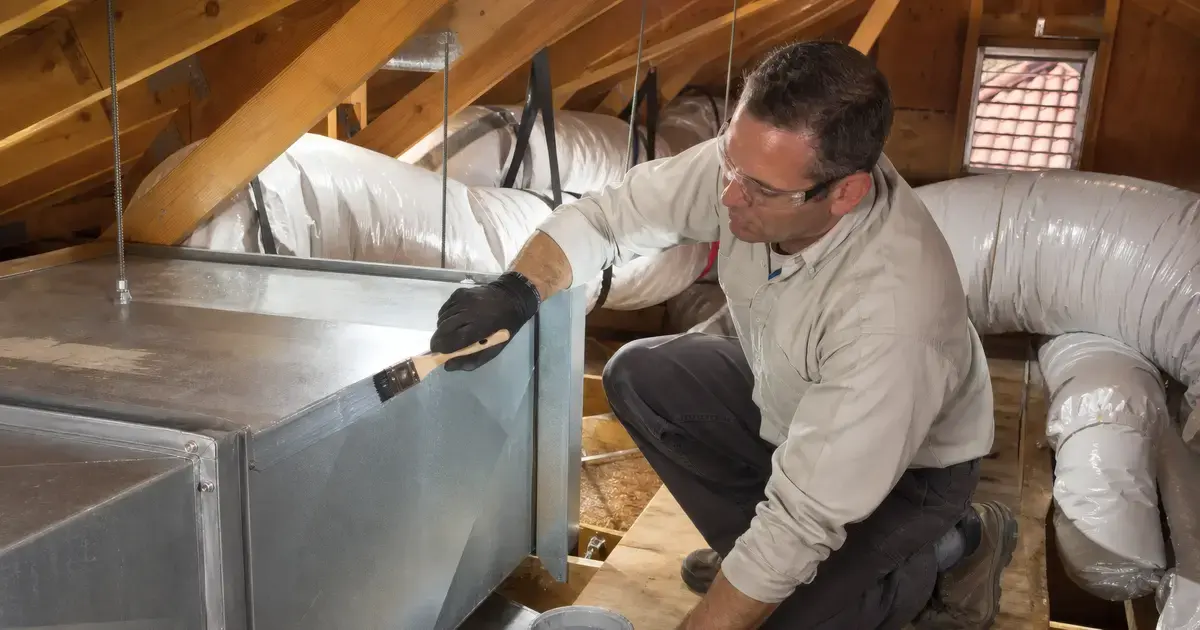
Duct sealing closes leaks at plenums, branches, boots, and returns. Learn which materials work, when DIY is safe, and what a measured quote should include.
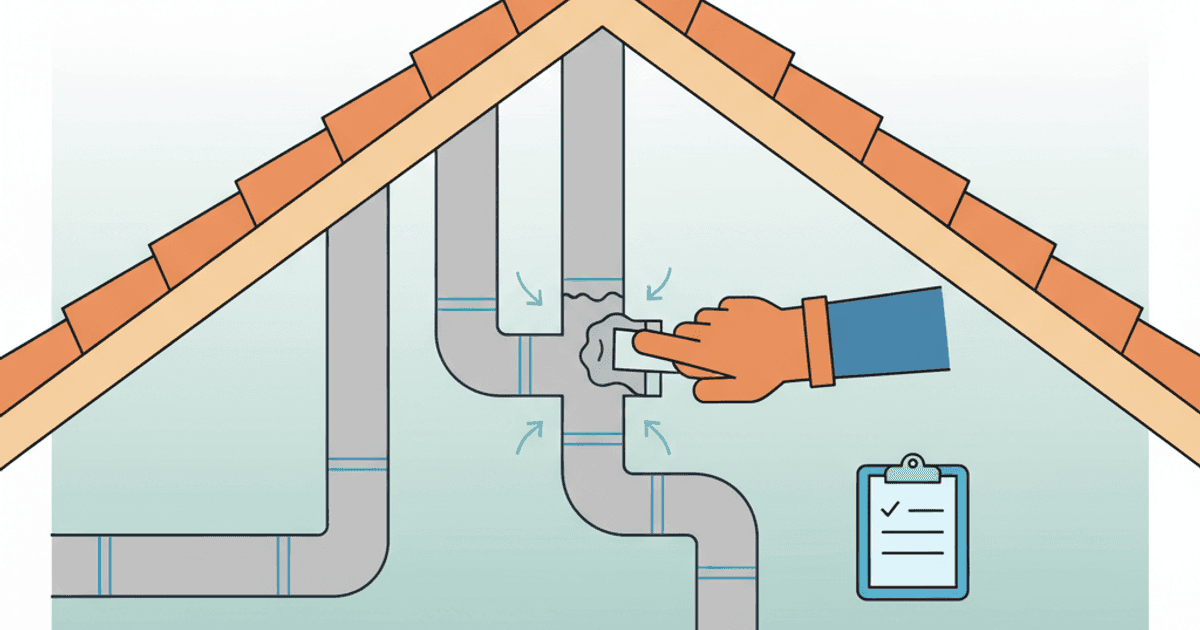
Learn what duct sealing fixes, what it costs, and the questions that separate real work from spray-and-pray.
Start at 68°F while awake, use a careful winter setback, and adjust for heat pumps, humidity, sleep, pets, health, and time-of-use rates.
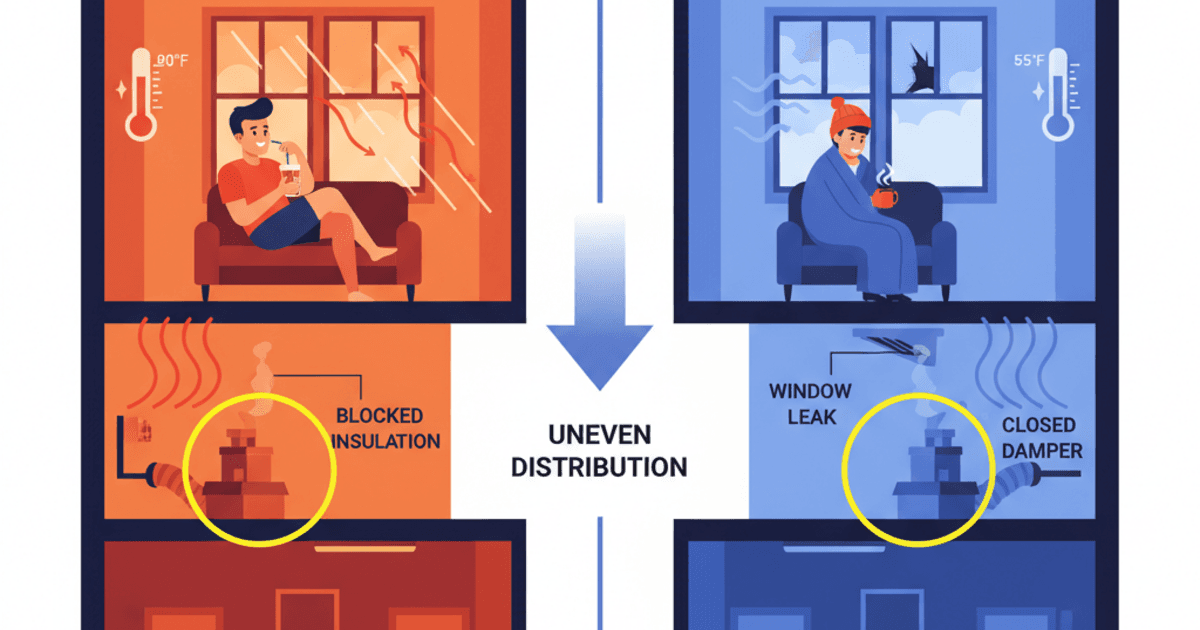
Weekend-level fixes to even out hot and cold rooms before spending on new HVAC or windows.