Blog
Heat Pump vs Furnace
Compare heat pump and furnace costs, cold-weather performance, comfort, sizing, backup heat, and quotes using your own home and utility rates.
Heat pump vs furnace comparisons get misleading fast when a quote uses the 47°F heat-pump rating and skips your winter fuel prices.
A heat pump is usually the stronger whole-system choice when you need heating and air conditioning, the house can support it, and its low-temperature capacity matches the load. A furnace remains a sensible choice where gas is inexpensive, winters are severe, or a smaller replacement project matters most. Dual-fuel sits between them.
Compare your rates in the Heat Pump vs Furnace Calculator. It takes about a minute, and the result is more useful than a national average.
On this page
Pick the system that fits the project
| Your situation | Direction worth pricing first | What could change the answer |
|---|---|---|
| Furnace and AC both need replacement | Heat pump | Electrical work, cold-weather capacity, ducts |
| Working furnace, failed central AC | Heat pump with the furnace retained | Compatibility and controls |
| Cheap gas, expensive electricity | Furnace or dual-fuel | A special heat-pump rate from the utility |
| No gas service | Heat pump | Backup heat and panel capacity |
| Very cold climate | Cold-climate heat pump or dual-fuel | The exact model's capacity curve |
| Drafty house with comfort complaints | Air sealing and load work first | Safety issues or failed equipment may force the schedule |
The useful comparison includes the whole project. A furnace supplies heat and normally needs a separate air conditioner. A heat pump supplies both. Comparing a heat-pump quote against a furnace-only quote hides part of the bill.
And do not replace a sound furnace merely because the spreadsheet shows a modest annual saving. Equipment condition, repair risk, and the value of new cooling belong in the decision.
Heat pumps and furnaces feel different
A furnace burns gas, propane, or oil and pushes a shorter burst of hot air through the ducts. A condensing gas furnace also needs sound combustion venting, condensate drainage, and a working carbon-monoxide alarm.
An air-source heat pump moves heat. Its compressor and refrigerant circuit reverse the cooling process, so the same system heats in winter and cools in summer. Supply air often feels warm rather than hot, and variable-speed models may run for long stretches at low output.
That long runtime can feel wonderfully even in rooms with decent airflow. In a bedroom with a pinched return path, it exposes the weakness quickly. A door may drift shut from the pressure difference, and the room still stays chilly.
Dual-fuel combines a heat pump with a furnace. The controls switch sources at a chosen outdoor temperature. It costs more and gives the installer more settings to commission, but it can preserve gas capacity while reducing furnace runtime in milder weather.
Cold-climate performance comes down to two numbers
The model name is less useful than its heating capacity and COP at low outdoor temperatures.
- Capacity, in Btu/h, shows whether the unit can keep pace with the house.
- COP shows how much heat the system delivers per unit of electricity. COP 2 means two units of heat for one unit of electric energy.
- At 5°F matters. Your local winter design temperature may be lower, so request the extended performance table too.
The current ENERGY STAR cold-climate criteria require a COP of at least 1.75 at 5°F and at least 70 percent of the unit's 47°F heating capacity at 5°F. That label is a screening tool. It cannot size a system for your house.
Ask the contractor to mark these on one sheet of paper.
- The home's heating load at the outdoor design temperature.
- The proposed matched system's capacity at that same temperature.
- How any remaining load will be covered during defrost and extreme cold.
For sizing, ACCA Manual J is the recognized residential load-calculation method. Manual S uses that load and manufacturer data to select equipment. A tonnage match to the old unit is not a load calculation.
Compare delivered heat with your rates
Brochure efficiency does not settle the operating-cost question. Take the all-in energy prices from recent bills and compare one million Btu of heat delivered indoors.
Heat-pump cost per million Btu = electricity price per kWh × 293 ÷ COP
Gas-furnace cost per million Btu = gas price per therm × 10 ÷ AFUE
Use AFUE as a decimal. A 95 percent furnace becomes 0.95.
Suppose electricity costs $0.14/kWh, gas costs $1.70/therm, and the furnace is 95 percent efficient. Gas heat costs about $17.89 per million delivered Btu. The heat pump costs about $13.67 at COP 3 and $20.51 at COP 2.
In that example the economic crossover is near COP 2.29. Above it, the heat pump costs less to run. Below it, the furnace does.
Rates wander. Run a low and high case rather than trusting one bill, especially when a utility changes winter tiers or offers an electrification rate. If removing the furnace lets you close the gas account, include the annual customer charges you would also stop paying (the quiet little line item people miss).
Use the calculator for the same math without rounding each step.
Comfort depends on the house around the machine
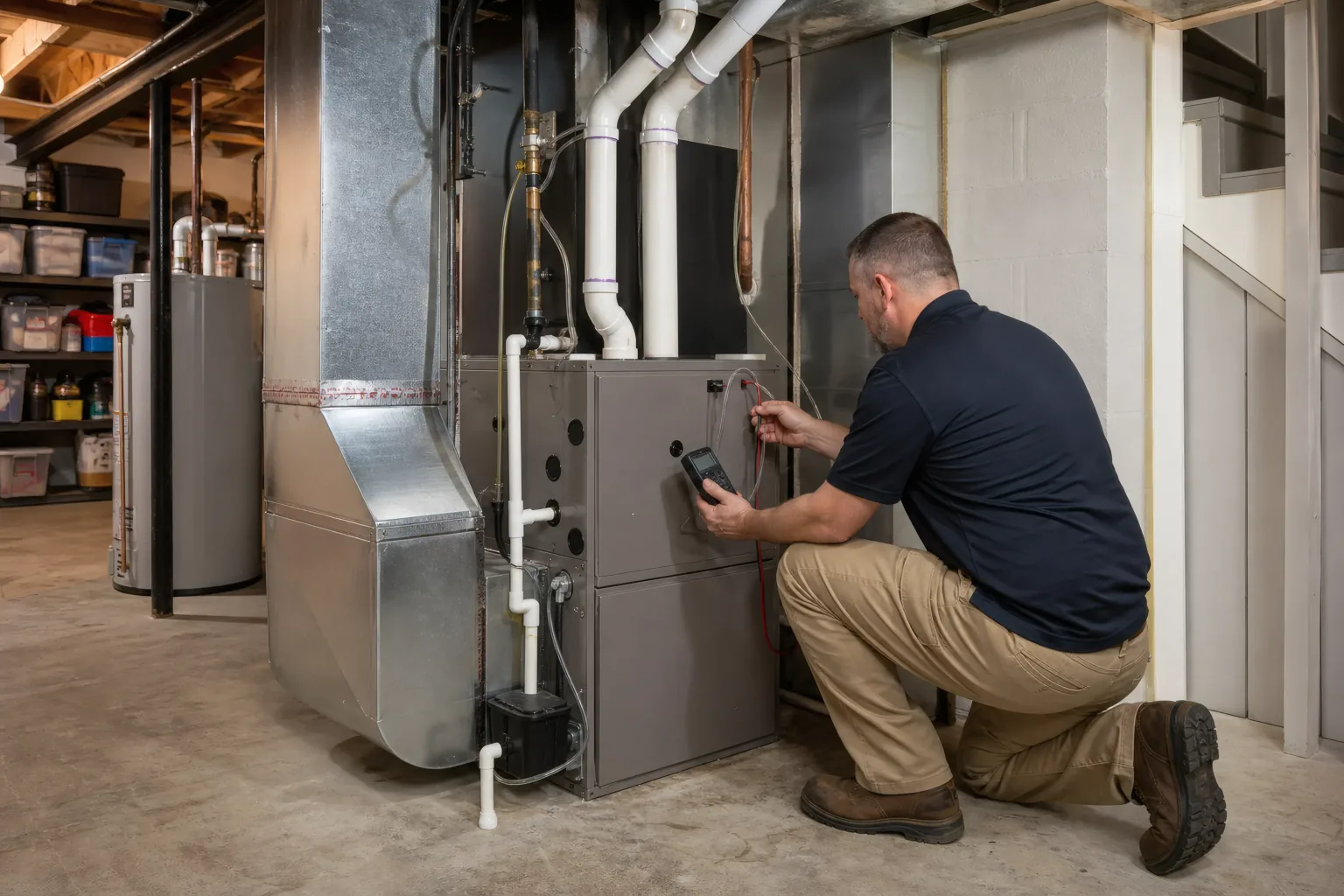
A larger equipment box will not repair weak returns, leaking ducts, or a bare attic. Those faults raise the load and make either system run harder.
Before collecting replacement quotes, note rooms that run hot or cold, filter size, noisy registers, and doors that move when the blower starts. Ask each bidder to measure external static pressure. If ducts pass through an attic, crawlspace, or garage, price duct sealing while access is open.
Air sealing and insulation can lower the design load enough to change the equipment size. Read insulation before a heat pump before paying for a system based on today's leaky house.
I would pay more for a smaller, well-documented design over a larger unit chosen by floor area. Oversizing can shorten cycles, increase noise, and leave some rooms uncomfortable.
Backup heat needs a written plan
Cold-climate heat pumps can operate below 5°F, though capacity and efficiency continue to change by model. ENERGY STAR's air-source heat-pump guide explains the low-temperature label and why a contractor still needs to size the system and plan backup heat for the home.
Your proposal should name the backup source and when it runs.
- Electric resistance strips are simple and provide COP 1 heat. Confirm panel, feeder, breaker, and staged controls.
- A furnace offers strong low-temperature output. In dual-fuel operation the thermostat must prevent incompatible simultaneous operation.
- No backup. This can work when the heat pump covers the design load and the household accepts the plan for rare conditions or an equipment outage.
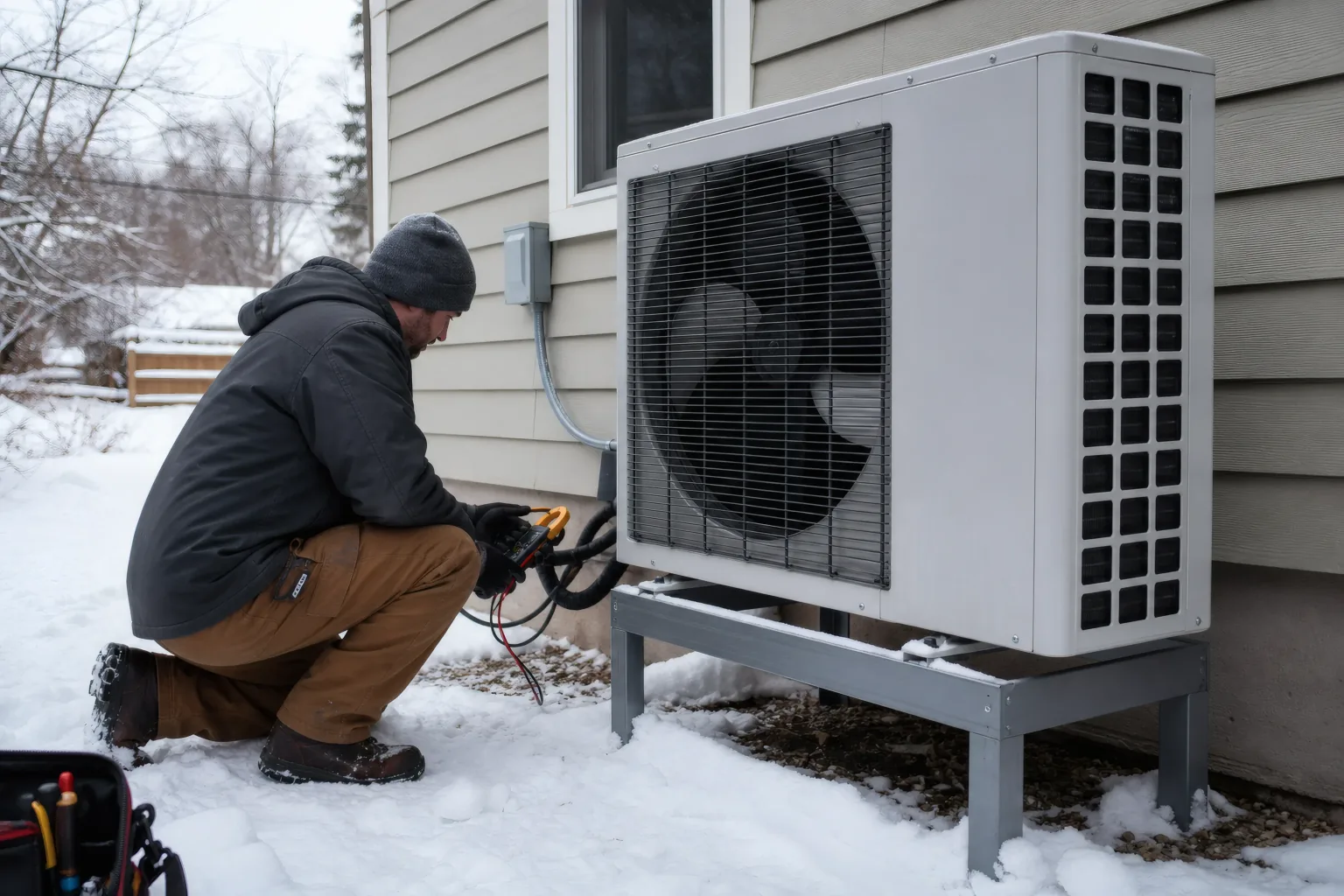
In snowy areas, the outdoor unit needs elevation above expected accumulation and room to drain defrost water. Keep drifting snow and roof runoff away from it. A shovel leaning against the coil can undo an otherwise tidy installation.
For a deeper controls discussion, see how dual-fuel heat pumps and furnaces work.
Read quotes side by side
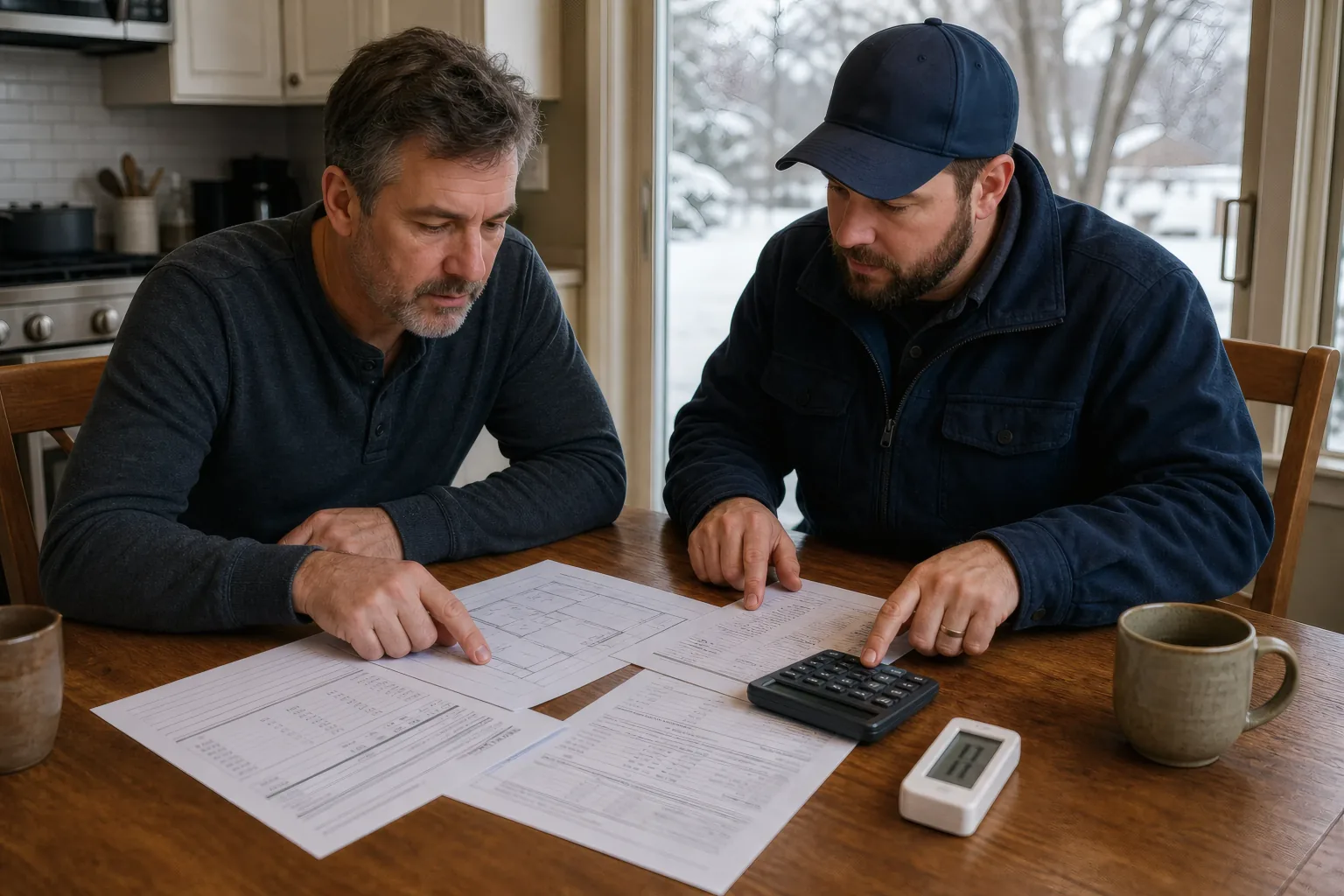
Three bids help only when they describe comparable work. Put each answer in the same columns.
- Exact outdoor and indoor model numbers, plus the AHRI matched-system reference.
- Manual J heating and cooling loads. Room-by-room results help when comfort is uneven.
- At 5°F, get capacity and COP; colder climates also need data at the design temperature.
- Duct repairs, filter cabinet, return-air changes, drain routing, line-set work, equipment pad or stand.
- Electrical scope. This might include a circuit, disconnect, service calculation, panel work, or heat-strip wiring.
- Controls, backup switchover, permits, startup measurements, labor warranty, and service response.
Ask for the commissioning record after startup. Refrigerant charge, airflow, static pressure, temperature rise, thermostat stages, and backup operation should be checked under the installed conditions.
The bargain bid gets expensive when “electrical by owner” appears in six-point type or the old ducts cannot carry the new airflow.
A cold-city example
Minneapolis makes a useful stress test. The heating season is long, gas can be competitive, and winter temperatures demand performance data well below the mild-weather rating.
A homeowner there should compare at least three complete scopes: furnace plus AC, a cold-climate heat pump with its stated backup, and dual-fuel. Use local bills, a Minneapolis design temperature in the load calculation, and the proposed unit's extended capacity table. The result may favor gas for the coldest hours while favoring a heat pump through spring and fall.
The same process works in Atlanta or Seattle. Their loads, temperatures, and fuel-price balance simply move the crossover.
Run the Heat Pump vs Furnace Calculator, save the result, and attach the quote checklist above to every estimate. If the equipment still works, finish any heating and cooling planning before the first rushed day of a heat wave or cold snap.
Sources & further reading
- Air-Source Heat Pumps — ENERGY STAR
- Heat Pump Equipment Key Product Criteria — ENERGY STAR
- Manual J Residential Load Calculation — Air Conditioning Contractors of America
- Carbon Monoxide Fact Sheet — U.S. Consumer Product Safety Commission
Frequently asked questions
Is a heat pump cheaper to run than a furnace?+
It depends on electricity price, fuel price, heat-pump COP at each outdoor temperature, and furnace efficiency. Compare delivered heat: electricity price times 293 divided by COP, versus gas price per therm times 10 divided by AFUE.
Can a heat pump replace a furnace in a cold climate?+
Yes, when the selected heat pump has enough capacity at the local winter design temperature and the home has a planned backup strategy. Check the exact matched system's low-temperature capacity rather than its 47-degree rating.
What is dual-fuel heating?+
Dual-fuel pairs an electric heat pump with a gas, propane, or oil furnace. Controls use the heat pump in suitable weather and switch to the furnace below a chosen outdoor temperature.
Does a heat pump need a furnace?+
No. Many homes use a heat pump with electric resistance backup or a heat pump sized to carry the design load. A furnace is one optional backup source, usually chosen for fuel-cost, capacity, or redundancy reasons.
Should I replace my furnace with a heat pump?+
Compare whole-project quotes, including cooling equipment, electrical work, ducts, controls, and any gas service charge. Then verify that the proposed heat pump covers the home's load at the winter design temperature.
Try the companion tool
This post links to an interactive tool built for this topic. Open it to see numbers tailored to your home.
Open the toolGet practical energy tips
Join homeowners getting practical tips on cutting energy bills and staying comfortable.
Practical tips only. Unsubscribe anytime.
Read this next
Related guides selected by topic overlap and upgrade path.
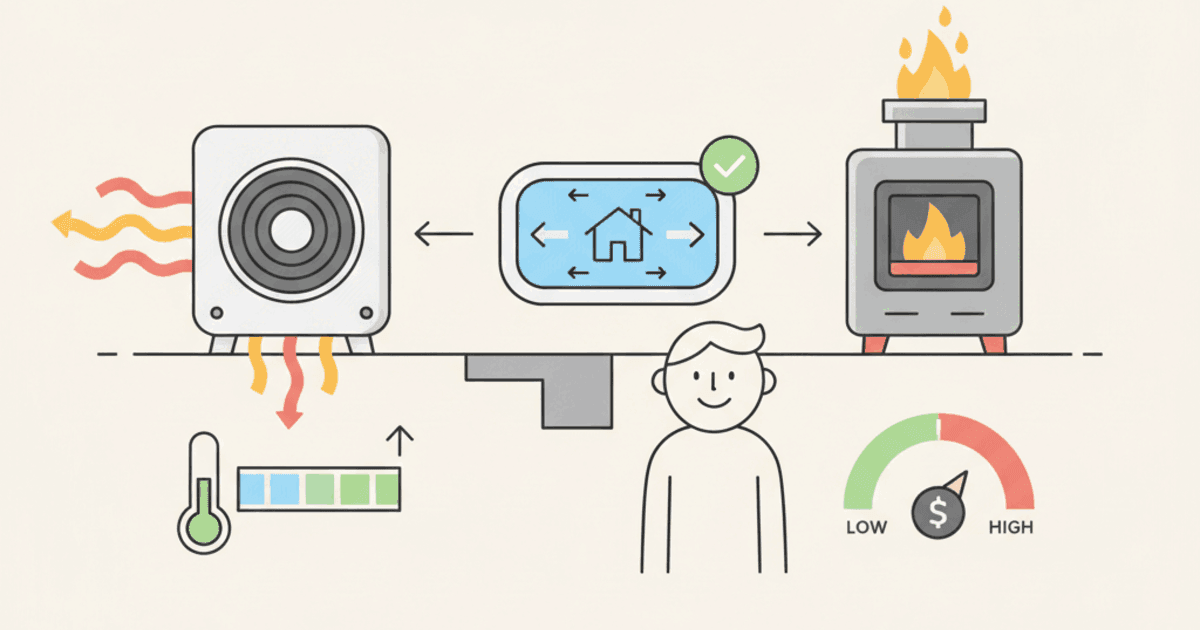
How a dual-fuel (hybrid) heat pump and gas furnace work together, how to set the switchover temperature from your electric and gas rates, the install cost premium, and when dual-fuel beats all-electric or all-gas. Updated for 2026.
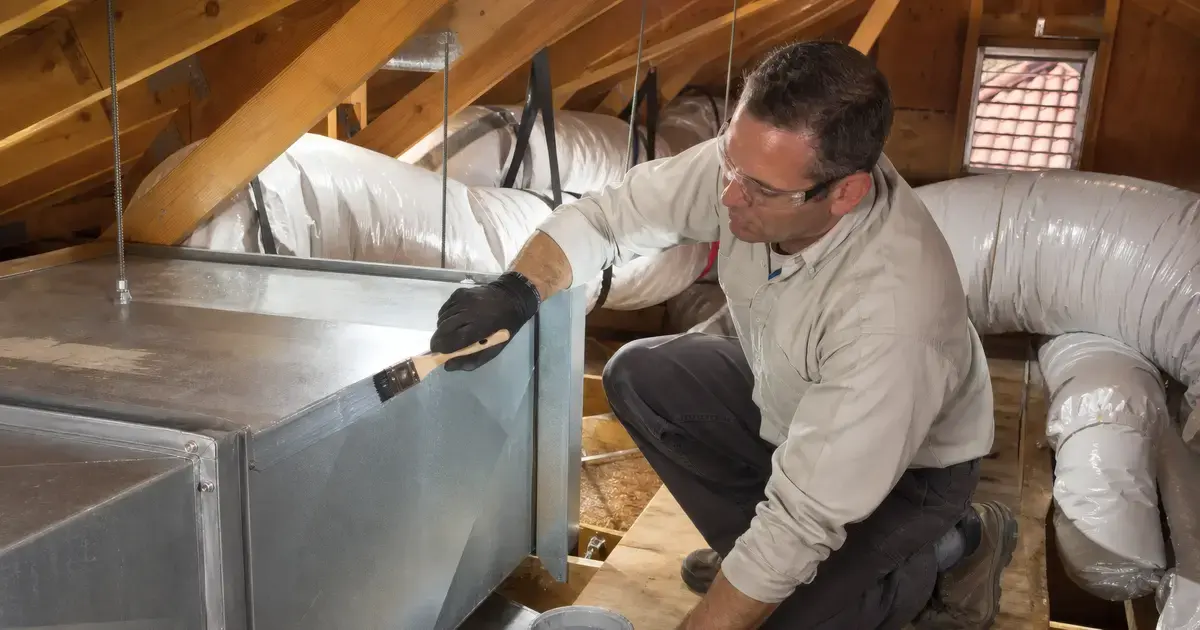
Duct sealing closes leaks at plenums, branches, boots, and returns. Learn which materials work, when DIY is safe, and what a measured quote should include.

Should you repair or replace your furnace, AC, or heat pump? Use the $5,000 rule, equipment age, real 2026 repair costs, and the R-410A refrigerant phase-down to decide with confidence.
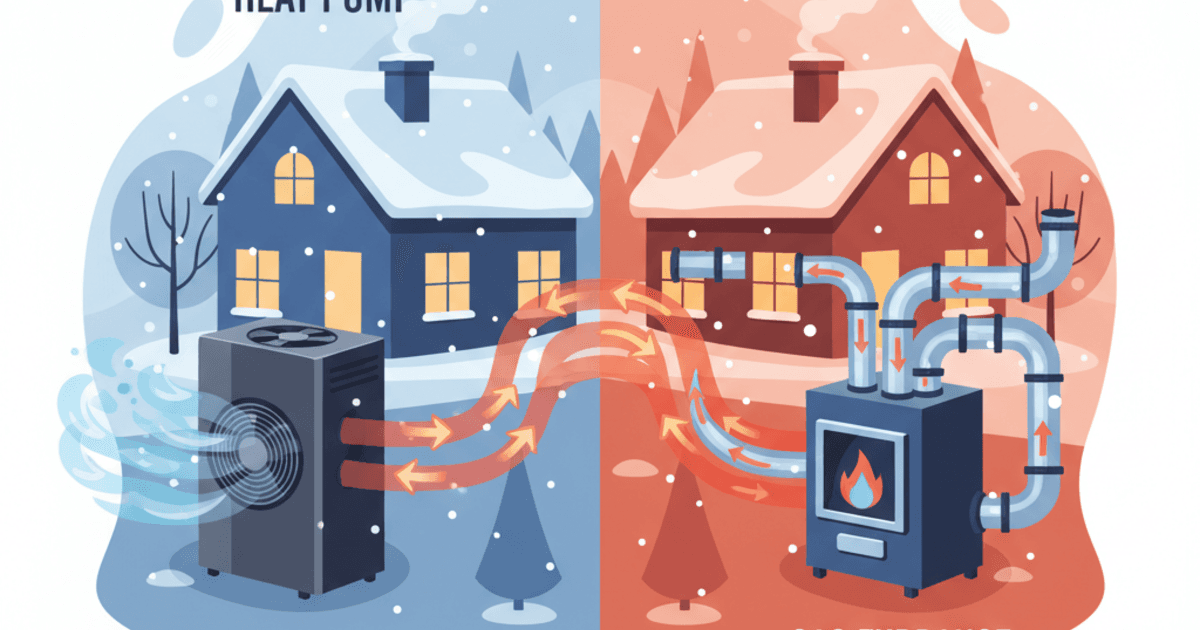
Heat pumps work below freezing, but the right choice depends on your electric vs gas price, your climate, and whether you pick a cold-climate model. Here is how to decide, with your own rates.